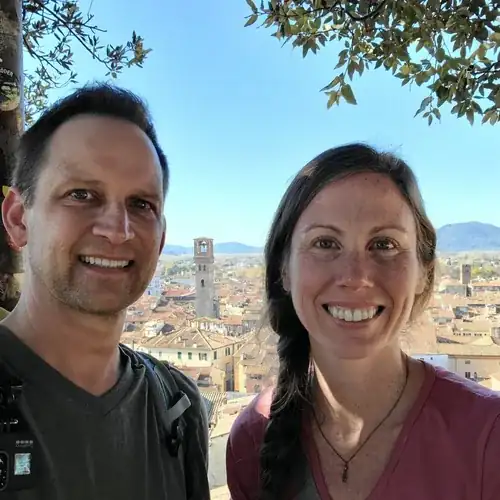
Two full days is the sweet spot for most first-time visitors. That gives you enough time to walk the walls, climb a tower, eat your way through the old center, and actually feel the city’s rhythm rather than just photograph it.
One day works if you’re day-tripping from Florence or Pisa and can commit to a focused four-hour highlight loop. You’ll hit the essentials, but you’ll miss the hidden churches and the evening energy that make Lucca more than a checklist. People call it the “city of 100 churches” for a reason, and most of the interesting ones aren’t in the guidebooks.
Three nights is where the trip starts to feel genuinely relaxed. You get unhurried mornings, time to wander neighborhoods without a plan, and a spare day for a trip to Pisa or deeper into Tuscany. If you’re a food-focused or culture-focused traveler, this is what I’d actually recommend.
For travelers using Lucca as a home base, four to five days or even a full week opens up day trips to Cinque Terre, Volterra, and the Tuscan coast. It’s a quieter, more affordable launchpad than Florence, and the car-free center makes it far more pleasant to return to each evening.
- 2 nights is the sweet spot for most first-time visitors — enough to feel the city without rushing.
- The 4 km city walls are Lucca’s unmissable highlight — walk or bike the full loop first thing.
- Day trips are easy: Pisa is 30 minutes by train, Florence 90 minutes.
- Book dinner ahead, especially on weekends — walk-ins at the best restaurants rarely work out.
- Stay inside the walls for the full Lucca experience; the car-free center is the whole point.
One Day, Two Days, or Three: What Each Gets You
What to Do in Lucca in One Day
A single day in Lucca is best spent on the three things you can’t replicate anywhere else in Tuscany: the Renaissance city walls, the tree-topped tower, and the elliptical Roman piazza. Start early to beat the midday heat and the tour groups that arrive from Florence around 10 AM.
Walking or Biking the City Walls
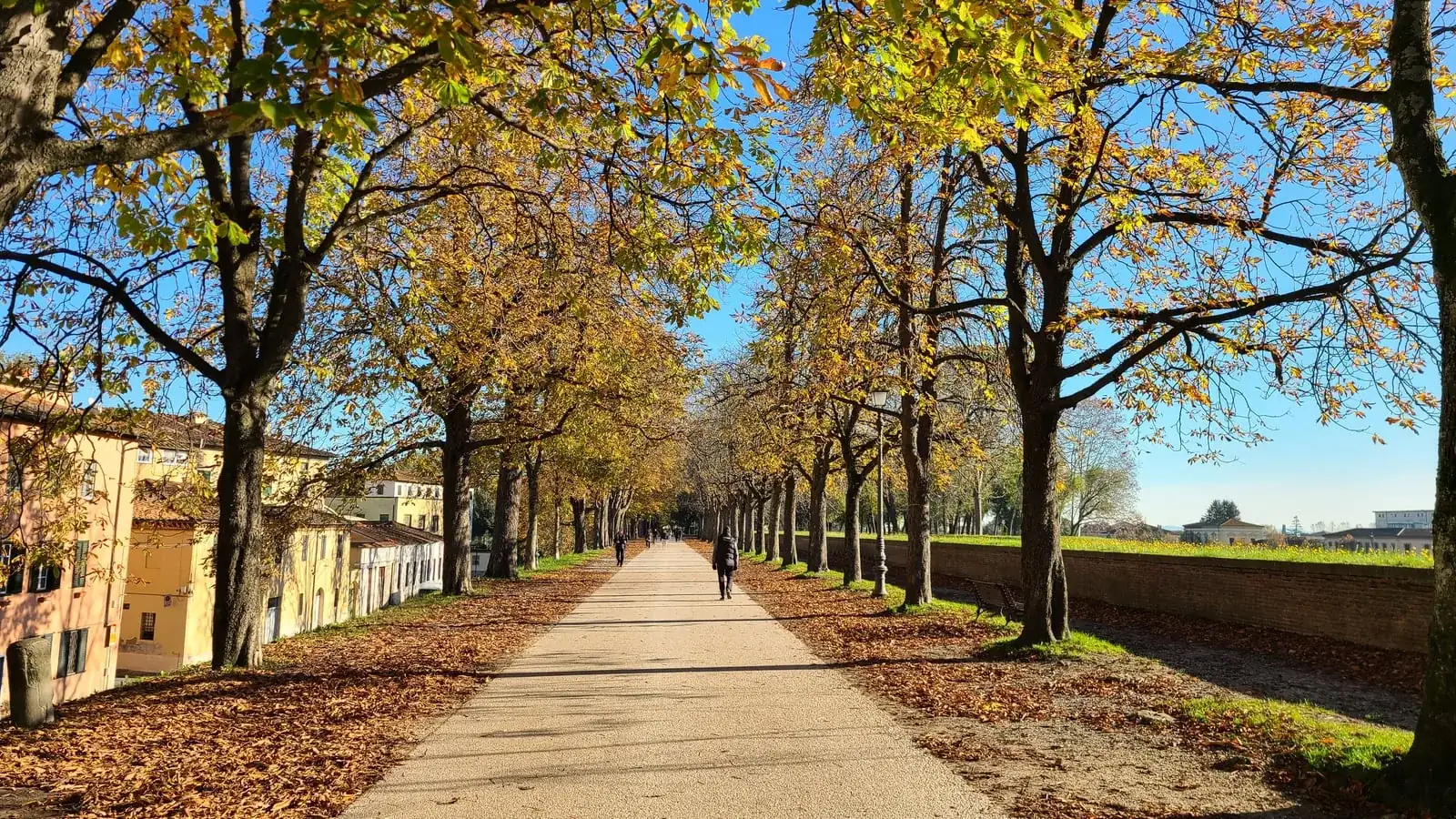
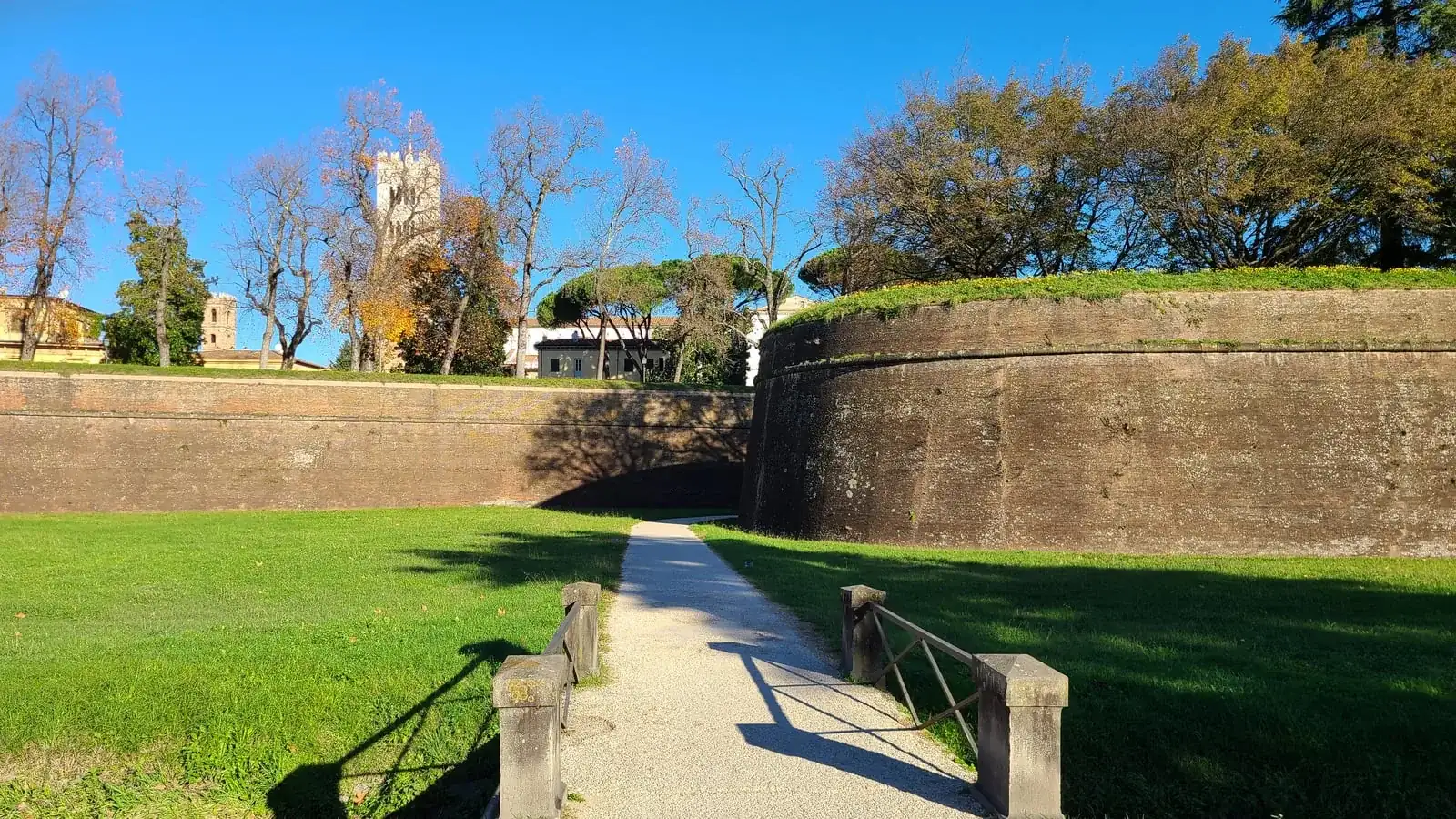
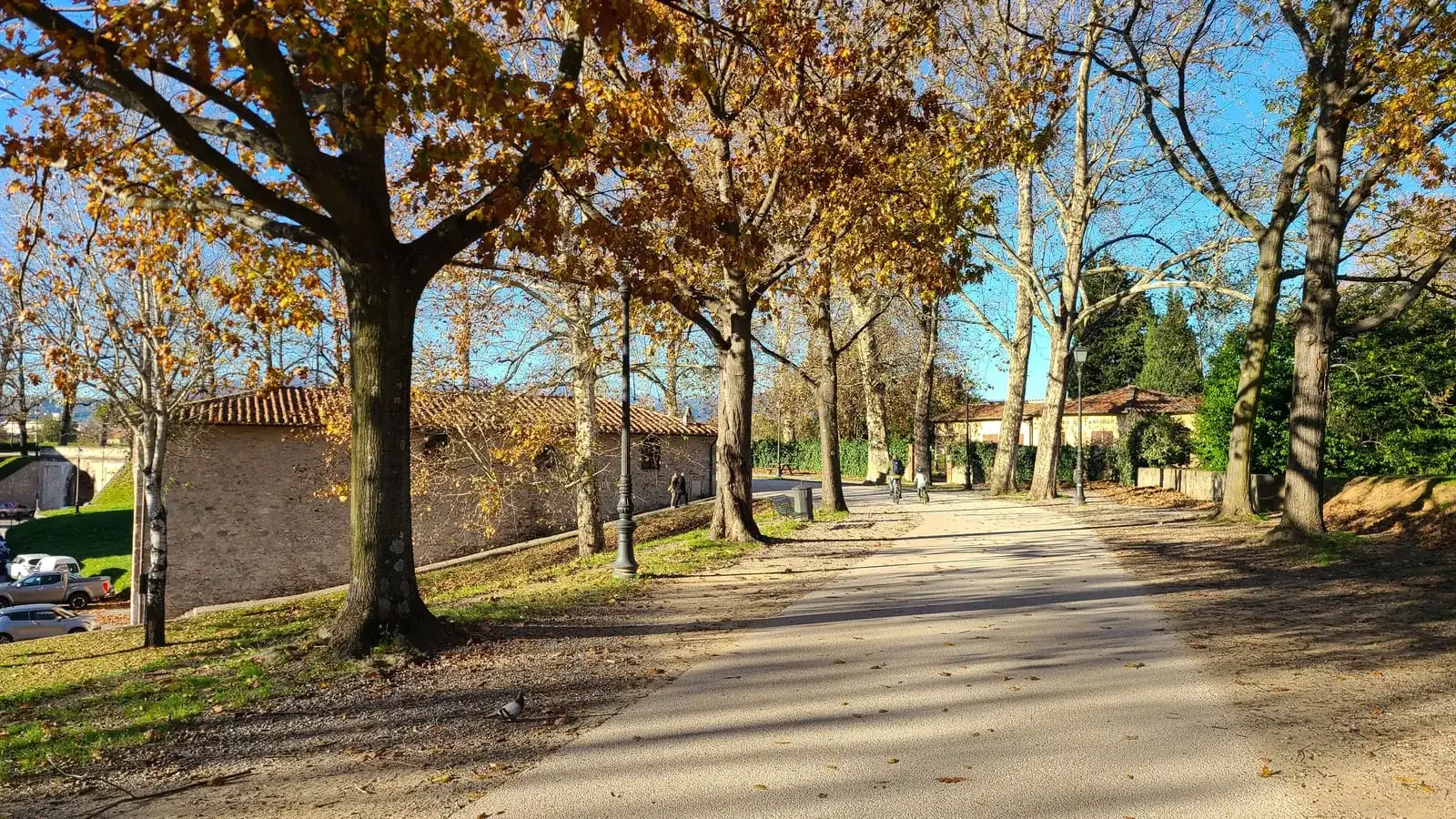
The city walls are the single best thing about Lucca, and they should be the first thing you do. This 4 km (2.6-mile) tree-lined loop sits on top of perfectly preserved Renaissance-era fortifications, wide enough for bikes, joggers, families with strollers, and the occasional elderly couple walking their dog. Cars are completely forbidden up here.
Biking the loop takes about 30 minutes without stops, while walking it takes closer to an hour. I’d recommend the bike. You cover more ground, catch better breezes, and can pull over whenever a view of the Apuane Alps or the terracotta rooftop jumble below catches your eye.
Biciclette Poli at Piazza Santa Maria, 42 · Open daily 8:30 AM to 8 PM. Return the bike early if you’re just doing the loop so you aren’t paying for dead time.
One thing photos won’t tell you: the walls are busier with everyday local life than you’d expect. Joggers, skaters, parents with kids, people eating lunch on the grass. It feels more like a neighborhood park than a tourist attraction, which is exactly what makes it worth your time. Bring water, because there’s limited shade on the southern stretches and no vendors along most of the route.
Climbing Torre Guinigi and Torre delle Ore
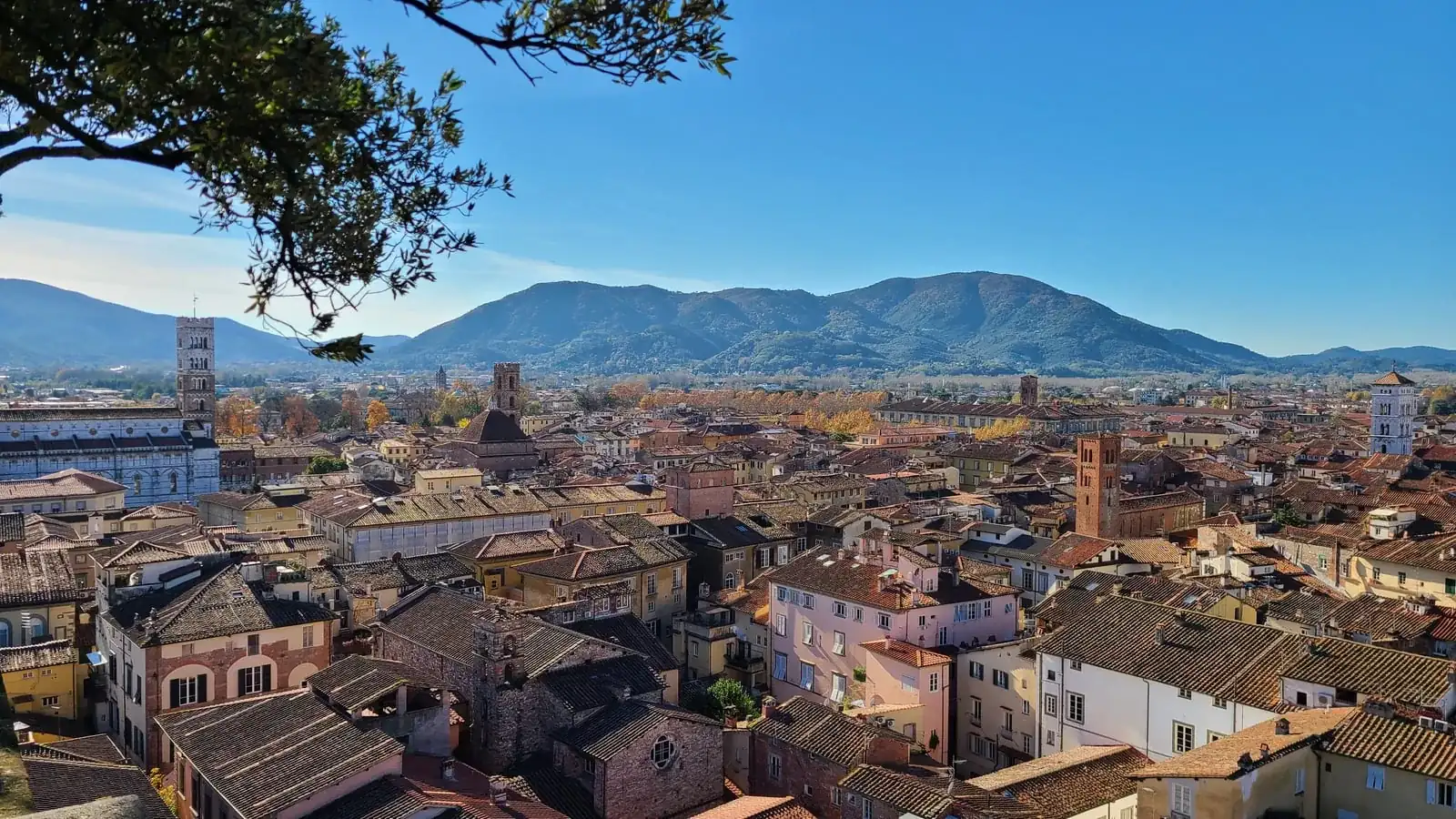
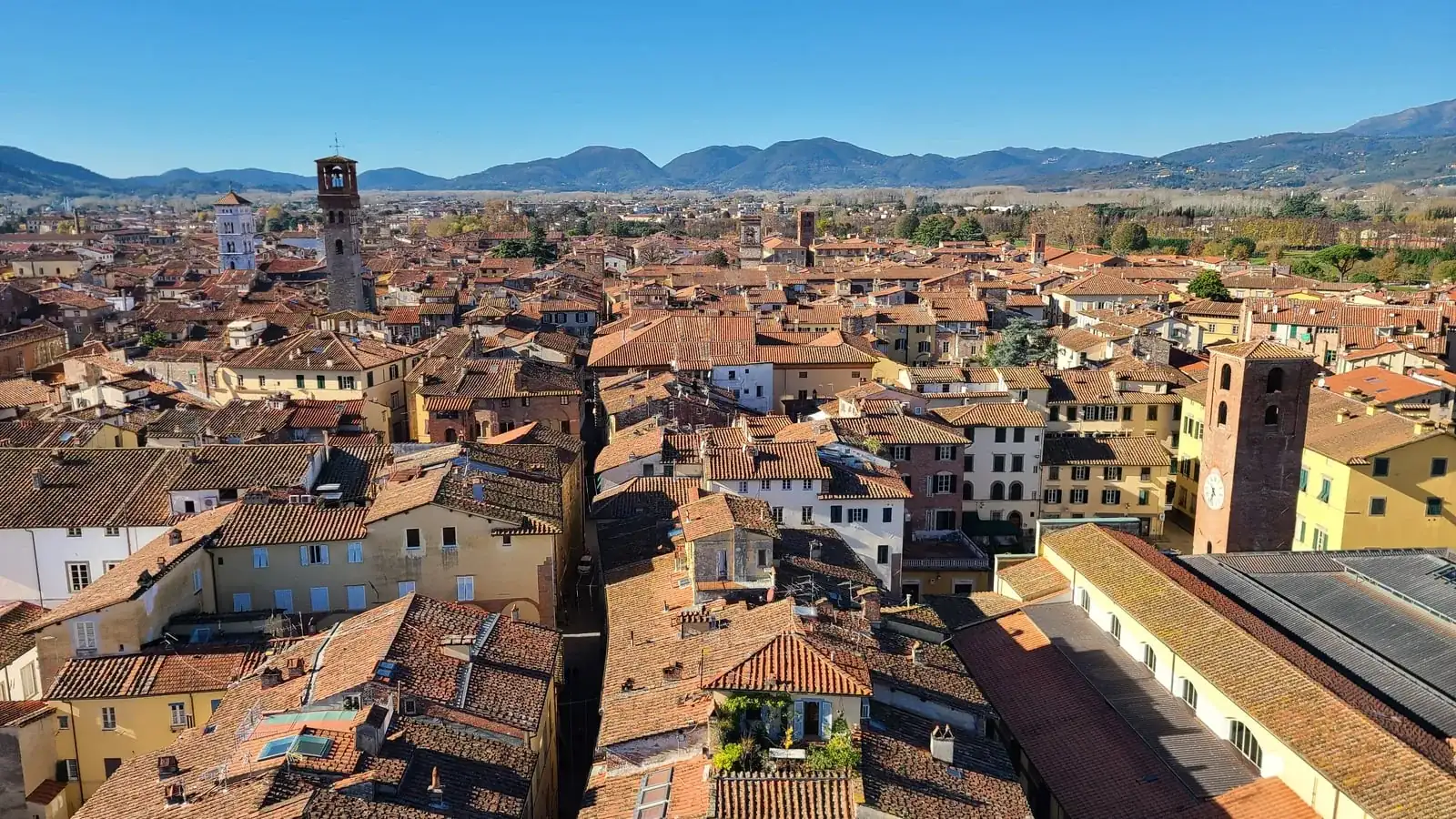
Torre Guinigi is the one to prioritize if you only climb one tower. Located at Via Guinigi 29, it’s the icon of Lucca’s skyline: a medieval brick tower with actual holm oak trees growing on its rooftop terrace. The 233 wooden steps are narrow, dark, and spiraling, so expect to press against the wall when someone comes down.
- Torre Guinigi — 233 steps · €6 admission · Via Guinigi 29 · 360° views with rooftop oak trees
- Torre delle Ore — 207 steps · 50 metres tall · clear line of sight back to Torre Guinigi
- Allow roughly 30 minutes per tower including the wait at the bottom
- Neither tower is accessible for visitors with mobility limitations — no elevators, genuinely steep staircases
Torre delle Ore is Lucca’s 14th-century clock tower at 50 meters tall with 207 steps. The view from up top gives you a different angle — including a clear line of sight to Torre Guinigi itself, which makes for a satisfying photo.
Churches and Piazzas to Prioritize
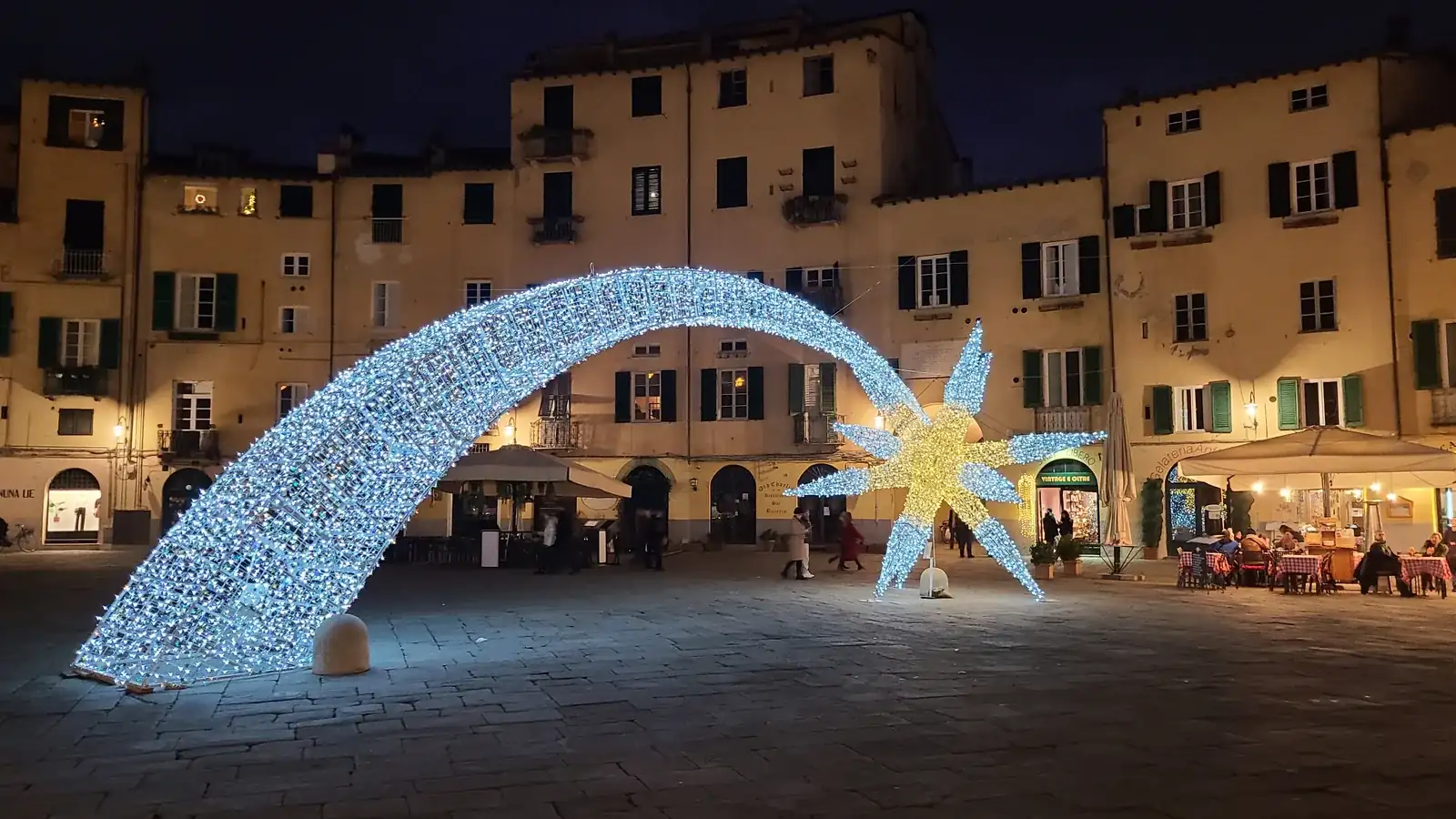
Piazza dell’Anfiteatro is the standout. Built on the footprint of an ancient Roman amphitheater, this oval-shaped square is ringed by pastel buildings with restaurants and small shops tucked into the ground floors. It’s quieter than you’d expect for something so central, and the enclosed shape blocks most street noise.
- Chiesa di San Michele in Foro on Piazza San Michele — Pisan-style layered marble facade, worth 30 minutes even if you don’t go inside
- Basilica di San Frediano — the golden mosaic facade stops you mid-stride from half a block away, 10 minutes
- Cattedrale di San Martino — asymmetrical facade and dark interior worth exploring
Connect these stops by walking Via Fillungo, the main shopping street, which threads past boutiques, historic cafes, and most of the landmarks listed above. It’s less a destination and more the natural corridor between everything worth seeing.
What to Do in Lucca with Two or Three Days
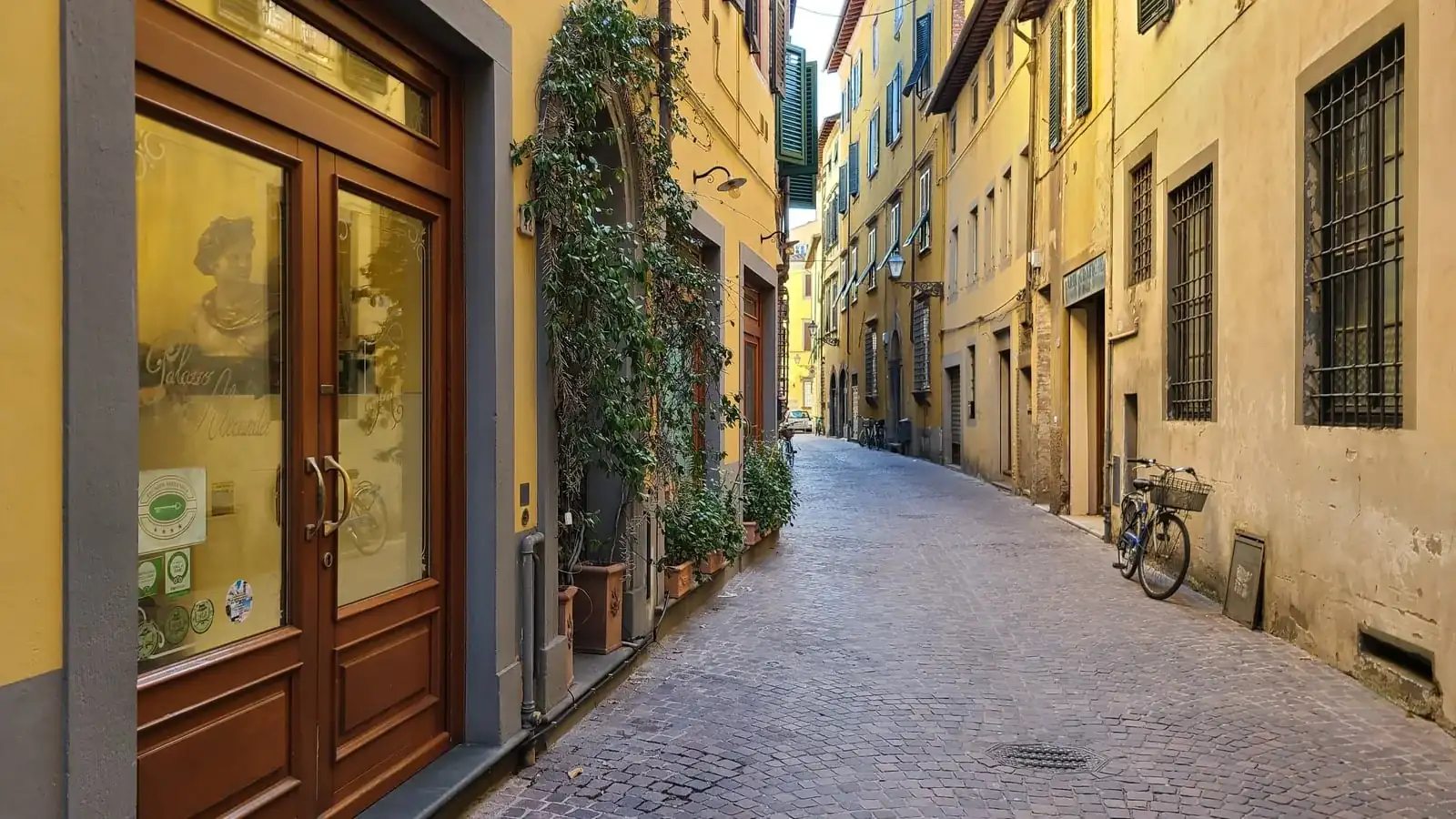
A second day lets you shift from sightseeing mode into something closer to how Lucca actually feels when you live there. The car-free medieval center rewards aimless wandering in a way that Florence and Pisa, with their crowds and traffic, simply don’t.
Spend the morning ducking into smaller churches you skipped on day one. With over 100 churches inside the walls, many contain overlooked frescoes and quiet courtyards that never make it into itineraries. The neighborhoods away from Via Fillungo have a residential calm where you’ll hear more Italian conversations than camera shutters.
At 8 PM nightly, the Church of San Giovanni hosts a one-hour Puccini concert — a fitting tribute to Lucca’s most famous native son. Afterward, stop by Antico Caffè Caselli on Via Fillungo, a historic cafe where Puccini himself reportedly spent time.
Last Sunday of each month — artisan fair. Third Sunday of each month — antiques market. Both are worth building your trip around if the dates align.
The walls at this point become part of your routine. You stop treating the tree-lined path like a sight to check off and start treating it like the evening walk it was always meant to be. The passeggiata on the walls after sunset is a completely different experience from the daytime bike ride.
A third day is ideal for a day trip to Pisa, just 30 minutes by train, or for diving deeper into the Tuscan countryside.
Is Lucca a Good Base for Exploring Tuscany?
Lucca is one of the best bases in Tuscany if you want a quiet home to return to each night without sacrificing access to major destinations. It’s more affordable and far less hectic than Florence, and the walkable center makes arriving back after a long day trip feel like a relief rather than another obstacle.
| Destination | Travel from Lucca | Best For |
|---|---|---|
| Pisa | 30 minutes by train | Half-day trip, easy combo |
| Florence | 1.5 hours by train | Full-day museum and art trip |
| Cinque Terre | Day trip via train | Coastal hiking and villages |
| Volterra | Day trip, car recommended | Etruscan history, hill town views |
| Tuscan beaches | Short drive west | Summer relaxation day |
Look for B&Bs or small hotels inside the walls. The experience of stepping out your door onto centuries-old cobblestones — no car noise, the walls glowing in morning light — is worth more than any pool or lobby. If you’re driving, park outside the walls and walk or bike in.
Where to Eat in Lucca
Lucca’s best food is found away from the laminated picture menus near the main piazzas. The city’s food identity leans toward simple, honest cooking: good focaccia, hearty soups, and grilled meats rather than fussy plating.
- Forno a Vapore Amadeo Giusti is the local favorite for focaccia, and it’s the first place I’d send anyone. The bread comes out warm with a salt-crusted top and a soft, oily interior that ruins all other focaccia for you.
- Pizzeria da Felice (Via Buia, 12) serves reliable pizza and cecina (chickpea flatbread) during split hours: Monday through Saturday, 12 to 2:30 PM and 4 to 8:30 PM. They accept credit cards, which isn’t guaranteed at smaller Lucca eateries.
- Osteria Miranda is the dinner pick. The menu changes and portions are generous, but you absolutely need a reservation. Showing up without one, especially on weekends, is the single most common dining mistake visitors make in Lucca.
Piazza dell’Anfiteatro works for a casual lunch with atmosphere — but choose carefully. Look for the restaurants with Italian-language menus and locals sitting down, not the ones with staff waving you in from the sidewalk.
Practical Tips for Visiting Lucca
Wear comfortable, flat-soled shoes with actual grip. The cobblestones inside the walls are uneven and polished smooth in places, and the tower staircases are genuinely slippery. Sandals and fashion sneakers will punish you by afternoon.
- You do not need a car inside the walls — the entire walled center is walkable end to end in 20 minutes, and biking makes it even faster
- Start sightseeing early, ideally before 9 AM — towers and walls are most pleasant in morning light, and tour buses from Florence and Pisa arrive mid-morning
- Torre Guinigi and Torre delle Ore climbs are not suitable for visitors with limited mobility — the walls themselves are fully accessible on most stretches
- No major changes to opening hours, transit, or access have been reported for 2025 or 2026 at the time of writing
Frequently Asked Questions
Is one day enough for Lucca? One day is enough to see the highlights — the city walls, Torre Guinigi, and the main churches — but you’ll need to move at a steady pace. If you’re day-tripping from Florence or Pisa, commit to a four-hour highlight loop and skip the towers if time is tight. Stay overnight if you can; the evening version of this city is completely different.
Is Lucca worth visiting? Yes, and often more than people expect. It’s one of the few Tuscan cities where the historic center still feels like it belongs to the people who live there rather than the people who are passing through. The walls alone are worth the trip. It’s also genuinely less crowded and less expensive than Florence, which matters if you’re doing extended travel in Italy.
How do I get to Lucca from Florence? By train: Lucca is about 1.5 hours from Florence on regional trains, with multiple departures per day. No reservation required on regional services. The Lucca train station sits just outside the city walls — walk through the gate and you’re in the old center within five minutes.
Is Lucca walkable? Extremely. The entire walled center is walkable end to end in about 20 minutes on flat cobblestone streets. There are no hills inside the walls. The only serious uphill is the wall top itself, which you access via ramps at several points around the perimeter. A bike is a genuine upgrade for the walls loop but completely optional everywhere else.
When is the best time to visit Lucca? April through June and September through October are the sweet spots — pleasant temperatures, fewer crowds than peak summer, and good light for photography. November, as I visited, is underrated: quieter, colder, and genuinely atmospheric, especially with the autumn color on the wall trees. Avoid August if possible; it’s hot, crowded, and some local businesses close.
Can I do Lucca as a day trip from Florence? Yes, easily. The train takes about 90 minutes each way, and a focused day gives you enough time for the walls, one tower, and a proper lunch. Buy your train ticket at the station or online through Trenitalia — no advance booking needed for regional trains, but check the schedule since some services run hourly.