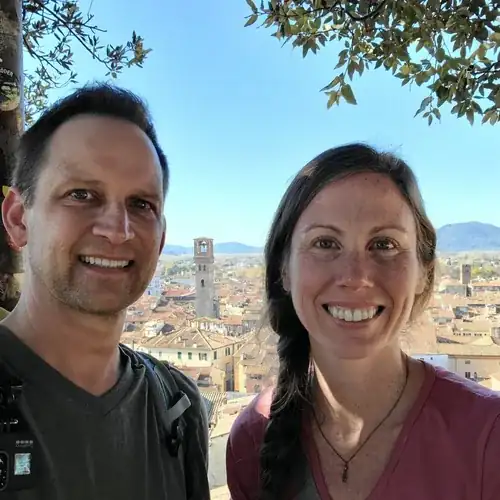
You’ve probably heard whispers about Lucca – that charming Tuscan city where locals still outnumber tourists, and Renaissance walls encircle cobblestone streets like a medieval hug.
But is it actually worth your time, or should you stick to the usual Florence-Pisa circuit?
Here’s the thing: Lucca’s got something most Italian cities have lost, and once you understand what sets it apart, you’ll know exactly whether it deserves a spot on your itinerary.
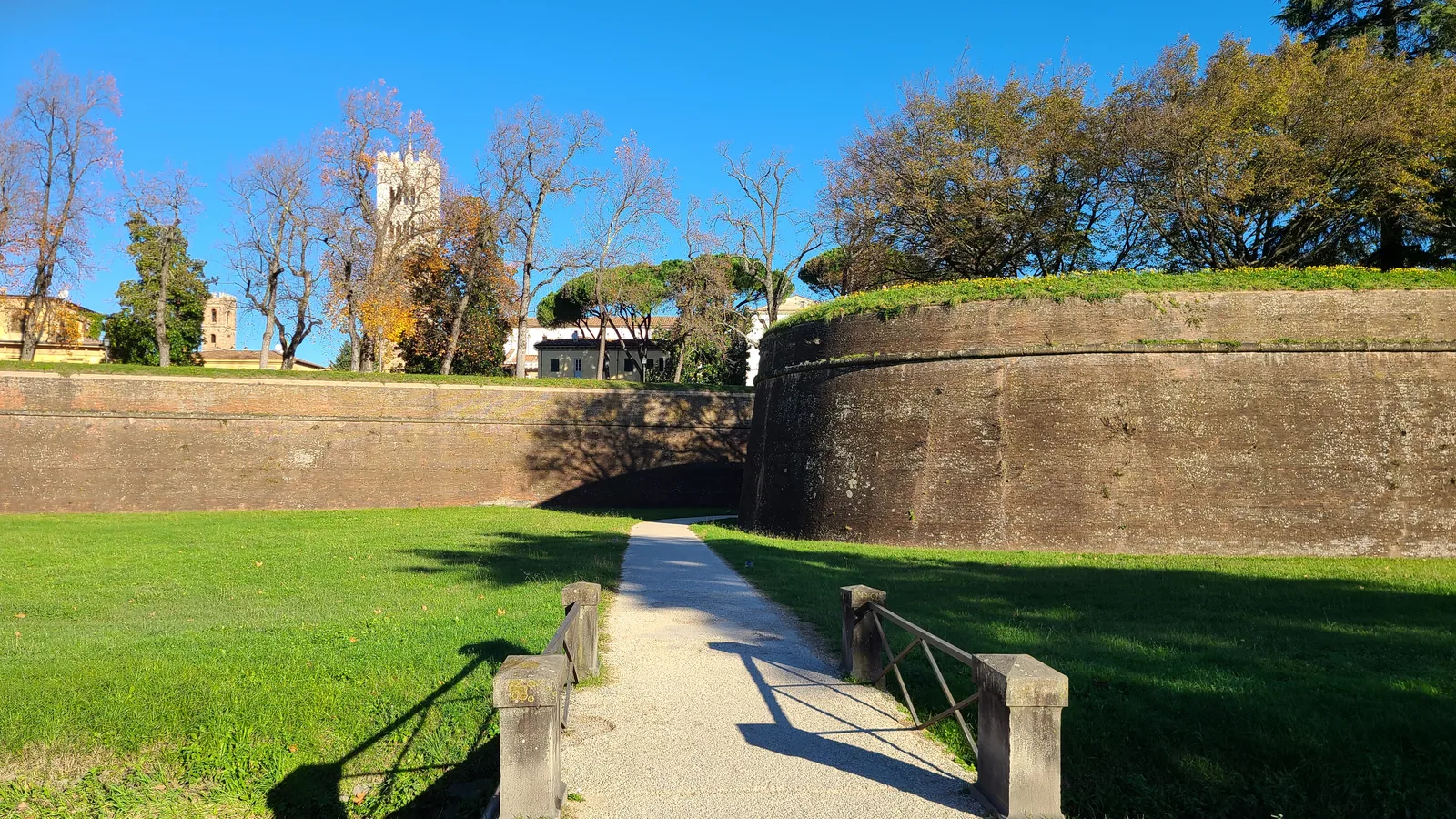
- Lucca’s 4.2 km Renaissance walls, completed around 1645, remain fully intact and now function as a tree-shaded park for walking and cycling that locals use daily
- The city earned the nickname “city of 100 churches” for its extraordinary concentration of Romanesque, Gothic, and Baroque buildings packed with art and marble pulpits
- You can see Lucca’s main attractions in one full day, though two to three nights allow for a more relaxed pace and nearby day trips
- Direct regional trains from Florence take about 1 hour 15 minutes for €8–10, and from Pisa just 25–35 minutes, making it highly accessible
- Peak season is July during the Lucca Summer Festival, while September to December offers smaller crowds with cultural festivals and authentic local atmosphere
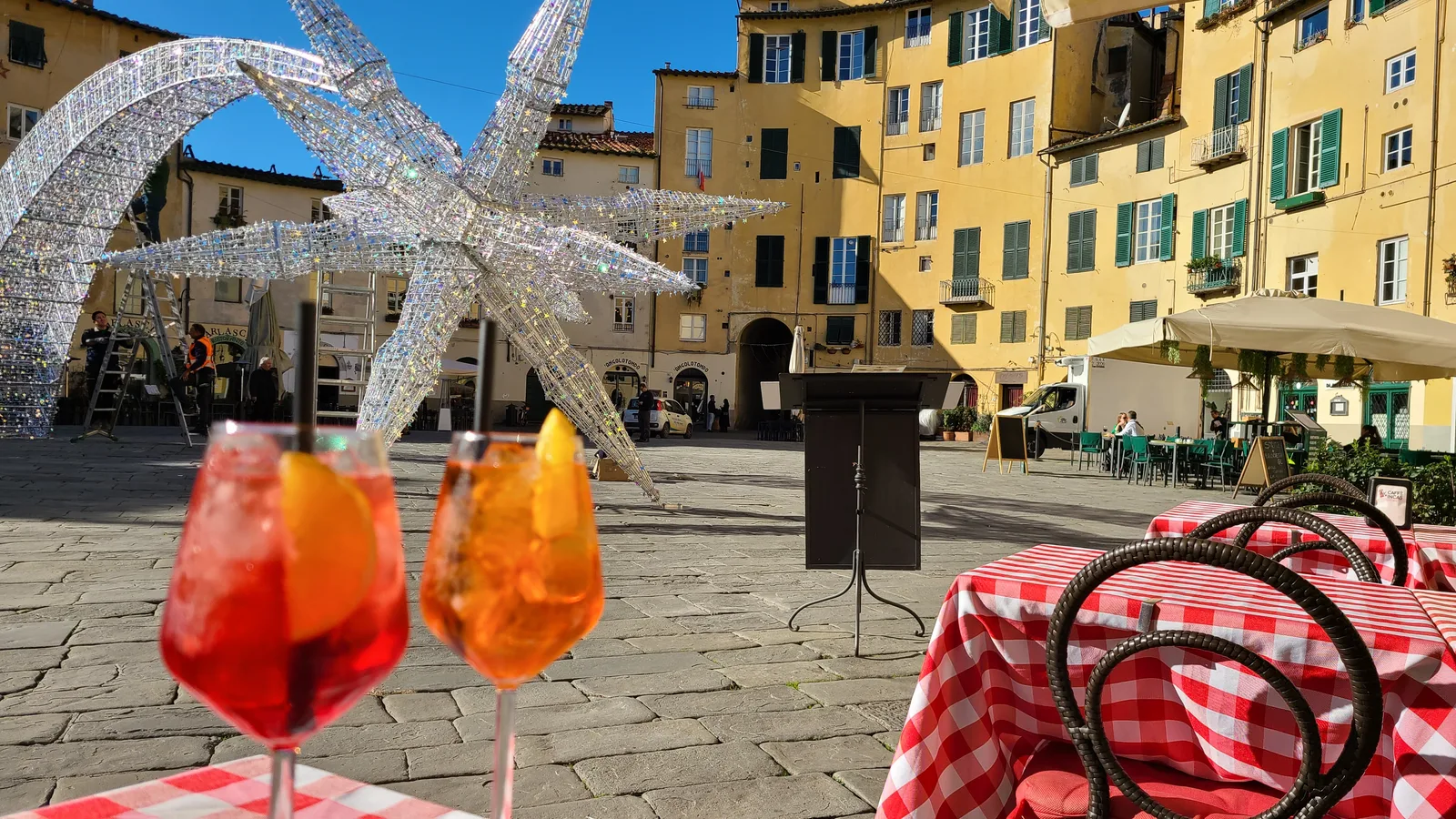
- Piazza dell’Anfiteatro sits on 2,000-year-old Roman amphitheater foundations with original arches still visible in ground-floor shops and cafés
- The city’s compact historic center with traffic-calmed streets is ideal for families and older travelers seeking flat, walkable neighborhoods
What Makes Lucca Special: Walls, Churches, and Quieter Tuscan Charm
While most Tuscan cities tore down their old defenses to make room for traffic, Lucca kept every meter of its Renaissance walls intact. You’ll walk or cycle a complete 4.2 km loop atop ramparts finished around 1645, now transformed into a tree-shaded park where locals jog, picnic, and walk dogs daily. This creates something rare: a walled historic center that feels lived-in rather than purely touristic.
Inside, you’ll find the “city of 100 churches”—an extraordinary concentration of Romanesque, Gothic, and Baroque buildings packed with altarpieces and marble pulpits. Because Lucca draws fewer crowds than Florence or Pisa, you’ll explore cobbled lanes at your own pace, mixing with residents instead of fighting tour groups. The walls include eleven interconnected ramparts, each originally designed with clear sightlines to adjacent defensive positions. It’s Tuscan charm without the chaos.
Top Sights in Lucca: Piazza dell’Anfiteatro, Medieval Towers, and Historic Churches
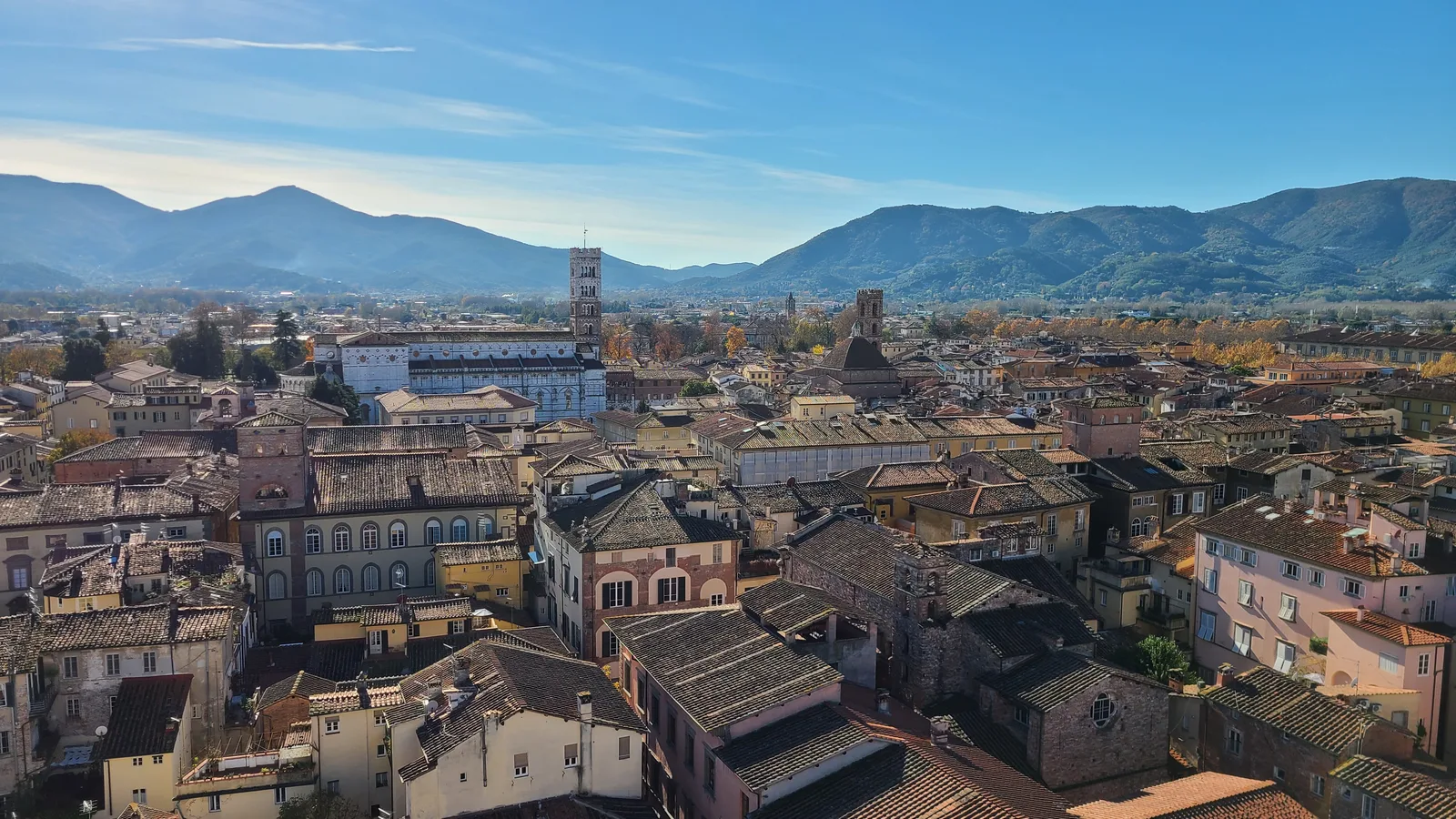
You’ll find Lucca’s top sights concentrated within its historic center, each one showcasing a different layer of the city’s past. The oval-shaped Piazza dell’Anfiteatro sits on Roman foundations, while medieval towers like Torre Guinigi offer sweeping views from their heights.
The original amphitheater structure once held 10,000 spectators in its cavea and featured fifty-four arches before its transformation into today’s public square. Lucca’s Romanesque churches and cathedral round out the experience, blending art, architecture, and centuries of history into walkable neighborhoods.
Piazza dell’Anfiteatro Roman Legacy
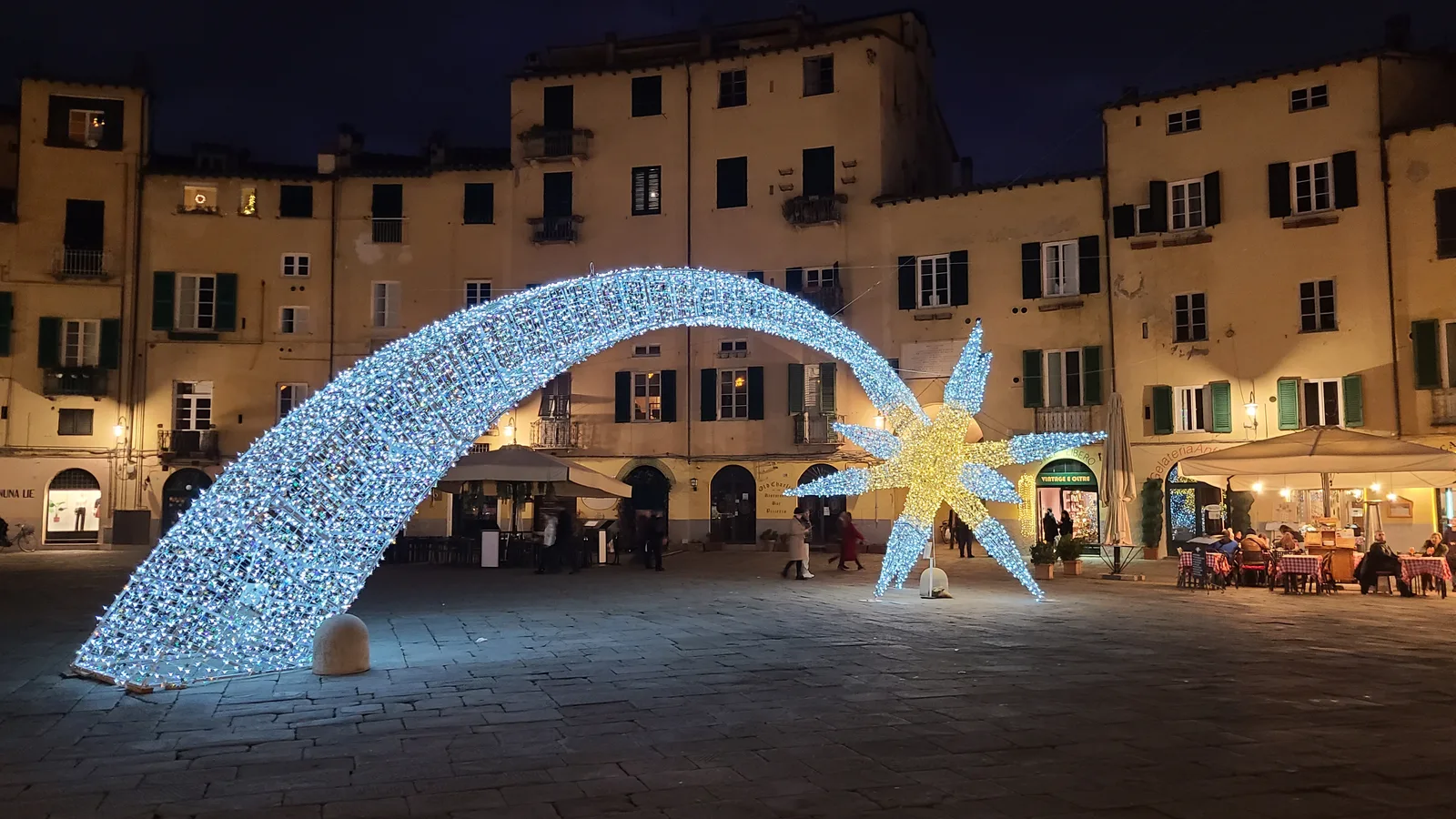
Standing in Piazza dell’Anfiteatro today, you’re literally walking through 2,000 years of history. This stunning elliptical square sits exactly where a Roman amphitheater once held 10,000 roaring spectators for gladiatorial games in the 1st–2nd century AD. You’ll spot the original Roman arches built into ground-floor shops and cafés—remnants of 54–55 arches that formed the ancient structure.
What makes this place extraordinary? Instead of crumbling into ruins, the amphitheater transformed into a living neighborhood. Medieval residents built homes into the old walls, creating the continuous ring of colorful buildings you see today. Architect Lorenzo Nottolini redesigned it between 1830–1839, clearing the cluttered interior to reveal this breathtaking oval piazza.
You’ll enter through one of four gateways positioned at the ellipse’s cardinal points—pure architectural magic. The piazza now buzzes with outdoor cafes where you can sip espresso surrounded by ancient Roman foundations.
Climbing Lucca’s Famous Towers
Lucca’s medieval skyline once bristled with nearly 200 competing towers—a stunning display of wealth and power that turned the city into a vertical battlefield of family egos. You can still climb two spectacular survivors today.
- Torre Guinigi — 45 meters tall with ancient holm oaks growing at its summit, featuring 233 steps and 360° views of fortifications and churches
- Torre delle Ore — 50 meters tall with a mechanical clock operational since 1471, offering 207 steps to one of Europe’s last working medieval timepieces
These towers weren’t just status symbols—they served as defensive strongholds during centuries when peace was scarce. The defensive towers were integrated into the design of Lucca’s Renaissance walls, creating strategic advantages throughout the fortification system.
Cathedral and Romanesque Treasures
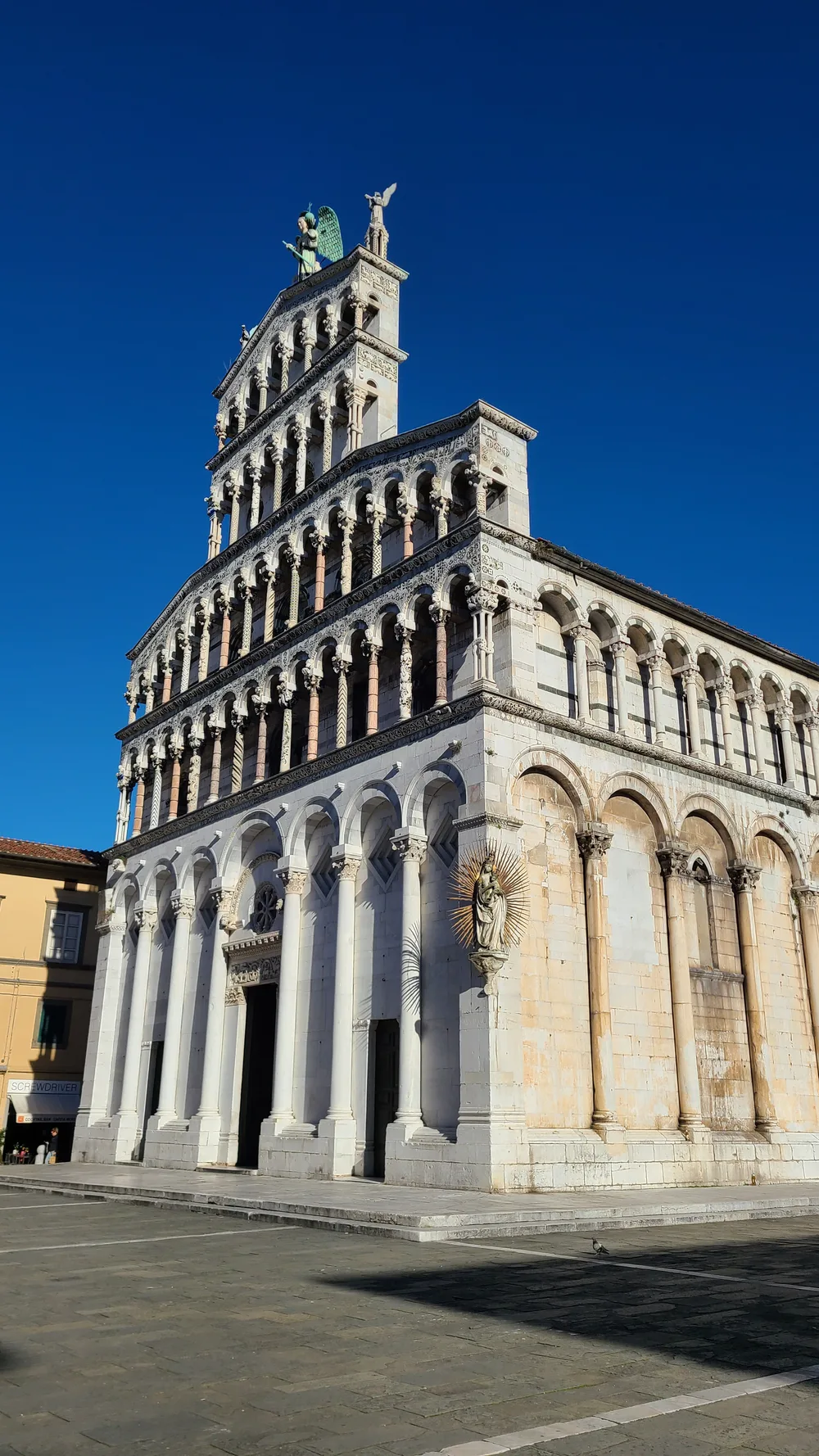
The Cathedral of San Martino rises from Lucca’s historic heart as a stunning mashup of architectural styles—Romanesque stripes meet Gothic arches meet Renaissance touches. You’ll spot the polychrome marble façade from blocks away, its green-and-white stripes climbing three tiers of loggias completed in 1204 by Guidetto da Como.
- Volto Santo — The Holy Face crucifix carved from wood in the 8th century, housed in Civitali’s octagonal shrine with over a thousand years of pilgrimage tradition
- Ilaria’s Tomb — Jacopo della Quercia’s hauntingly beautiful monument to a young noblewoman
- Nicola Pisano’s Deposition — An early masterpiece of naturalistic sculpture gracing the portal lunette
This wasn’t just any cathedral—it anchored the Via Francigena pilgrimage route.
How to Get to Lucca From Florence, Pisa, and Beyond
Planning a trip to Lucca and wondering how you’ll actually get there? You’ve got plenty of options! From Florence, direct regional trains depart hourly from Santa Maria Novella station, taking about 1 hour 15 minutes for just €8–10. Buses are even cheaper at €3–5 but run less frequently.
If you’re flying into Florence Airport, hop on the T2 tram to the main station, then catch that Lucca train—total journey takes around 1.5–2 hours. Coming from Pisa? Even easier! Regional trains zip you to Lucca in just 25–35 minutes from Pisa Centrale.
From Pisa Airport, you’re looking at roughly 30 minutes by train with one quick change. Driving? The A11 motorway gets you there in under an hour from Florence.
Where to Stay in Lucca: Hotels and Apartments Inside the Walls
You’ve made it to Lucca—now where should you drop your bags? Staying inside the historic walls puts you steps from Piazza dell’Anfiteatro, Guinigi Tower, and the famous tree-lined ramparts. You’ll love the traffic-calmed streets and quiet cobblestone charm.
- Palazzo Dipinto — A 4-star boutique hotel near Piazza San Michele with modern design, a winter garden, and private garage
- Hotel Ilaria — An exclusive retreat by the Botanical Garden offering bikes, breakfast, and concierge services
- Inside the Wall — A sustainable guesthouse overlooking the ramparts, just 5 minutes from the amphitheater
You’ll also find cozy B&Bs in restored palazzi and self-catering apartments near Via Fillungo—perfect for families or longer adventures. Everything you need is walkable!
How Many Days Do You Need in Lucca?
You can see Lucca’s main attractions in just one day if you’re short on time. Two full days let you explore the historic center at a relaxed pace and walk the complete city walls without rushing. If you want to use Lucca as a base for day trips to Pisa (30 minutes away) or Florence (1.5 hours), plan on staying 3-4 nights.
One Day for Highlights
If you’re wondering whether a single day is enough for Lucca, the answer is yes—one full day gives you plenty of time to experience the city’s main attractions without feeling rushed. The compact historic center makes it easy to walk between highlights, and you’ll cover the essentials comfortably.
- Walk or bike the Renaissance walls — 60–90 minutes for the complete 4km circuit
- Climb Torre Guinigi — 30–45 minutes for panoramic views from the tree-topped tower
- Visit major churches and piazzas — 2–3 hours combined for Duomo di San Martino, Piazza dell’Anfiteatro, and San Michele in Foro
Begin your day from the train station and follow Via Fillungo through the heart of town, saving the walls for the afternoon when light and crowds are best.
Multi-Day Base Option
While a day trip covers the highlights, Lucca truly shines when you stay longer and let the city’s rhythm slow you down. Three nights (two full days) gives you the perfect balance—enough time to explore museums, cycle to Puccini’s villa at Torre del Lago, and stumble upon hidden courtyards without rushing.
If you’ve got four to five days, you’ll reveal even more. Take a Tuscan cooking class, attend a Puccini concert, and use Lucca as your base for day trips to Cinque Terre or Volterra. You’ll have time for morning café stops and evening passeggiata strolls through romantically lit streets.
A full week lets you tackle that epic 17-mile Cinque Terre hike and still enjoy Lucca’s unhurried atmosphere. The longer you stay, the deeper you’ll fall for this elegant city.
Best Day Trips From Lucca: Garfagnana, Barga, and the Tuscan Coast
Looking for adventures beyond Lucca’s walls? You’re perfectly positioned for unforgettable day trips into Tuscany’s wild heart and coastal gems.
Head north to Garfagnana, where the Apuan Alps frame deep valleys and medieval hilltowns. You’ll drive the scenic loop in about 3.5 hours, stopping at Devil’s Bridge, exploring Castelnuovo di Garfagnana’s fortress, and hiking Parco Alpi Apuane’s limestone peaks. Don’t miss the submerged village at Lago di Vagli or the stunning Grotta del Vento cave system.
Barga enchants with its Romanesque cathedral and views over mountain valleys—it’s one of Italy’s most beautiful villages.
- Authentic Tuscany without tourist crowds
- Outdoor adventures with caves, lakes, and hiking trails
- Local flavors you’ll taste in family-run trattorias
When to Visit Lucca: Festivals, Weather, and Crowd Levels
Timing your visit to Lucca can transform a lovely trip into an extraordinary one. July brings the spectacular Lucca Summer Festival, where world-class performers like Neil Young take the stage at Area Mura Storiche, one of Europe’s most stunning venues. You’ll experience incredible energy, though crowds peak during this season.
The Winter Festival from October to December offers Teatro del Giglio concerts with smaller audiences and authentic local atmosphere. September 13 draws pilgrims for the Volto Santo procession, blending spirituality with cultural celebration.
February and March feature the European Festival Francigena Melody Road across 13 locations. For peaceful exploration of Lucca’s art and architecture, visit during off-season months when you’ll enjoy the city’s treasures without competing with festival-goers.
Is Lucca Worth Visiting? Who Should Go and Why
Lucca earns its place on any Tuscany itinerary through a rare combination of intact Renaissance fortifications, exceptional architecture, and genuine local character. You’ll find everything walkable within the 4 km circuit of tree-lined walls that double as an elevated park.
- History lovers — Craving dense medieval layers without Florence’s crowds, with 100 churches, Roman ruins, and tower-top views within minutes of each other
- Families and older travelers — Needing flat, car-free streets and safe rampart paths perfect for leisurely strolls or bike rides
- Foodies — Seeking authentic trattorias and easy countryside access for wine, olive oil, and regional tastings
You’ll experience authentic Tuscan life here, not a theme park version. That’s Lucca’s real draw.
Conclusion
You’ll fall in love with Lucca the moment you bike along those ancient walls. It’s got everything you want in a Tuscan town—stunning churches, cozy trattorias, and zero tourist chaos. You can explore the whole city in a weekend, or use it as your base for discovering hidden gems nearby. Whether you’re into history, food, or just soaking up Italian charm, Lucca won’t disappoint. Book that trip—you’ll thank yourself later!