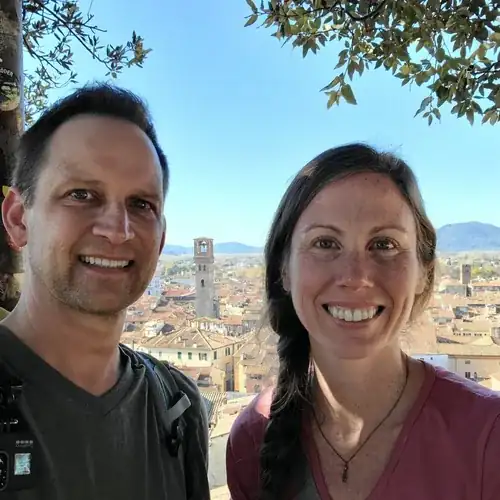
Lucca looks small on a map. Genuinely small. The kind of small where you glance at it, assume two or three hours will cover it, and start planning what else to add to the day. That assumption is wrong, and it catches a lot of visitors off guard.
The walled city packs a full day of walking, climbing, eating, and lingering into a compact historic center where nothing is more than 25 minutes from anything else on foot. The challenge isn’t finding enough to do. It’s sequencing what you do in an order that makes sense logistically and experientially — so you’re not backtracking, fighting midday crowds at the wrong sites, or arriving at a church during a wedding.
This itinerary runs morning to evening. It tells you what to see, when to see it, what it actually costs in 2026, and where the common planning mistakes happen.
- Walk the walls first thing in the morning. The east and north sections offer the best light and mountain views, and doing the loop early orients you to the city layout before you descend into the streets.
- Torre Guinigi tickets cost €8 in 2026. Older blog posts quoting €5 to €6 are outdated — budget accordingly and verify current pricing before you go.
- Pizzeria da Felice on Via Buia is closed Sundays. If your visit falls on a Sunday, adjust your lunch plan to Pizzeria Pellegrini near Piazza San Michele instead.
- The Piazza dell’Anfiteatro is built over a Roman amphitheater, not inside standing ruins. The oval shape is what survives at street level — adjust expectations before you walk through the archway.
- The “Puccini e la sua Lucca” concert at Chiesa di San Giovanni runs nightly at 20:00 for €25 per person and works as a natural end point for the day. Same-day tickets are available, but booking ahead removes the guesswork in peak season.
- Many small shops and churches close for a long midday break. Plan church visits for the morning or late afternoon, not the middle of the day.
Getting Your Bearings: Arriving at the Walls and Entering the City
Lucca’s train station sits just outside the walls, which means your first view of the city is the walls themselves: a thick, tree-lined ring of Renaissance stonework that doesn’t look like a fortification so much as a raised park surrounding everything. Porta San Pietro is the closest gate to the station, roughly five minutes on foot, and it drops you almost directly into the historic center.
From Porta San Pietro, Piazza Napoleone is five to seven minutes on foot. The Duomo is eight to ten minutes. Piazza dell’Anfiteatro, reached via Via Fillungo, is around twenty minutes. Nothing inside the walls is more than 20 to 25 minutes’ walk from anything else, which means the entire historic center is navigable without a map after a single loop.
If you want to combine the wall walk with a bike, Biciclette Poli at Piazza Santa Maria 42 rents bikes daily from 08:30 to 20:00. The day’s sights are all walkable, so a rental isn’t necessary — but it’s worth knowing the option exists if you want to do the full wall loop faster and still have time for everything else.
Morning: Walk the Walls First
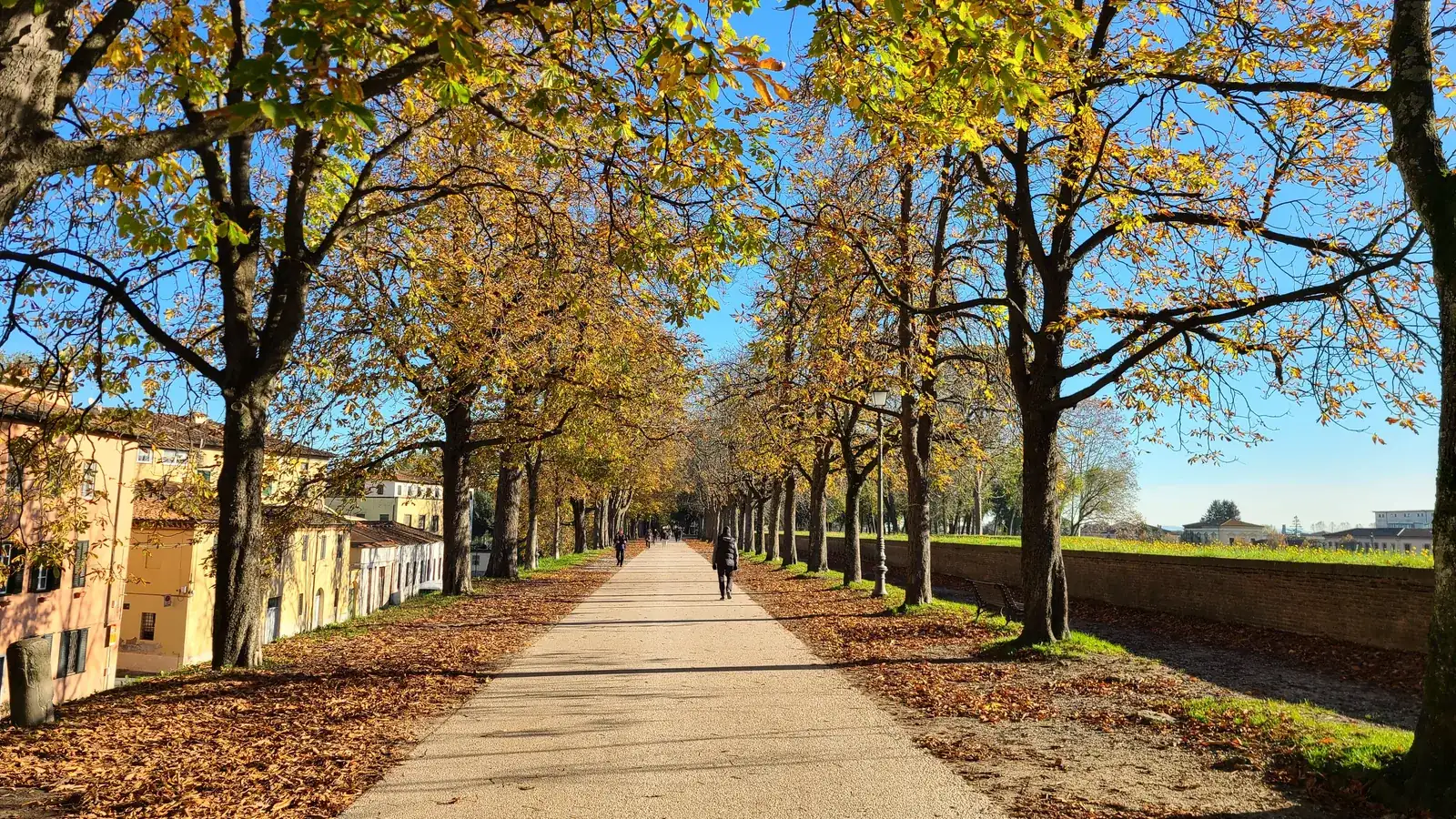
The Mura di Lucca — also called Le Mura Urbane — are one of the most intact sets of Renaissance city walls in Europe. The full loop is 4 to 4.2 kilometers, free to walk, and open around the clock. Walk them first. Not because they’re the most visually dramatic thing in Lucca, but because doing the loop before you descend into the streets gives you a working mental map of the city that makes everything else easier to navigate.
The surface is wide, flat, and tree-lined. Plane trees create a dappled canopy overhead, and the bastions along the route — Baluardo San Colombano near Porta Elisa, Baluardo San Salvatore on the western side, Baluardo San Paolino in the southeast — have grassy lawns and benches where people actually stop and sit. This isn’t a tourist corridor. Families are out walking dogs. Students are cycling to class. Elderly residents are doing laps. It functions like a neighborhood park that happens to be elevated above an entire medieval city.
An uninterrupted loop takes approximately one hour on foot. With stops, expect 75 to 90 minutes. The inward views are the ones that pull your attention: a dense carpet of red-tiled rooftops, the Torre Guinigi and Torre delle Ore rising above the skyline, and the occasional visible line of laundry strung across a back courtyard. The outward views open onto countryside and hills, with the Acquedotto Nottolini visible on the southern side.
Cyclists share the walls and move faster than you expect. Keep right as a pedestrian — this is how the space actually functions, and ignoring it will result in a near-miss within the first ten minutes.
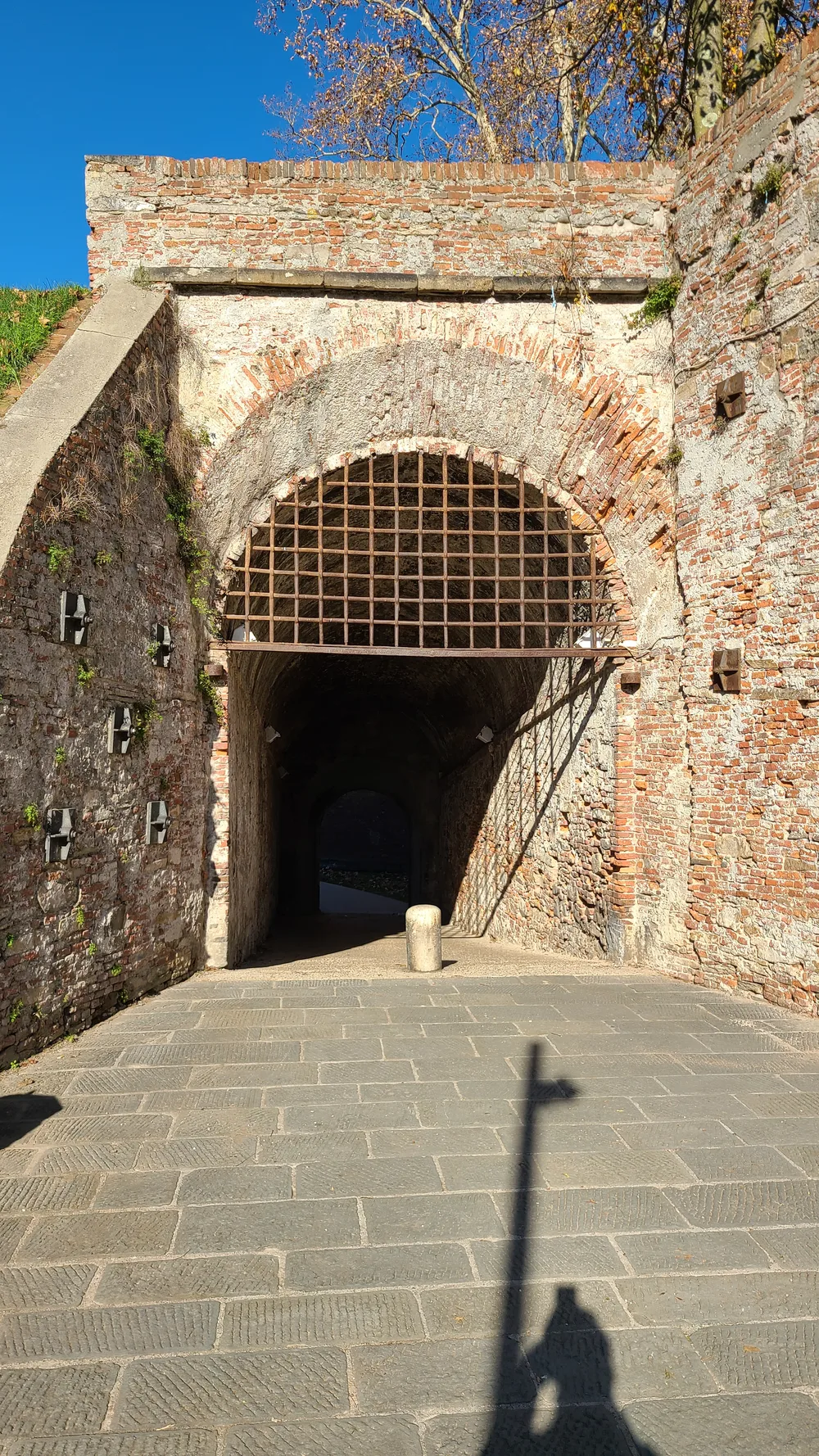
Timing your loop matters for the views. The east and north walls are best in the morning, when the light hits the Apuan Alps and you’re walking into the sun rather than away from it. The west and south walls are best in late afternoon when the sun drops behind the mountains and lights up the rooftops. Ramp access is available at Porta San Pietro, Porta Elisa, Porta Santa Maria, and Porta San Donato — useful if you want to split the loop rather than complete it all at once.
Mid-Morning: The Duomo and the Volto Santo
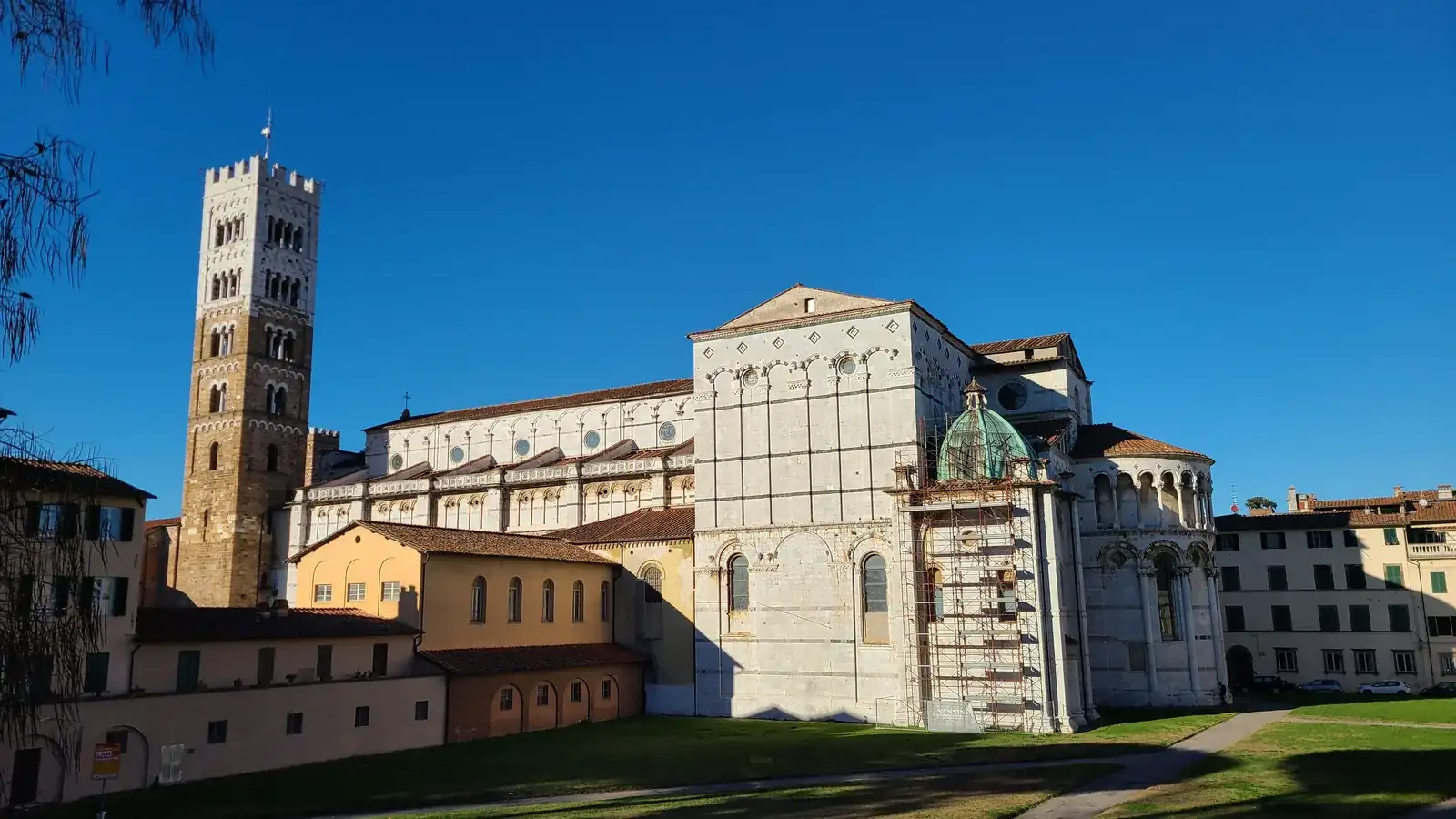
The Duomo di San Martino on Piazza San Martino is the anchor of a morning in Lucca. The facade is white-and-green marble with an asymmetrical arrangement that comes from the bell tower being built before the church, forcing the architects to work around it. The interior is cool and dim, with the smell of incense and old stone.
This is where the Volto Santo di Lucca lives: a large wooden crucifix with eyes described accurately as following you as you move around the space. Candles are typically lit at its base. Works by Tintoretto are inside. Allow 30 to 45 minutes for the interior alone, and longer if you’re adding the museum and bell tower.
Ticket pricing in 2026: €3 for the cathedral only, €10 for a combined ticket covering the cathedral, museum, bell tower, and Roman archaeological site. Standard hours run Monday through Friday 09:30 to 17:00, Saturday 09:30 to 18:00, and Sunday 12:00 to 18:00.
Hours can shrink in winter, and closures for mass and weddings override posted times without much notice. Arriving early in the morning dramatically reduces the chance you’ll walk up to a closed door or a ceremony in progress.
Mid-Morning: San Frediano and San Michele
Lucca has more churches than most cities twice its size, and on a single day you don’t need to see all of them. The two worth targeting alongside the Duomo are San Frediano and San Michele in Foro, but they reward different timing.
Basilica di San Frediano sits on Piazza San Frediano and earns its visit for one thing: the large golden Byzantine-style mosaic covering most of the facade. The mosaic faces east, which means morning light hits it at a low angle and the gold sections genuinely glitter. In flat midday light, that effect disappears almost entirely. Entry is free, and the interior takes about ten to twenty minutes to walk through. Do this in the morning as part of the same loop as the Duomo rather than backtracking for it later.
Chiesa di San Michele in Foro sits on Piazza San Michele, one of the busiest crossroads in the historic center. The facade is ornate layered marble, built on the site of the Roman forum. Mid-morning is probably the worst time to see it — the facade is most dramatic in late afternoon when the light rakes across the marble, or at night when it’s lit from below. If you pass through the piazza in the morning on your way between other sights, note it. Plan to come back in the evening. It’s a two-minute detour on the way to dinner, not a separate stop that requires replanning the afternoon.
Lunchtime: Where to Eat Without Wasting the Middle of Your Day
Midday in Lucca is when the city’s long break culture kicks in. Smaller shops pull their shutters down. Some churches close. The move is to treat lunch as a deliberate pause rather than a rushed gap between sights.
For a single-day visit, Pizzeria da Felice on Via Buia 12 is the most efficient and locally authentic midday option available. Counter service. Thin Lucchese pizza sold by weight, sliced and weighed right in front of you. The cecina — a chickpea flatbread that’s oily, salty, and nutty — is typically eaten with black pepper, and it’s what Lucca residents actually eat at noon. Hours are Monday through Saturday 12:00 to 14:30 and 16:00 to 20:30.
Pizzeria da Felice is closed on Sundays. If your visit falls on a Sunday, the alternative is Pizzeria Pellegrini on Piazza San Michele 25, open daily from 10:30 to midnight.
If you want a sit-down lunch, L’Angolo Tondo on Piazza dell’Anfiteatro works in that area. That said, the ring of cafes around the piazza is tourist-oriented and priced accordingly — save your appetite for the side streets rather than eating there out of convenience.
Early Afternoon: Piazza dell’Anfiteatro and the Roman Amphitheatre Beneath It
Piazza dell’Anfiteatro is built on the exact footprint of a Roman amphitheater, and that oval shape is the amphitheater’s most visible legacy. The structure itself is largely underground, absorbed into the medieval buildings that rose above it over centuries.
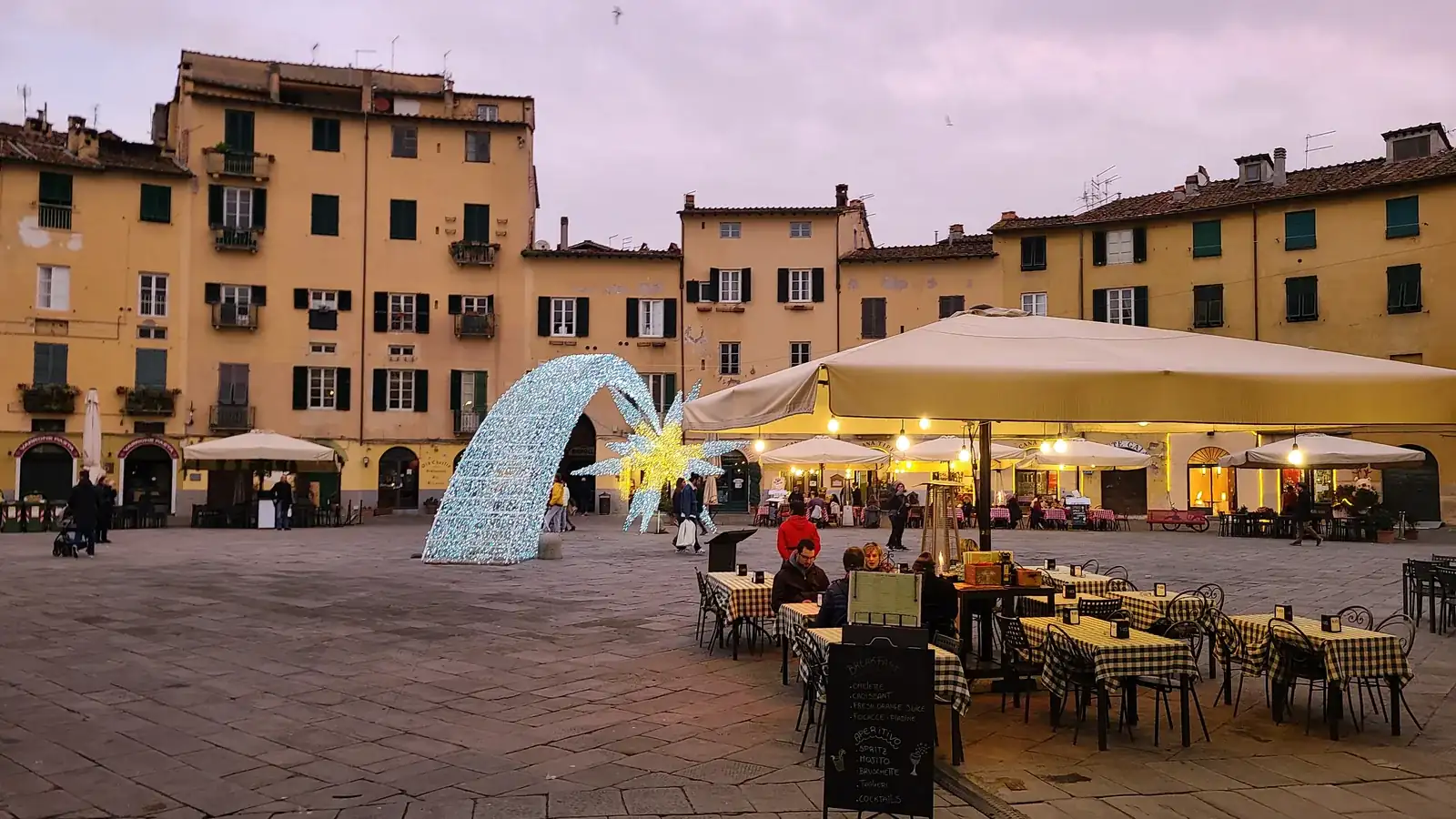
The entry experience is part of what makes it worth seeing. Four narrow archways lead into the space, and the transition from the compressed street into the sudden openness of the oval is one of the more striking moments in the city. Cafes and restaurants ring the interior. Plan 20 to 30 minutes here: walk through the archways, take in the shape, sit briefly with a coffee or an aperitivo. Treat it as a piazza experience rather than a historical site with things to read and examine.
Afternoon: Torre Guinigi or Torre delle Ore — Which Tower Should You Climb?
Both towers are climbable, and they offer genuinely different things from the top. On a single day, you’re choosing one.
Torre Guinigi on Via Guinigi 29 is the more iconic choice. The tower is 45 meters tall with 233 wooden steps and no lift. At the top, holm oak trees grow from the roof — not a couple of scraggly plants in pots, but a real grove with shade and rustling leaves. Birds are at nearly the same level. City noise and bells drift up from below. It’s one of those things that sounds like a quirky fact until you’re actually standing in it. Tickets are €8 in 2026. Allow 30 to 45 minutes including the climb.
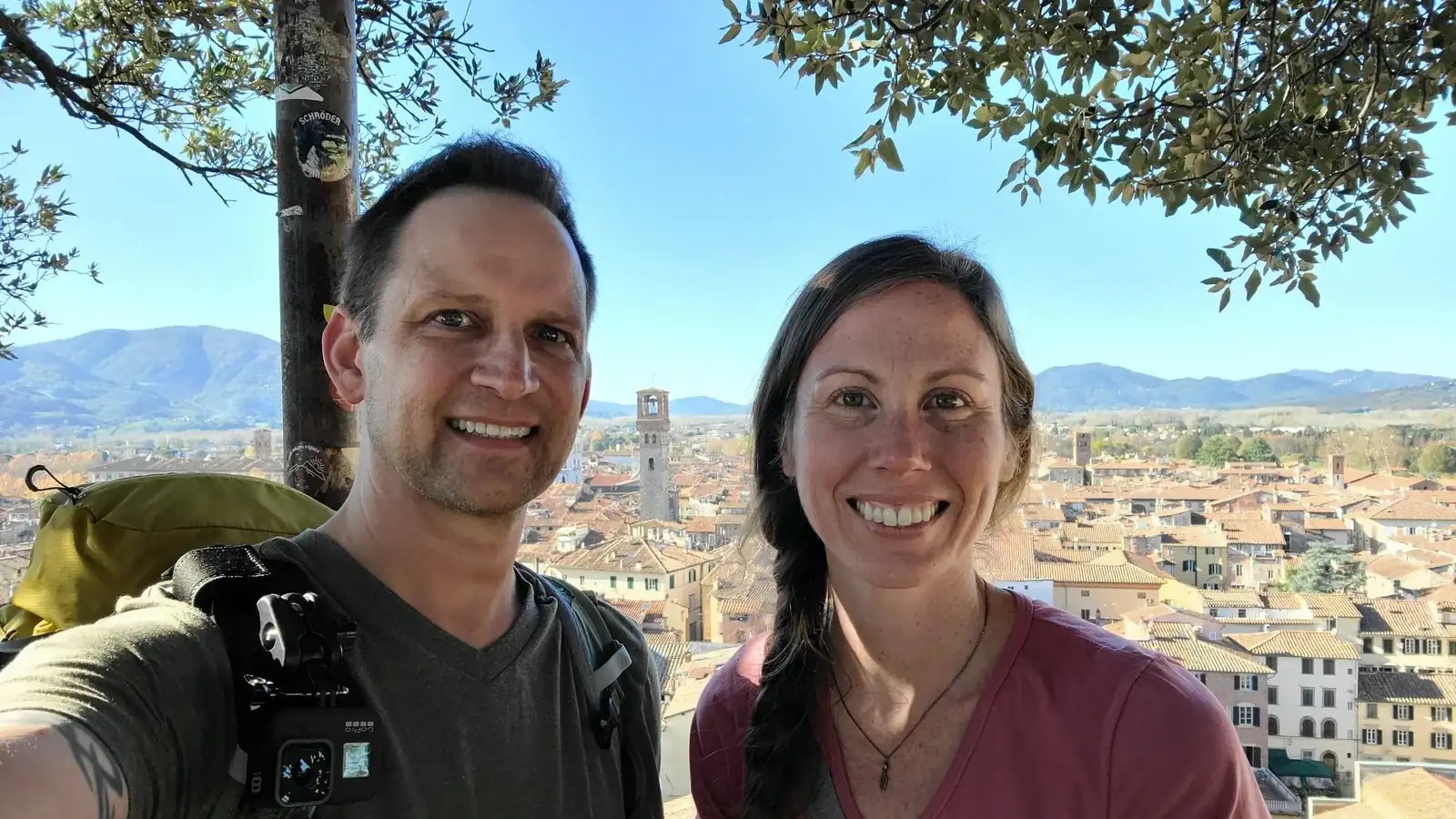
Torre delle Ore is the tallest tower in Lucca and also climbable. The practical reason to choose it over Guinigi: from Torre delle Ore’s top, you can see the Guinigi Tower in the skyline. For anyone wanting a photograph that captures Guinigi’s distinctive oak-topped silhouette from a distance, that’s the shot. It’s also typically less crowded.
For a one-day itinerary, Torre Guinigi is the stronger choice. The oak trees are the more distinctive and memorable experience. Torre delle Ore is the smarter fallback if Guinigi has a long queue, or if the photograph from above matters more to you than the experience of standing in the grove itself.
Late Afternoon: Via Fillungo, Piazza Cittadella, and the Quieter Side of the City
Late afternoon is when the city shifts. The midday lull ends, shops reopen, and the streets fill with a mix of tourists and locals that leans noticeably more local than the morning rush.
Via Fillungo is the main commercial artery running through the historic center, connecting the major piazzas and lined with shops, cafes, and foot traffic. It’s useful as a navigation corridor and worth walking slowly rather than just moving through it. The side streets off Via Fillungo are quieter and more likely to have a cafe where you can sit without competing for a table with a tour group.
Piazza Cittadella sits along this stretch — quieter than the main squares, home to Puccini’s birthplace and a statue of the composer. If you’re planning to attend the evening concert, the Puccini Museum (Casa Natale di Giacomo Puccini) is right here on the piazza.
This is also the moment to swing back through Piazza San Michele. The facade of Chiesa di San Michele in Foro hits differently in late afternoon light than it did in the morning — the layered marble catches the angled sun in a way that justifies the brief detour.
Two sights worth naming even if they don’t belong in a one-day itinerary: Palazzo Pfanner (a 17th-century palace with a Baroque garden, €6) and the Orto Botanico di Lucca (a quiet 19th-century botanical garden near the southeast walls, €5). Both take 30 to 60 minutes and are better suited to a second day. If this is your only day, skip them in favor of the walls and towers.
Evening: Dinner, the Passeggiata, and the Puccini Concert
Via Fillungo and the main squares stay genuinely lively well into the evening. Passeggiata culture is real here: locals walking, gelato shops open late, tables spilling onto the piazzas. The walls are lit at night and used by joggers and couples after dark.
Dinner options across a range of budgets:
- Osteria Miranda — Described consistently as fantastic for dinner. Reservations recommended for evenings and weekends.
- Undici Undici — Bistro with outdoor seating facing the Duomo. Good option if you want the piazza atmosphere without the full fine-dining price point.
- Ristorante Giglio — One Michelin star, cited as relatively affordable for a starred experience. Reservations recommended.
- Buca di Sant’Antonio — Michelin-guide listed, traditional Lucchese setting. Reservations recommended for evenings and weekends.
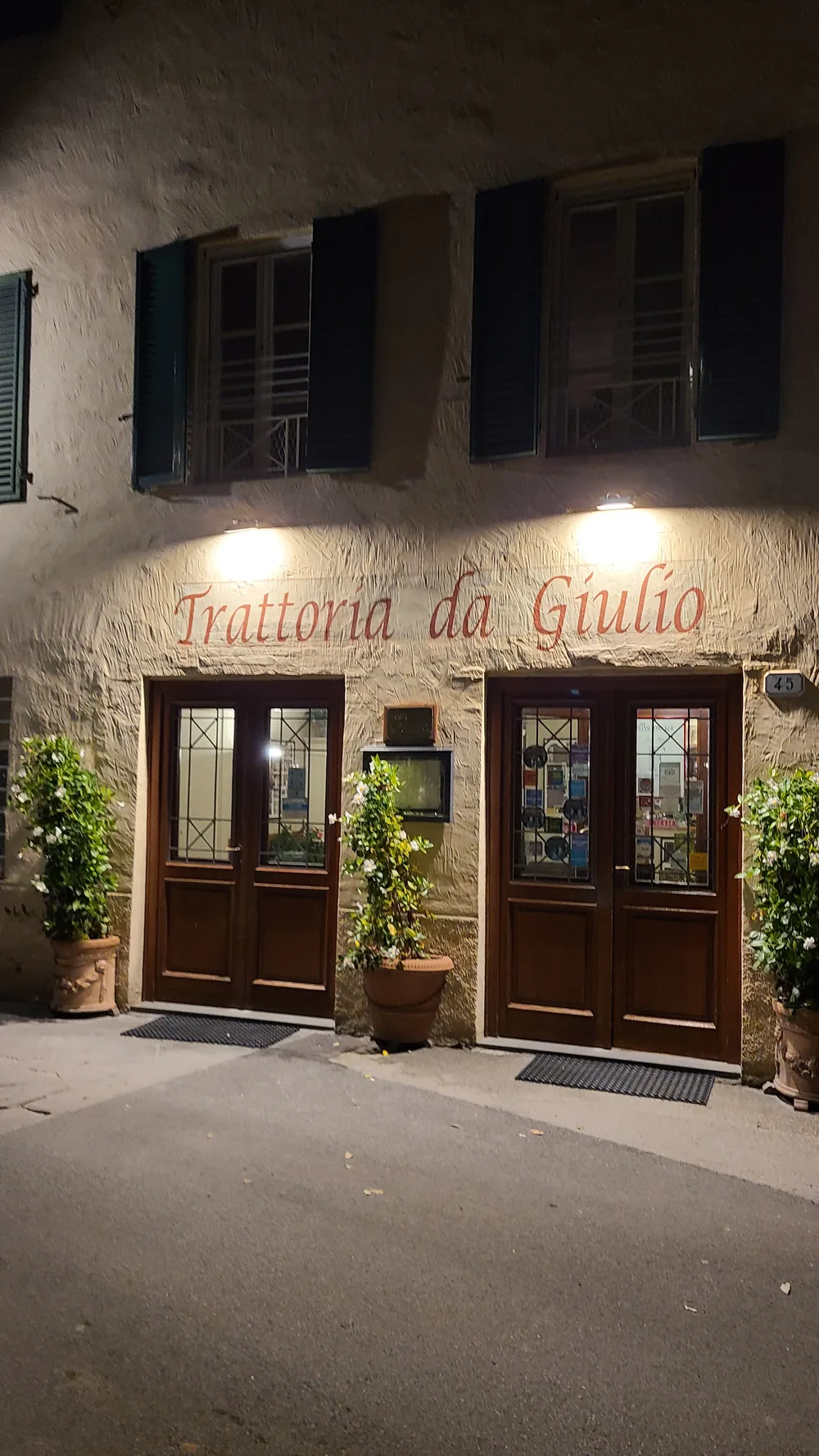
- Trattoria da Giulio / Osteria dal Manzo — Both serve traditional Lucchese cuisine without reservation stress.
After dinner, the “Puccini e la sua Lucca” concert at Chiesa di San Giovanni starts at 20:00 and runs approximately one hour. Tickets are €25 per person. Same-day purchase is possible and works for most visits. In peak season, booking ahead removes the uncertainty of showing up and finding it sold out.
The concert is a natural endpoint for the day. Dinner, then the 20:00 performance, then a short walk back through the lit streets to your accommodation or the train station. The city is quiet enough at night that the walk out feels like a different place than the one you arrived in that morning.
Frequently Asked Questions
What’s the best time of day and direction to walk the walls for views and to avoid bike traffic and crowds?
The east and north walls are best in the morning for light and views toward the Apuan Alps. The west and south walls are best in late afternoon for sunset over the rooftops, with the Acquedotto Nottolini visible on the southern side. Mornings are generally less crowded than mid-day. The walls are open 24/7 and used by joggers and couples at night, so there’s no single wrong time. For cyclists: they share the surface and move faster than walkers expect. Pedestrians keep right.
For towers, if we only want to climb once, should we prioritize Guinigi Tower or Torre delle Ore?
Torre Guinigi is the stronger single climb. The holm oak trees growing from the roof at 45 meters are the defining experience, and the tower is more closely associated with Lucca’s identity. Tickets are €8 in 2026 — verify current pricing before visiting, as older sources quote €5 to €6 and are outdated. Torre delle Ore is the better alternative if Guinigi has a long queue, or if you specifically want a photograph with the Guinigi Tower in the skyline. Both have 200-plus steps with no lift.
Are the Duomo, San Frediano, and the walls accessible for travelers with limited mobility?
The walls have ramp access at Porta San Pietro, Porta Elisa, Porta Santa Maria, and Porta San Donato. The surface is wide and flat — one of the more accessible wall walks you’ll find at any Italian city. The Duomo interior is accessible at ground level; the bell tower involves stairs and is not. San Frediano and San Michele are both accessible at ground level for facade and basic interior visits. Torre Guinigi has 233 wooden steps and no lift, making it unsuitable for those who can’t manage a sustained stair climb.
Is it realistic to do the Puccini concert same-day, or should tickets be booked in advance?
Same-day purchase is confirmed as possible and works for most visits. Concerts run nightly at 20:00 at Chiesa di San Giovanni, lasting approximately one hour, at €25 per person. During peak summer months, booking ahead removes uncertainty if the concert is a firm part of your plan. For off-season visits or anyone flexible about which evening they attend, same-day is fine.
What do the Guinigi Tower tickets actually cost in 2026, and why do older sources say something different?
Current 2026 pricing is €8. The €5 to €6 figures that appear on older blogs and travel sites reflect what the tower cost before a recent price increase. Visitors sometimes arrive expecting a cheap climb and budget accordingly — the gap is noticeable enough to mention. Verify current pricing before your visit and expect possible queues in peak months, particularly in the late morning hours when the tower sees its heaviest foot traffic.