
You’ll find Bergerac isn’t just another French town—it’s where medieval charm meets world-class wine country.
Nestled along the Dordogne River, this gem offers everything from Renaissance architecture to lazy riverside picnics.
Whether you’re hunting for that perfect Monbazillac vintage, tracing Cyrano’s footsteps through cobblestone streets, or simply soaking up the laid-back Périgord lifestyle, there’s something here that’ll capture your heart.
- Bergerac’s medieval old town features narrow winding lanes with half-timbered houses, Renaissance architecture, and hidden squares perfect for exploration on foot
- Château de Monbazillac sits just 10 minutes south of town and offers guided wine tastings of world-class sweet whites for €17.50 with panoramic valley views
- The V91 Greenway provides a scenic 38-kilometer mostly flat cycling route along the Dordogne River with easy access from Bergerac’s center
- Cloître des Récollets opens daily from 10:00 AM to 9:00 PM and includes free wine tastings plus a 400-square-meter Cyrano exhibition
- Traditional gabare boat cruises depart June through September for €11-12 and offer 50-minute to 1.5-hour journeys spotting wildlife along the Dordogne
- The Tobacco Museum at Château Henri IV houses Europe’s most extensive tobacco artifact collection with rare pipes and a historic pipe bowl sculpting machine
- Lac de Pombonne, just 5 km away, offers supervised swimming, free parking, and picnic facilities with a beach open daily from 11:30 a.m. to 6:30 p.m. in summer
Wander Bergerac’s Medieval Old Town Streets
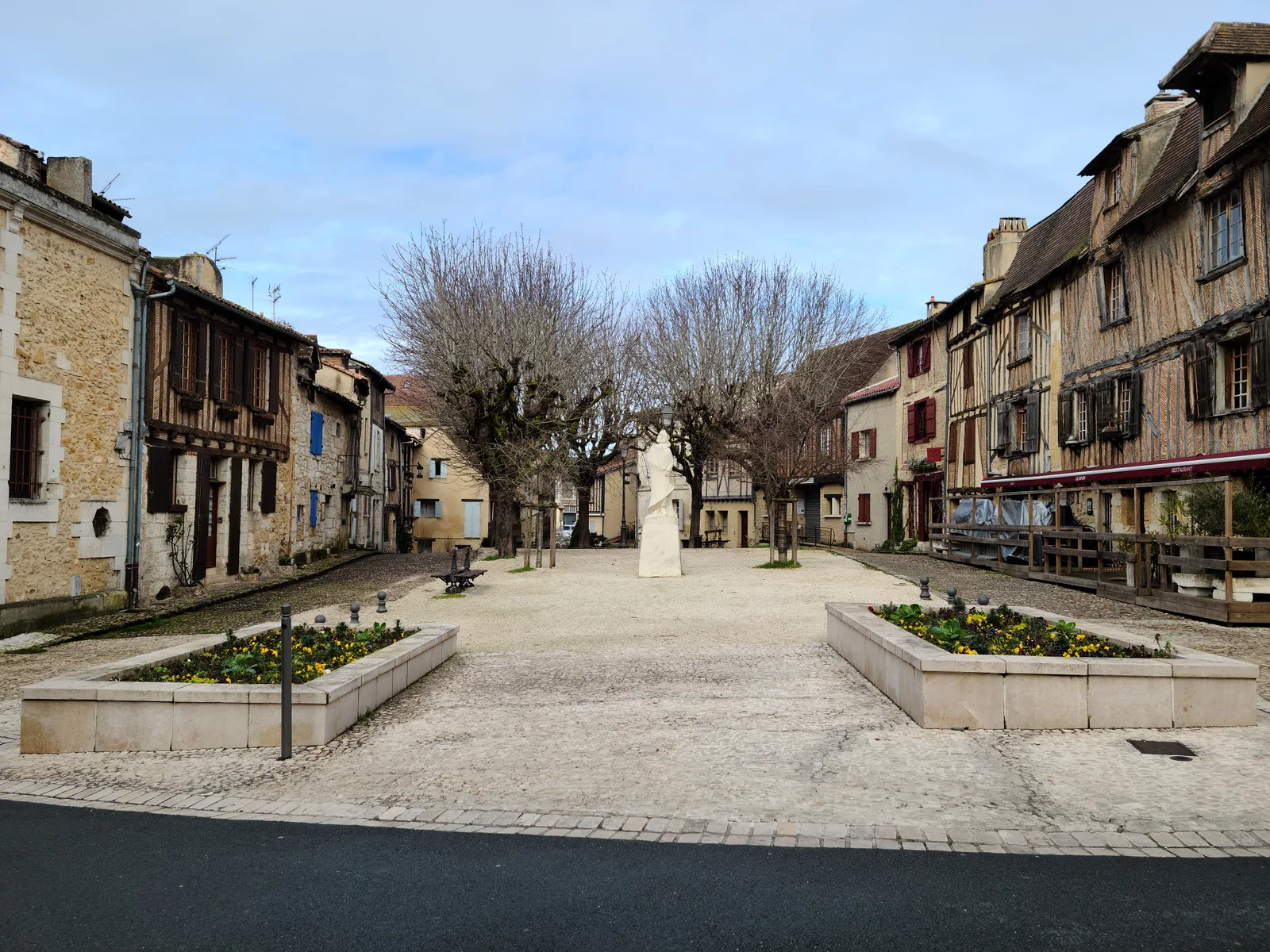
When you step into Bergerac’s medieval old town, you’ll find yourself wandering through a labyrinth of narrow, winding lanes where half-timbered houses lean toward each other like old friends sharing secrets. Start at Place Pélissière, where cafés ring the square and Cyrano de Bergerac’s statue stands guard near Eglise St Jacques.
From here, explore Rue des Récollets, Rue des Conférences, and Rue Neuve d’Argenson, admiring ogival windows and intricately carved doors. Don’t miss Place de la Mirpe’s photogenic boatmen’s houses or the shaded medieval quarter near the old Protestant Temple.
Stroll down to Quai Cyrano, where 17th-century stonework meets the Dordogne’s sparkling waters. You’ll discover underground cellars, restored buildings, and charming squares tucked around every corner.
Pick up a tourist map to help navigate these winding medieval streets and ensure you don’t miss any hidden gems during your exploration.
Tour Cloître Des Récollets for Free Wine Tastings
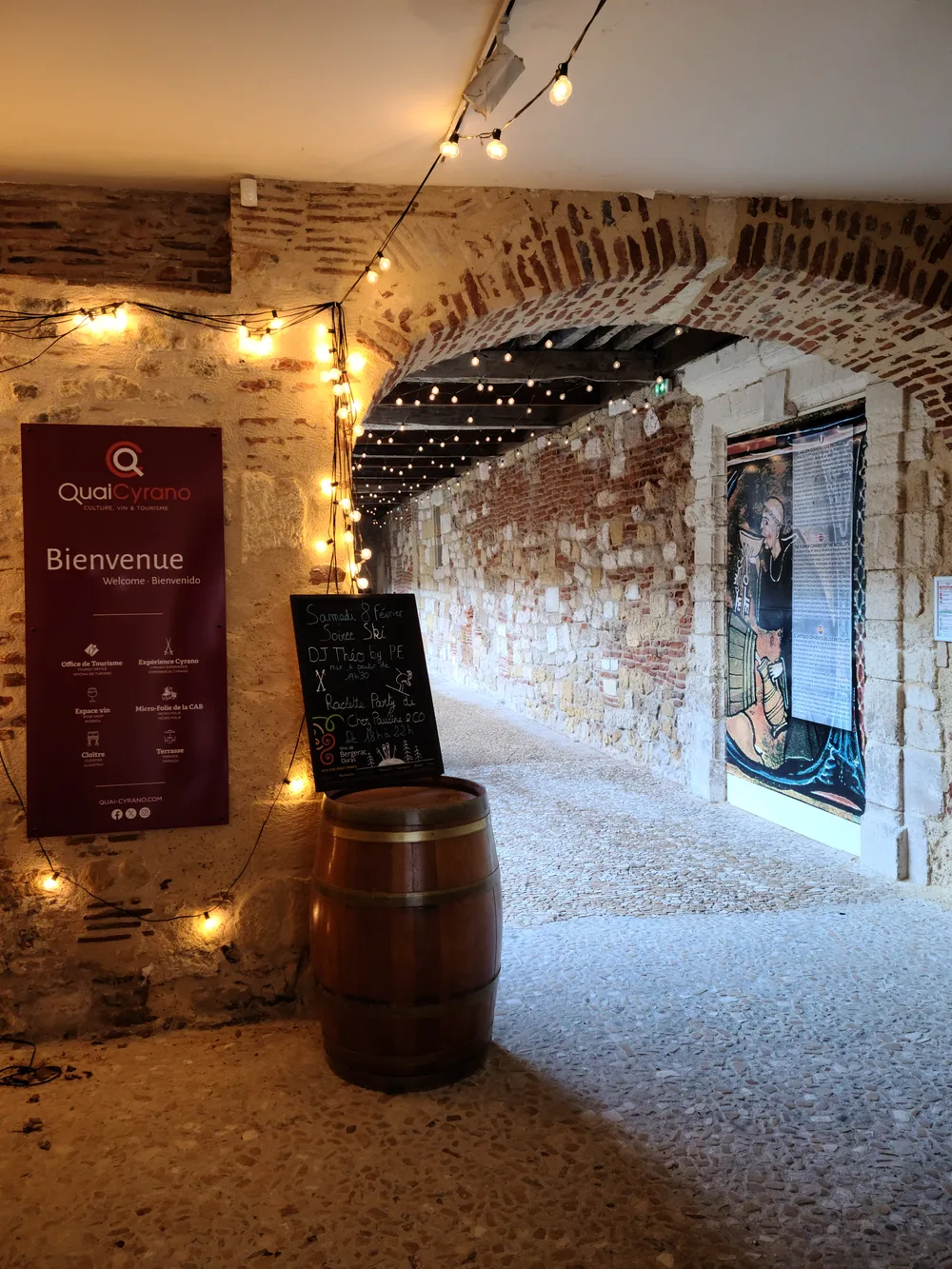
Your stroll through the old town naturally leads you to one of Bergerac’s most impressive landmarks at 1 rue des Récollets. The Cloître des Récollets, built in 1621 under Louis XIII, combines stunning brick-and-stone architecture with wooden balconies and Renaissance galleries. Franciscan friars originally established this convent to convert the Protestant population, and today it houses the Maison des Vins et du Tourisme.
You’ll find professional wine tasting rooms and bars integrated throughout the historic complex. Head to the panoramic terrace overlooking the Dordogne River for spectacular views while sampling regional wines.
The site underwent significant restoration work to preserve its 17th-century galleries and repair structural damages, ensuring visitors can safely explore this architectural treasure. The facility opens daily from 10:00 AM to 9:00 PM, making it easy to fit into your schedule.
The “Cyrano de Bergerac” exhibition spanning 400 square meters is included in your visit to this beautifully restored cultural landmark.
Visit Château De Monbazillac for Sweeping Valley Views
Just 10 minutes south of Bergerac, you’ll find Château de Monbazillac perched high above the Dordogne valley, offering stunning panoramic views that stretch across endless vineyards. This fairytale Renaissance château isn’t just about the scenery—it’s home to world-class sweet wine tastings that showcase the region’s 500-year winemaking heritage. You’ll explore three floors of furnished rooms, discover the secrets of Monbazillac wines in the new museum, then sample the cooperative’s finest offerings while soaking in those sweeping valley vistas. Built in 1550, the château has remarkably survived various wars and revolutions throughout the centuries.
Exquisite Wine Tasting Experience
Perched majestically on a hillside overlooking the Dordogne Valley, Château de Monbazillac beckons wine lovers with its fairytale turrets and world-class sweet wines. You’ll discover the secrets behind Monbazillac’s legendary sweet whites during guided tastings in the Aroma Pavilion. Expert sommeliers walk you through three exceptional wines, revealing the magic of noble rot that transforms grapes into liquid gold each autumn.
You’ll explore color, fruity notes, and floral aromas while learning centuries-old techniques. The château’s wine cooperative has perfected these vintages since 1960, continuing traditions established by Protestant exiles in the 1600s.
Book the Monba’licieux tour for €17.50 to experience this guided tasting, with English tastings available at 3:30 p.m. September and October visitors can choose multiple daily sessions.
The château welcomes visitors daily from 10 a.m. to 7 p.m. during the peak summer months of June through September, with last access at 6 p.m.
Panoramic Dordogne Valley Overlook
The Château de Monbazillac commands attention from its hilltop perch high above the Dordogne Valley, rewarding visitors with breathtaking panoramic views that stretch across miles of rolling countryside. You’ll spot the sweeping vistas immediately as you reach the end of the driveway, where this stunning Renaissance castle dominates the landscape.
From its wooded setting, you can gaze across the region’s rolling vineyards and patchwork fields that define the Bergerac wine country. The castle sits just 10 minutes south of Bergerac, making it an easy drive for spectacular views. Whether you’re exploring the three floors inside or enjoying lunch at the on-site restaurant (open June-October), you’ll have constant access to these far-reaching valley panoramas that make Monbazillac unforgettable.
See Cyrano De Bergerac Statues at Place Pelissiere
At Place Pélissière in Vieux Bergerac’s historic heart, you’ll find one of France’s most photographed literary monuments: a striking bronze statue of Cyrano de Bergerac. Created by Mauro Corda in 2005, this polychrome sculpture depicts Rostand’s famous character with his prominent nose and dramatic plume. You’ll love posing for selfies beneath his proud gaze!
The square itself is charming. It faces the XII-XIX century Église Saint-Jacques and features Font-Ronde, a circular basin that once served as a washhouse. You can toss coins into its turquoise water or relax at nearby terraces.
This statue is part of “Les Pas de Cyrano” trail connecting three Cyrano monuments throughout the city. It’s your perfect starting point for exploring medieval alleys and discovering Bergerac’s literary heritage, even though Cyrano never actually lived here!
Explore the Tobacco Museum at Château Henri IV
Step into the Tobacco Museum at Château Henri IV to discover tobacco’s fascinating 4,000-year journey from ancient American civilizations to modern times. You’ll find an incredible collection of rare artifacts, including ornate pipes, smoking accessories, and vintage tobacco jars that you won’t see anywhere else in Europe. Don’t miss the mesmerizing pipe bowl sculpting machine that demonstrates the intricate craftsmanship behind these historic smoking instruments.
Tobacco’s 4,000-Year History
You’ll see how this plant shaped civilizations culturally, socially, economically, and politically. Life-size models showcase glamorous marketing campaigns featuring fashionable women, while displays reveal the historical divide between smokers and snuff users. The museum documents medicinal applications and ceremonial practices preserved through centuries.
Since its 1983 inauguration, this unique European institution houses collections found nowhere else on the continent. You’ll explore rare artifacts that bring this fascinating saga to life.
Rare Artifacts Collection
The Tobacco Museum’s collection ranks as the most extensive in Europe, housing artifacts you won’t find anywhere else on the continent. You’ll discover rare ceremonial calumets (peace pipes) from indigenous cultures, antique briquets (lighters), and an impressive variety of pipes spanning multiple centuries. The craftsmanship displays showcase intricate tobacco tools from the 17th through 19th centuries that’ll blow your mind.
The collection spans continents, featuring ethnographic pieces from Africa, Asia, and the Americas. You’ll see tobacco plant dryers, historic presses, and authentic models that bring production methods to life. The museum’s ground floor focuses on cultivation equipment, while upper floors house decorative arts and manufacturing tools. Each artifact tells tobacco’s story across 4,000 years of human history.
Pipe Bowl Sculpting Machine
Among the museum’s most fascinating mechanical treasures, a historic pipe bowl sculpting machine demonstrates the ingenious engineering behind 19th-century tobacco craftsmanship. You’ll witness how artisans transformed raw materials into ornate smoking implements that spanned 3,000 years of cultural history. This remarkable device showcases the technical innovation that made Bergerac a tobacco manufacturing hub.
The machine reveals how craftsmen mass-produced decorative pipe bowls while maintaining artistic quality. You can examine its intricate mechanisms and understand how it shaped the region’s tobacco trade legacy. It’s part of the museum’s exceptional collection of consumption objects housed within the 17th-century Maison Peyrarède.
This hands-on display connects you directly to Bergerac’s industrial heritage, where tobacco cultivation still dots the countryside with distinctive drying kilns.
Discover Bergerac’s Wine and River Transport Museum
Nestled along the Dordogne River’s banks, the Musée de la Ville du Vin et de la Batellerie brings Bergerac’s fascinating past to life. You’ll explore this charming half-timbered building that once served as a tavern on the historic port. Inside, you’ll discover how wine trade shaped the region for centuries and learn why the Dordogne River was essential to Bergerac’s growth.
The museum’s exhibits reveal impressive stats—back in 1860, 60,000-70,000 tons of goods traveled these waters annually. You’ll see rare photographs, archives, and carefully chosen artifacts that trace 3,000 years of history. The collections showcase everything from medieval wine culture to river navigation heritage.
Admission is completely free, and you’ll get wine estate recommendations to continue your Bergerac adventure beyond the museum walls.
Cruise the Dordogne on a Traditional Gabare Boat
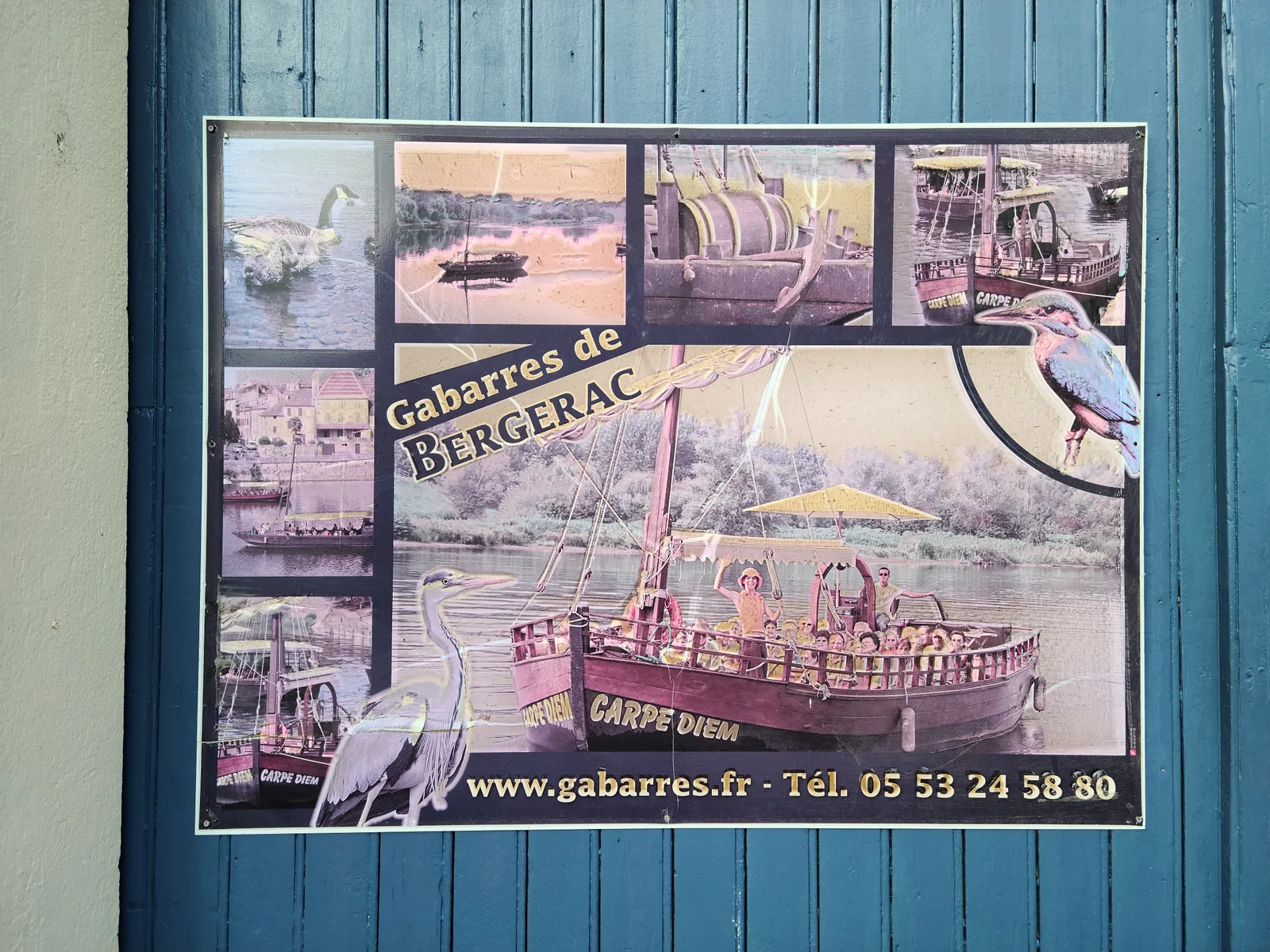
Step aboard a traditional gabare boat and you’ll glide through Bergerac’s history on the same waters that once carried wine barrels and lumber to the Atlantic coast. These flat-bottomed vessels depart from Quai Salvette for 50-minute to 1.5-hour cruises along the Dordogne.
You’ll spot herons, kingfishers, and cormorants while drifting past tree-lined banks and historic quays. The tours run June through September, with extra departures mid-July to late August. Commentary’s available in French, English, and Spanish.
Tickets cost €11-12 (cash only) at the hut opposite the tourist office. The modern motorized replicas maintain their wooden construction and authentic silhouette. In the 18th century, original gabarres made one-way trips—dismantled at journey’s end, their wood sold as firewood while skippers walked home upriver.
Bike Bergerac’s Scenic Riverside Cycle Path
The V91 Greenway stretches 38 kilometers along the Dordogne River from the Tuilières dam straight into Bergerac, offering one of the region’s most relaxing rides. You’ll pedal through shaded paths that keep you cool while enjoying stunning riverside views. The mostly flat terrain makes it perfect for families and casual cyclists.
- Easy access – Start from Bergerac’s center (just 5 minutes to reach the station) or catch a 15-minute train from Sainte-Foy-la-Grande
- Scenic variety – Pass charming villages, vineyards, and bastide towns along the way
- Extended options – Connect to the larger 240-kilometer route stretching from Souillac to Libourne
- Flexible distances – Choose the full 38-kilometer stretch or shorter segments like the 27-kilometer Mouleydier circular
You’ll find clear V91 signposting throughout.
Photograph Half-Timbered Houses in the Historic Center
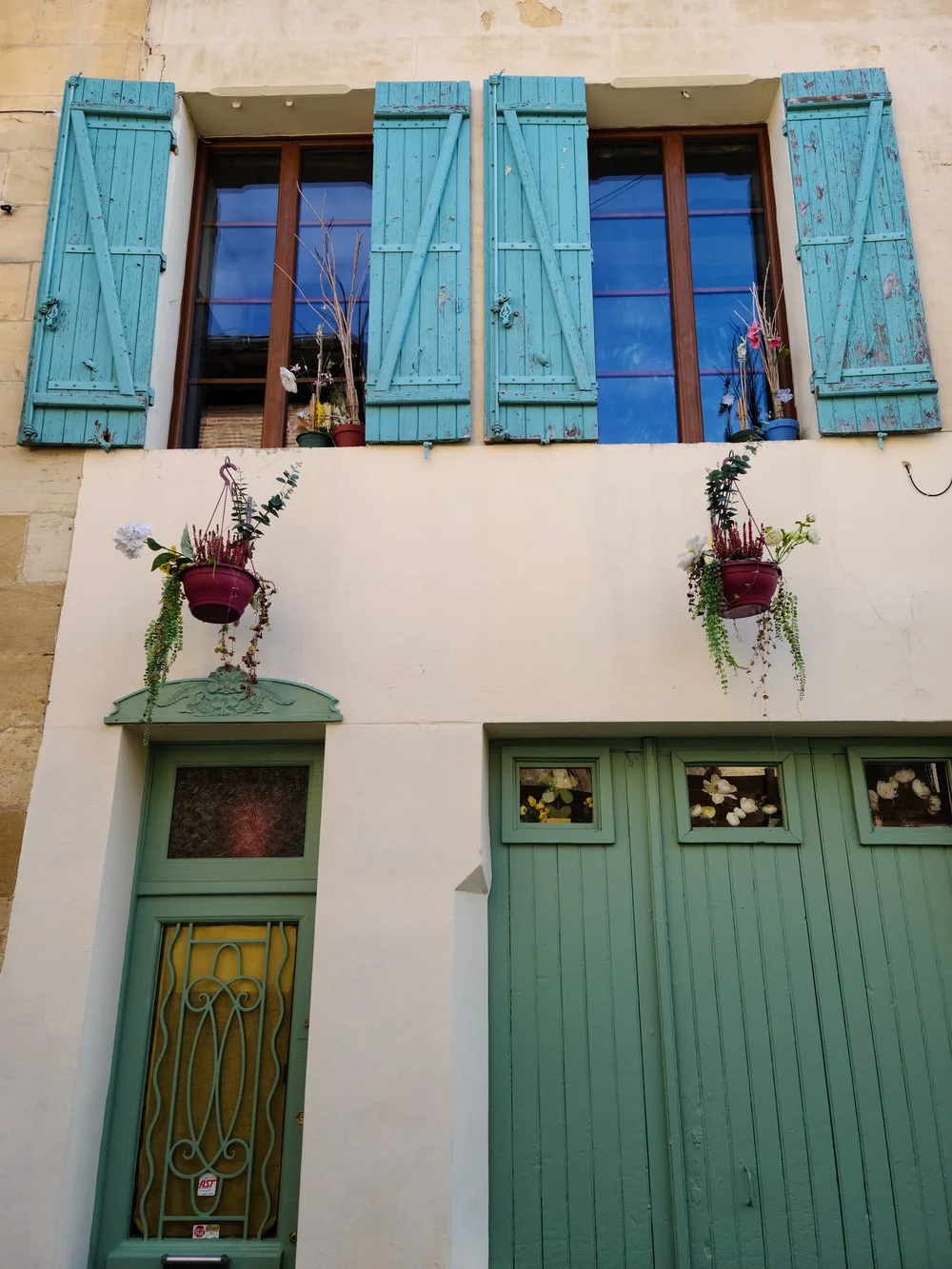
You’ll find Bergerac’s historic center bursting with photogenic half-timbered houses that make every corner a perfect shot. The medieval district’s cobbled streets and charming squares offer endless opportunities to capture intricate wooden facades, ogival windows, and architectural details that transport you back centuries. Early morning or late afternoon provides the best natural lighting to photograph these stunning 16th and 17th-century buildings, especially around Place de la Mirpe and Place Pélissière.
Best Photography Locations
When you’re hunting for that perfect shot, Bergerac’s historic center delivers an embarrassment of riches with its timber-framed beauties. Place de la Myrpe steals the show with the town’s most photographed half-timbered house. You’ll find tranquil, shaded corners perfect for capturing details without crowds.
- Place Pelissiere — Cobbled courtyard with fountain and Cyrano statue for anchoring compositions
- Le Cloître des Récollets — Medieval wooden galleries offer unique angles during free self-guided tours
- Quai Cyrano — Riverside promenade where 17th-century stone meets timber houses along the Dordogne
- Old Town alleyways — Medieval streets showcase ogival windows, carved doors, and textured cobblestones
Don’t miss the narrow streets near the Tobacco Museum. They’re lined with mansions featuring intricate architectural details that make stunning close-ups.
Architectural Features to Capture
Beyond simply finding the right locations, understanding what makes these buildings special will sharpen your photographic eye. Focus on the exposed timber framing that defines these 15th-century facades. You’ll notice intricate patterns where dark wooden beams contrast beautifully against lighter stone and plaster infill.
Capture the shift styles visible throughout the quarter—from pure medieval designs to Renaissance influences. Don’t miss the wooden galleries and columns at Cloître des Récollets, where architectural elements create stunning vertical compositions. The golden triangle between Rue Waldeck-Rousseau and Avenue Aristide Briand offers concentrated examples of half-timbered perfection. Look for details like carved wooden supports and decorative beam arrangements. These features tell Bergerac’s story as a city of art and history, making your photographs meaningful beyond mere aesthetics.
Optimal Lighting Times
Timing transforms ordinary architectural shots into stunning photographs of Bergerac’s half-timbered treasures. You’ll capture the most dramatic images during golden hour when warm light emphasizes timber patterns and medieval textures. Early morning sessions between 6:30-8:00 AM provide soft, directional illumination that reveals every architectural detail.
- Spring and autumn afternoons (4:00-6:00 PM) – Side-lighting creates depth on building facades without harsh shadows
- Rue Saint Clar evenings – Narrow lanes produce striking contrasts between illuminated streets and shadowed timber frames
- Place Pélissière late afternoons (2:00-4:00 PM) – Golden light bathes half-timbered buildings while maintaining plaza brightness
- Winter midday hours – Lower sun angles deliver extended shadow play across historic facades
Shoulder seasons offer consistent conditions with moderate temperatures and predictable lighting patterns.
Attend a Château Wine Tasting in Bergerac’s Countryside
Scattered across rolling hills just outside Bergerac, historic château vineyards open their cellars and tasting rooms to visitors enthusiastic to sample the region’s exceptional wines. You’ll discover family-run estates like Château Terre Vieille, where dynamic guides share their passion during tours priced from 7€ to 29€. Head to Château de Monbazillac for stunning 16th-century architecture paired with tastings from €11.80.
Book Château Feely’s half-day organic vineyard experience at 14h30, including four wine tastings and food pairing lessons. Most châteaux provide English-language tours and welcome last-minute bookings, but booking in advance ensures your preferred time slot.
Domaine de Grange Neuve offers virtual reality tours that bring wine-making history to life. You’ll meet local winemakers, walk through sun-drenched vines, and learn everything from grape to bottle.
Admire Bronze Sculptures at the Costi Museum
Tucked beneath a vaulted cellar ceiling in the historic Petite Mission, you’ll find nearly 60 bronze and plaster sculptures that showcase Constantin Papachristopoulos’s artistic mastery. Known as Costi, he trained under renowned sculptor Antoine Bourdelle and created these remarkable pieces between 1929 and 1973.
- Sensitive portraits — Capture human emotion in bronze
- Elegant homages to the feminine form — Showcase graceful artistry
- Striking male head studies — Display technical mastery
- Intimate plaster works — Reveal the artist’s creative process alongside finished bronzes
You’ll appreciate how the warm stone cellar enhances each sculpture’s beauty. This hidden gem earned Tripadvisor’s Travelers’ Choice award, recognizing it among the top 10% of attractions. Best of all, entry’s completely free! Most visitors spend just 5-10 minutes here, making it perfect for a quick cultural stop.
Swim and Picnic at Bergerac’s Lac De Pombonne
Just 5 km from Bergerac’s center, you’ll discover Lac de Pombonne—a stunning 55-hectare natural park that’s become the go-to summer escape for locals and visitors alike. The supervised sandy beach welcomes swimmers daily from 11:30 a.m. to 6:30 p.m. throughout summer, with shallow areas perfect for children and deeper zones for confident swimmers. You’ll love spreading out your picnic blanket in the shaded spots along the wide beach. The on-site Guinguette serves delicious local cuisine and hosts lively musical evenings right on the sand. Beyond swimming, you can explore hiking trails through natural woodland or observe birds from dedicated observatories. Free parking makes access easy, and dogs are welcome on leashes outside the swimming zone.
Walk Across Vieux Pont for Dordogne River Views
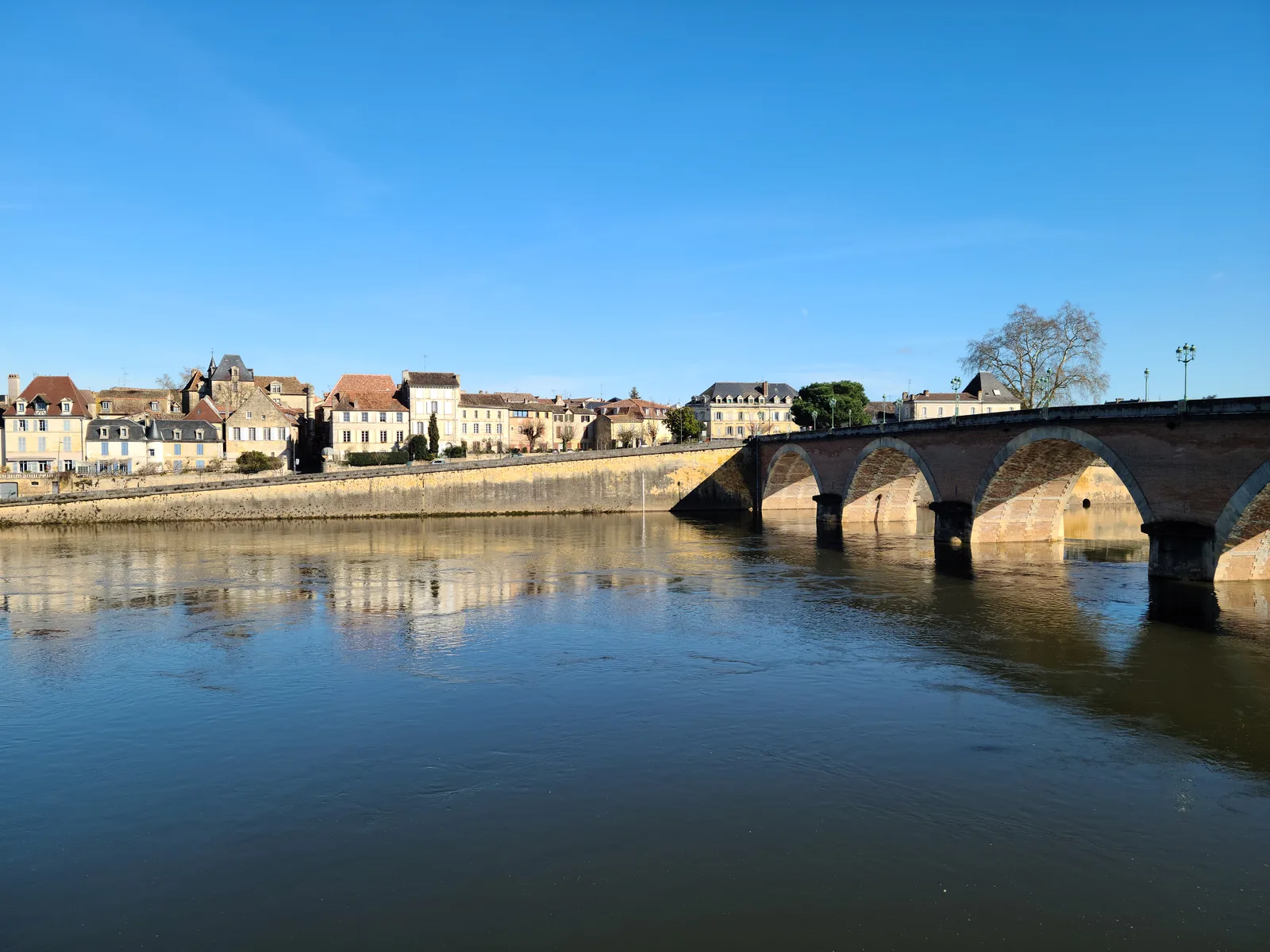
Connecting both sides of Bergerac since 1825, the Vieux Pont (also called Pont St.-Jean) stands as the town’s beloved river crossing. You’ll love strolling across this elegant stone and brick bridge, which replaced the original Grand Pont destroyed by floods in 1783. The town went without a bridge for 42 years before this beauty was built.
- Panoramic views — Of the Dordogne River stretching toward the countryside
- Charming 19th-century style lamps — Line the bridge for romantic evening walks
- Perfect photo spots — Capture river traffic and historic buildings
- Views of the Old Port — And picturesque riverbanks from multiple vantage points
The bridge’s medieval-inspired arches and stonework create a romantic atmosphere that’s ideal for leisurely walks. You’ll find access points on rue de l’Ancien Pont and rue Hyppolite Taine.
Conclusion
You’ve got an incredible adventure waiting for you in Bergerac! From wandering those charming medieval streets to sipping world-class wines at historic châteaux, you’ll find something special around every corner. Don’t forget to snap photos with Cyrano’s statue and take in those stunning Dordogne views. Whether you’re here for the culture, the wine, or just to relax by the lake, Bergerac won’t disappoint. Pack your bags and get ready for an unforgettable French escape!