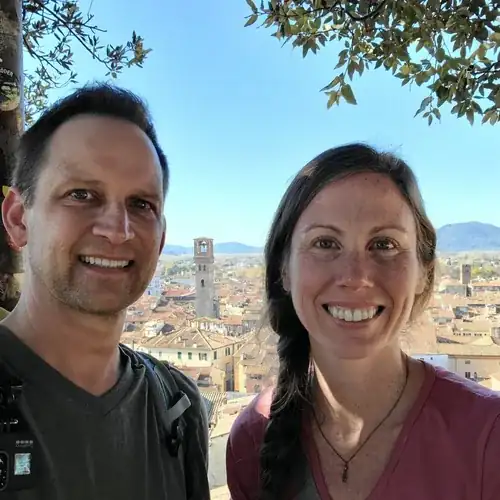
You’ll find yourself enchanted the moment you step into Lucca, a Tuscan gem that’s somehow escaped the overwhelming tourist crowds of its famous neighbors. This walled medieval city offers something genuinely special—intact Renaissance fortifications you can actually walk on, hidden piazzas that surprise you around every corner, and towers that reward your climb with unforgettable views.
Whether you’re planning a day trip or a longer stay, here’s what makes Lucca worth your time.
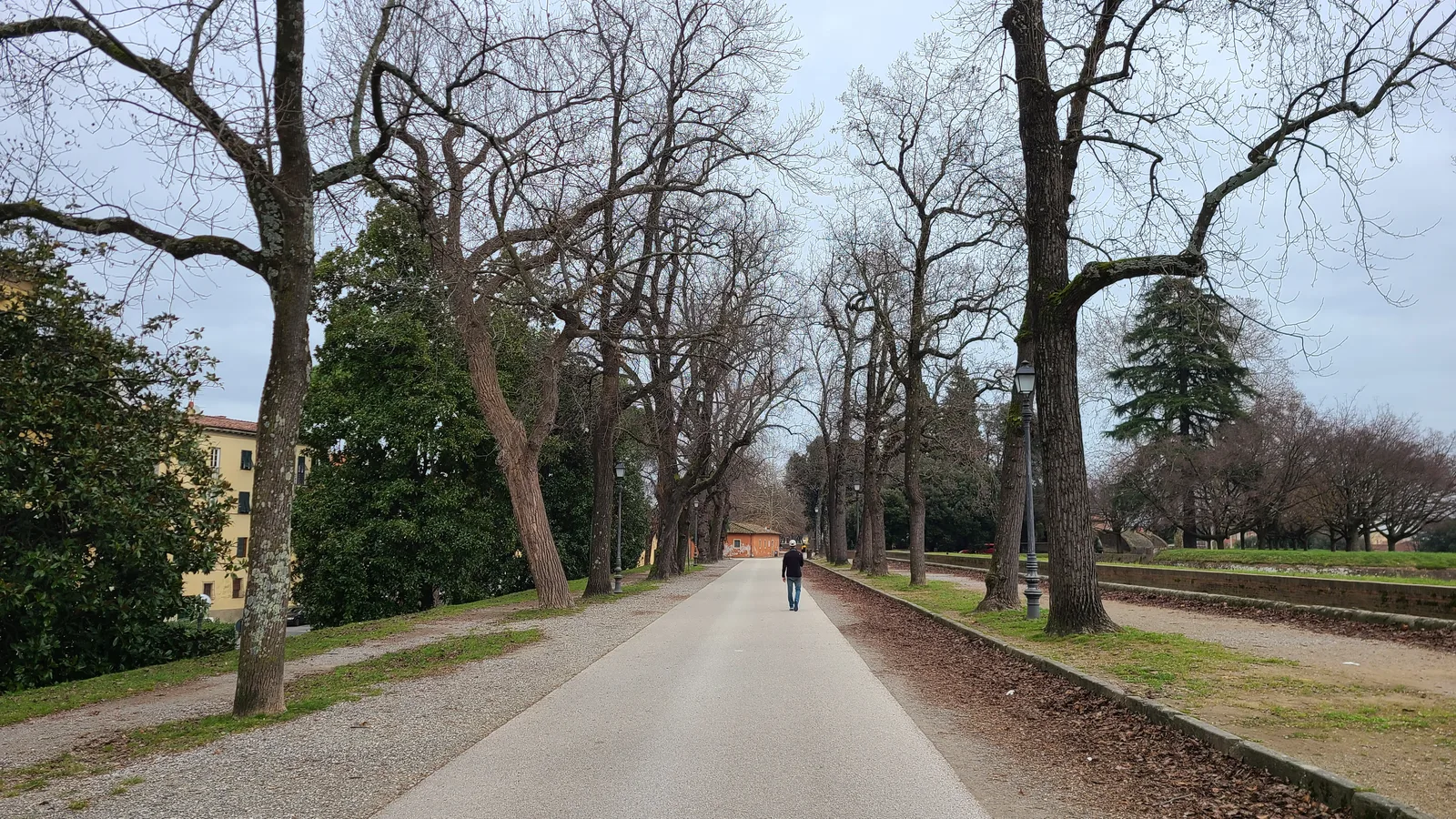
- Lucca’s Renaissance city walls form a complete 4.2-kilometer circuit that takes 60–90 minutes to walk or 25–35 minutes to cycle, with sweeping views and tree-lined pathways
- Piazza dell’Anfiteatro preserves a 2,000-year-old Roman amphitheater as a ring of medieval buildings with original Roman vaults visible at ground level
- The Cathedral of San Martino houses the Volto Santo, Europe’s oldest surviving wooden crucifix, believed carved by Nicodemus in 782 and brought from the Holy Land
- Torre Guinigi’s rooftop garden features ancient holm oak trees that have thrived for over 400 years and offer panoramic city views from 200+ steps up
- Palazzo Pfanner showcases an 18th-century Italian garden designed by Filippo Juvarra with marble statuary and geometric gravel paths framed by lemon trees
- Lucca’s street grid still follows the ancient Roman orthogonal plan, with Roman foundations underlying the Renaissance walls
Walk or Bike Lucca’s Renaissance City Walls
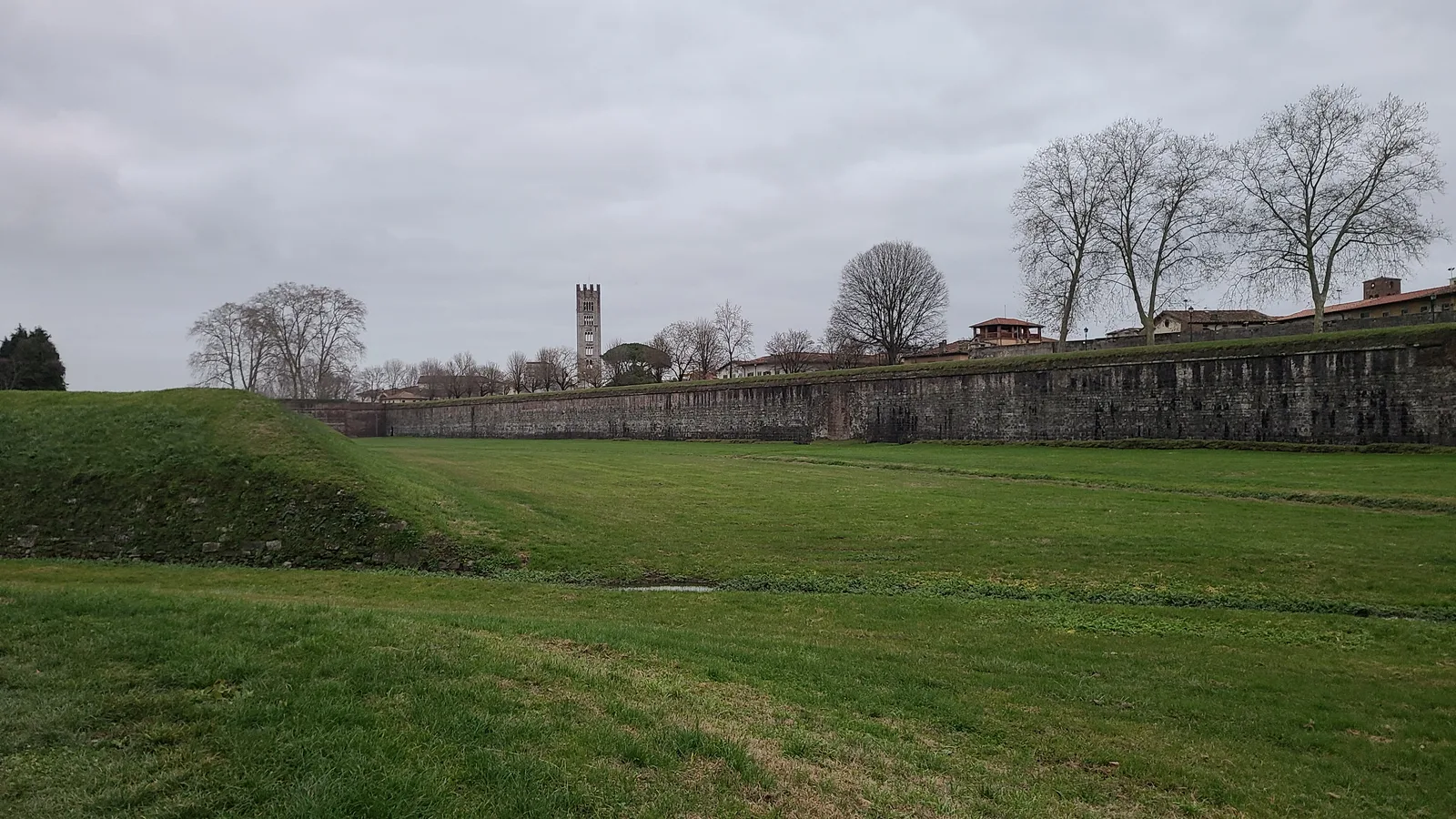
When you circle Lucca on foot or by bike, you’re walking atop one of Europe’s best-preserved Renaissance fortifications—a complete ring of 16th and 17th-century military walls that never fired a shot in anger. The 4.2-kilometer circuit sits 12 meters high and 30 meters wide, lined with plane trees, oaks, and magnolias that shade the broad promenade.
You’ll complete the loop in 60–90 minutes walking or 25–35 minutes cycling, passing ten bastions and historic gates along the way. The car-free path offers sweeping views of church towers, terracotta rooftops, and distant hills.
The walls proved their worth in 1812 when mighty doors closed hermetically to protect Lucca from the flooding River Serchio, keeping the city dry while surrounding areas were submerged. Access ramps at several gates let you hop on for short sections or tackle the full ring—Lucca’s favorite green space doubles as your scenic track.
Early morning or late afternoon provides the most comfortable temperatures and the best light for photography along the entire circuit.
Explore Piazza dell’Anfiteatro and Roman Landmarks
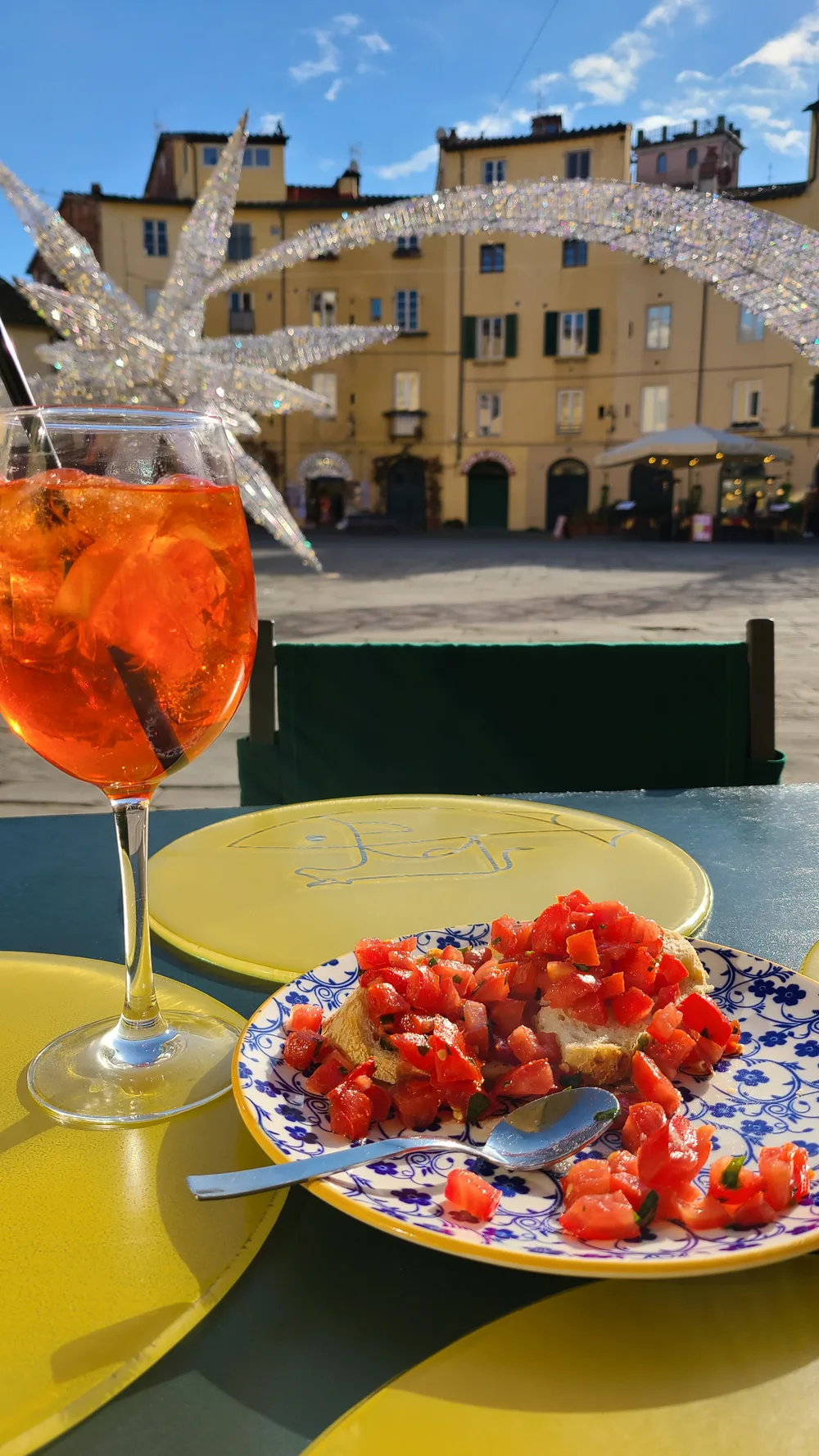
Step off the tree-lined walls and into Lucca’s most surprising public space—Piazza dell’Anfiteatro, where a 2,000-year-old Roman amphitheater lives on as a ring of butter-yellow buildings. You’ll enter through one of four medieval gateways that punch through the continuous oval of houses.
Look closely at the ground-level arches—they’re original Roman vaults, now filled with cafés and gelaterias. The arena once held 10,000 spectators watching gladiators; today you’ll find locals sipping espresso at outdoor tables.
Beyond the piazza, Lucca’s Roman bones show everywhere. The street grid still follows the ancient orthogonal plan. Head to Piazza San Michele, built over the old Roman forum.
The amphitheater’s remains sit more than two meters below today’s street level, a hidden layer of ancient history beneath the vibrant square. Even the Renaissance walls rest on Roman foundations, layers of history stacked beneath your feet.
Visit the Duomo and San Michele’s Romanesque Façade
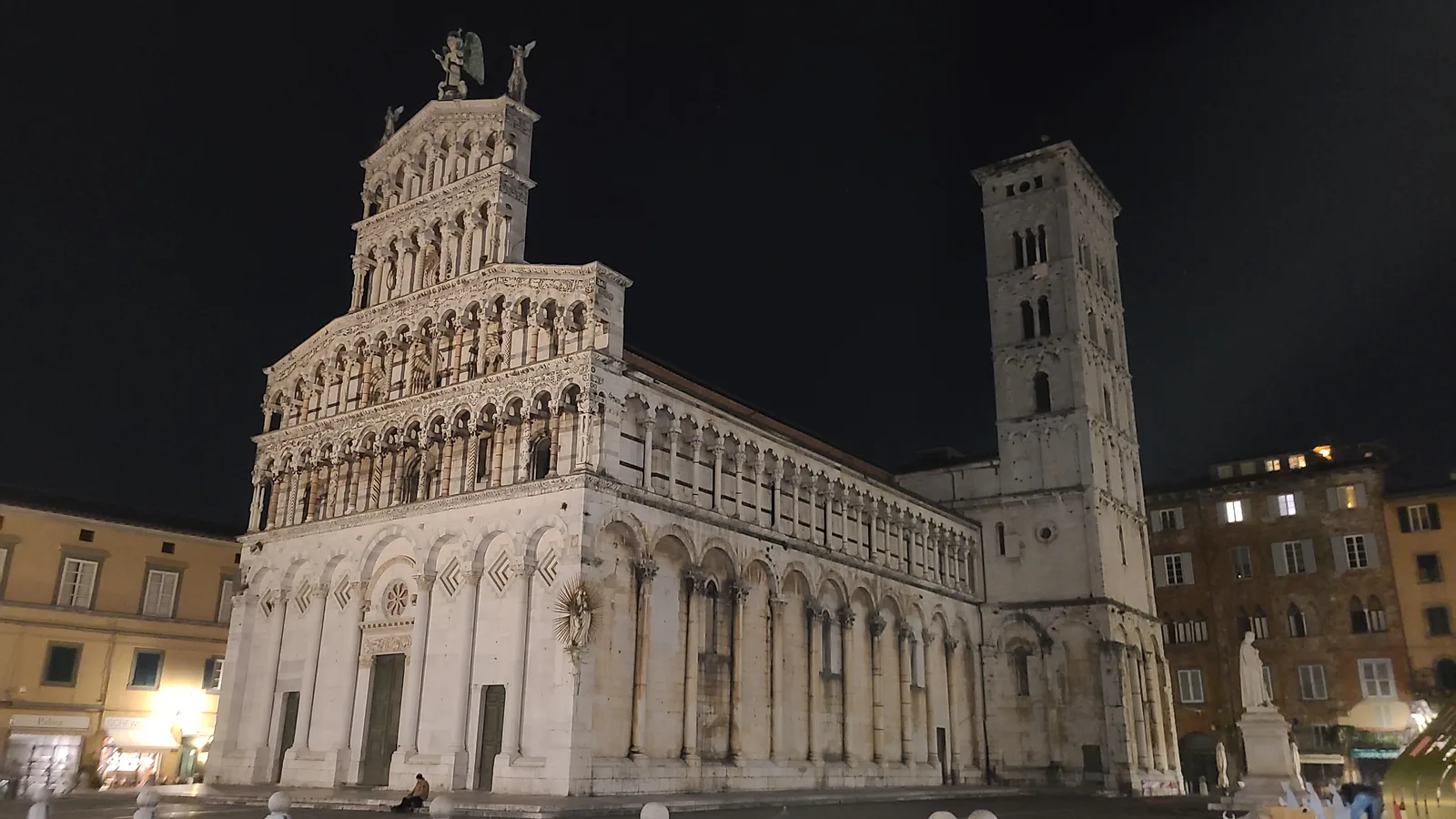
As you walk through Lucca’s medieval streets, you’ll spot the Cathedral of San Martino rising above the terracotta rooftops—a stunning blend of Romanesque and Gothic architecture that’s been stopping pilgrims in their tracks since 1070. The facade’s polychrome marbles shimmer in white, pink, and green, creating a striped masterpiece designed by architect Guidetto da Como in 1204.
Don’t miss the intricate bas-reliefs decorating the three-arch portico, depicting Saint Martino’s stories and the cycles of the months. Inside, you’ll find Nicola Pisano’s dramatic Deposition from 1260 and a legendary cedar-wood crucifix believed to be carved by Nicodemus himself.
The Volto Santo is Europe’s oldest surviving wooden crucifix, brought from the Holy Land to the port of Luni in 782 and mysteriously moved to the cathedral, where it has drawn pilgrims for over 1,200 years.
Look for the Volto Santo, Europe’s oldest surviving wooden crucifix, which was brought from the Holy Land to the port of Luni in 782 and later mysteriously moved to this cathedral. The cathedral sits along the Via Francigena pilgrimage route, where money changers once traded with travelers beneath its magnificent arches.
Climb Torre Guinigi and Torre Delle Ore for City Views
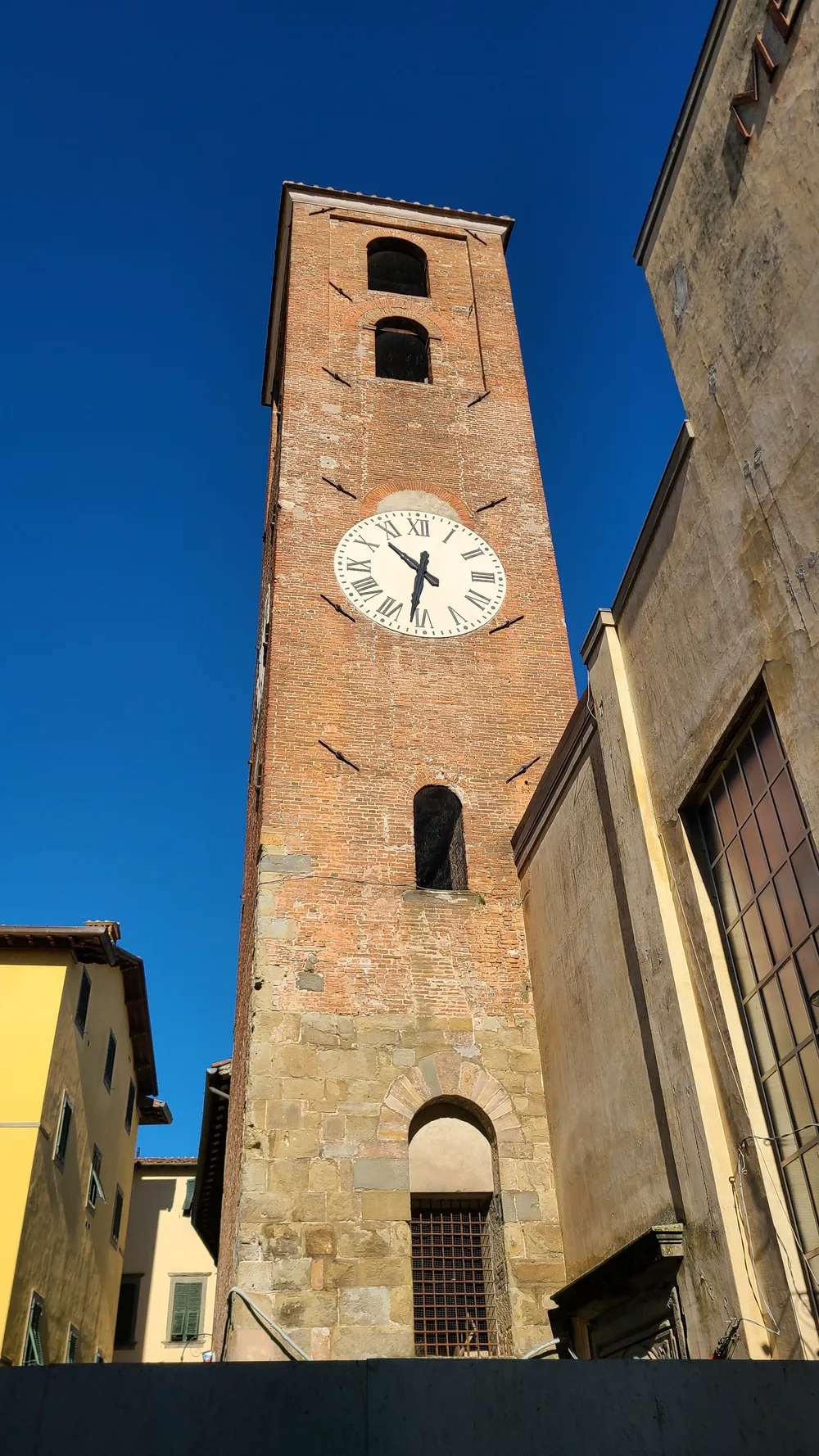
Looking up from Lucca’s cobblestone streets, you’ll notice two towers that define the city’s skyline in completely different ways—Torre Guinigi crowned with its impossible rooftop garden of ancient holm oaks, and Torre delle Ore standing taller as Lucca’s historic clock tower and civic sentinel. Both climbs are essential Lucca experiences.
Torre Guinigi’s narrow staircase winds 200+ steps to a shaded terrace where evergreen oaks frame panoramic views over terracotta rooftops and Renaissance walls. The trees symbolize rebirth and have thrived here since at least 1600.
Built in the second half of the 14th century, this elegant fired brick tower was commissioned by the Guinigi family, whose wealth as merchants allowed them to construct one of the tallest towers in the city as a display of their social status. Torre delle Ore rises even higher, its mechanical clock still regulating city time as it has for centuries.
From either summit you’ll grasp how medieval towers once bristled across this skyline, marking family power before most vanished.
Both tower staircases are narrow, steep, and steep—wear supportive footwear and take your time with the climbs for safety and to catch your breath at the views.
Tour Palazzo Pfanner and Take Day Trips to Puccini’s Villa
Hidden behind a Baroque facade near the city walls, Palazzo Pfanner rewards visitors with one of Lucca’s most photogenic treasures—an 18th-century Italian garden where marble gods pose among lemon trees and geometrically precise gravel paths lead to an octagonal fountain. You’ll tour furnished reception rooms decorated with quadraturist frescoes from 1720, then descend the monumental stone staircase into the garden designed by Filippo Juvarra.
Statues representing the four seasons and Greek mythology line the symmetrical avenues, while a centuries-old magnolia shades bamboo groves. The Pfanner family transformed part of the palazzo into Lucca’s first brewery in 1846.
Today you’ll find a museum displaying 19th-century medical instruments alongside antique furnishings that recreate aristocratic life in this film-location palace.
Conclusion
You’ll find Lucca’s charm wraps around you like a warm embrace. From cycling the ancient walls to discovering hidden piazzas, this Tuscan gem delivers unforgettable moments at every turn. You’ve got Renaissance architecture, Roman history, and stunning tower views all waiting for you. Don’t rush through—Lucca rewards those who take their time. Pack your walking shoes, bring your camera, and get ready to fall in love with one of Italy’s most enchanting walled cities.