You’ve probably climbed Arthur’s Seat and walked the Royal Mile, but Edinburgh’s most memorable experiences hide beneath your feet and down forgotten alleyways.
This ancient city guards secrets that most visitors never discover—from underground streets frozen in time to tidal islands you can only reach with perfect timing.
Ready to venture beyond the guidebook basics?
Here’s where Edinburgh gets genuinely interesting, starting with what lies beneath South Bridge.
- Edinburgh’s South Bridge vaults contain roughly 120 underground rooms from 1785–1788 that once housed merchants, craftspeople, and later became slums and smuggling hubs before being sealed in the 19th century
- Real Mary King’s Close offers 1-hour guided tours through preserved 17th-century plague-era rooms, with departures every 15 minutes and free cancellation up to 24 hours before
- Cramond Island’s concrete causeway is passable for roughly two hours either side of low tide, with regular risk of stranding walkers who misjudge timing
- Dunbar’s Close Garden provides free daily access from 7 a.m. and features authentic 17th-century garden layouts hidden off the Royal Mile’s crowded streets
- Surgeons’ Hall Museums displays over 12,000 exhibits including preserved organs and the Burke and Hare exhibit, open daily 10am–5pm with no photography allowed
- Scott Monument requires climbing 287 narrow spiral steps to reach 200-foot-high viewing platforms with 360-degree city views
- Arthur’s Seat, a 341-million-year-old extinct volcano, offers multiple hiking routes ranging from 30 to 90 minutes depending on starting point and fitness level
Explore Edinburgh’s Underground Vaults Beneath South Bridge
The South Bridge you walk across today hides a secret city beneath your feet. Built between 1785 and 1788, this nineteen-arch viaduct created roughly 120 underground rooms that once buzzed with taverns, workshops, and storage vaults. Merchants stored wine and textiles while cobblers and smelters plied their trades in these chambers.
But poor waterproofing doomed the vaults quickly. By 1795, chronic flooding drove legitimate businesses out. The damp, abandoned spaces became slums housing Edinburgh’s poorest residents, then transformed into brothels, gambling dens, and smuggling hubs.
Poor sanitation and overcrowding created deadly conditions, with frequent murders occurring and vaults used to conceal victims’ bodies. Authorities eventually sealed the vaults with rubble in the 19th century, and they vanished from memory until rediscovery in the 1980s.
Now you can tour this forgotten underground labyrinth and experience Edinburgh’s dark history firsthand.
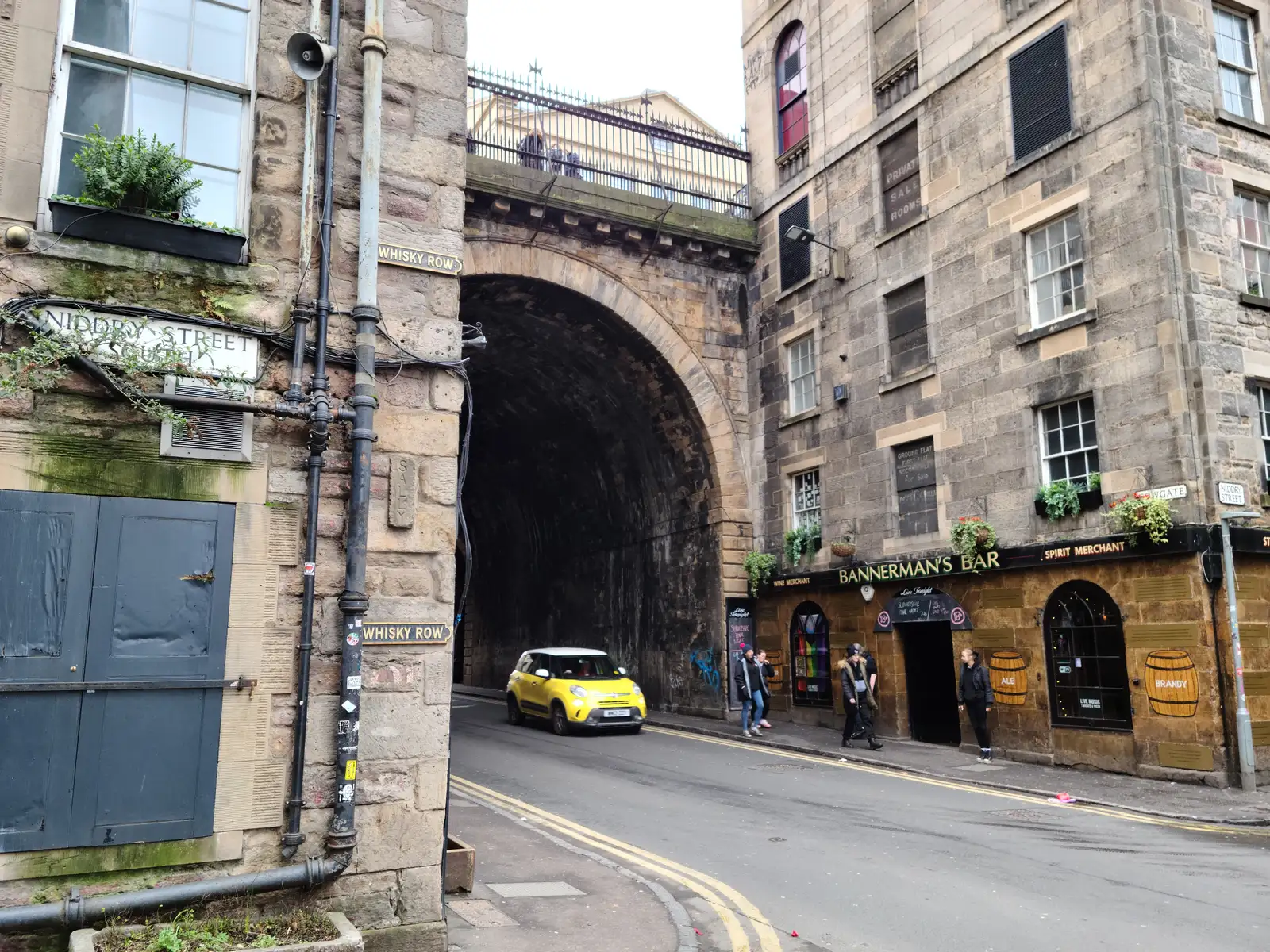
Step Into Real Mary King’s Close Buried Street
You’ll walk through actual 17th-century rooms where Edinburgh’s plague victims lived, worked, and died during the devastating outbreaks of the 1640s. Costumed character guides bring the grim reality to life, sharing stories of crude medical treatments, desperate quarantine measures, and the families crammed into these dark, disease-ridden tenements.
The hour-long tour pulls no punches—you’re getting authentic plague history, not sanitized folklore. These chambers remained hidden beneath the Royal Exchange construction after the street was partially demolished and buried in 1753.
Plague Stories and History
When you descend into the shadowy depths of The Real Mary King’s Close, you’re walking through Edinburgh’s most visceral chapter of suffering and survival. In 1645, plague devastated this narrow warren, killing half the city’s population. You’ll discover how both bubonic and pneumonic plague swept through these cramped tenements, where multiple families shared single rooms in buildings that soared 10–12 storeys high.
The close’s dark, damp conditions bred rats and fleas while open sewers contaminated everything. Plague doctors roamed these passages, nailing shut infected homes and burning victims’ belongings. When the Royal Exchange was built in the 1750s, workers simply demolished the upper floors and sealed the lower levels beneath vaulted ceilings, preserving this haunting snapshot of Edinburgh’s deadliest epidemic.
The last resident didn’t leave until 1902, when Andrew Chesney received a compulsory purchase order and finally vacated the close.
Guided Tour Experience Details
Stepping beyond the plague history, your journey through The Real Mary King’s Close unfolds as a fully guided, 1-hour underground adventure beneath the Royal Mile. You’ll follow a character guide in period costume through a warren of original 17th-century streets and rooms—some over 400 years old.
Tours depart every 15 minutes, taking you through dimly lit passageways and enclosed spaces with preserved stonework and low ceilings. Your guide brings real residents’ stories to life, explaining how this once-bustling close became buried beneath later buildings.
You’ll hear tales of famous royal visitors and learn to separate myths from documented facts. It’s an immersive “time travel” experience rather than a conventional museum visit.
The tour offers free cancellation up to 24 hours before your scheduled visit. Note that children under 5 aren’t permitted, and wheelchair access isn’t available.
Walk to Cramond Island Before the Tide Traps You
If you time it right, a walk across the concrete causeway to Cramond Island delivers one of Edinburgh’s most atmospheric mini-adventures—but get it wrong and you’ll be waiting for the lifeboat. The Firth of Forth tide rises fast, regularly stranding walkers who misjudge their return window.
Verify Queensferry Lifeboat’s Cramond tide timetable before you set out—you’ll have roughly two hours either side of low tide to explore safely.
The mile-long causeway runs beside striking WWII anti-boat pylons, leading to an island dotted with derelict gun emplacements and coastal defense ruins.
- Concrete pylons marching into the Firth of Forth
- Abandoned military structures from both World Wars
- Panoramic views toward the Forth bridges
- Real risk that keeps your adrenaline pumping
Discover Hidden Closes and Secret Gardens Off the Royal Mile
Step off the Royal Mile’s crowded cobblestones and you’ll find a network of over 80 narrow closes and wynds hiding peaceful courtyards that most tourists never see. Dunbar’s Close Garden is the crown jewel—a recreated 17th-century knot garden tucked behind an unassuming passageway on the Canongate, where formal hedges and gravel paths create a serene escape from the bustle.
These hidden spaces reveal Edinburgh’s layered past, from David Hume’s former residence in Riddle’s Court to atmospheric alleyways that once led to markets and medieval tenements.
Dunbar’s Close Tranquility
Tucked between the gray stone walls at 137 Canongate, Dunbar’s Close Garden offers something Edinburgh’s Royal Mile rarely provides—complete tranquility. You’ll need sharp eyes to spot the small entrance sign, but stepping through transports you from bustling crowds into a 17th-century walled sanctuary.
This restored garden, saved from becoming a car park in 1977, features manicured topiary, parterres, and meandering paths that follow authentic period design principles. Benches scatter throughout, inviting you to pause and breathe amid roses and irises.
- Free access daily from 7 a.m. with no admission fees
- Historic authenticity dating to 1647 garden layouts
- Spring mornings ideal timing for peak blooms
- Complete seclusion with dappled shade and diminished city noise
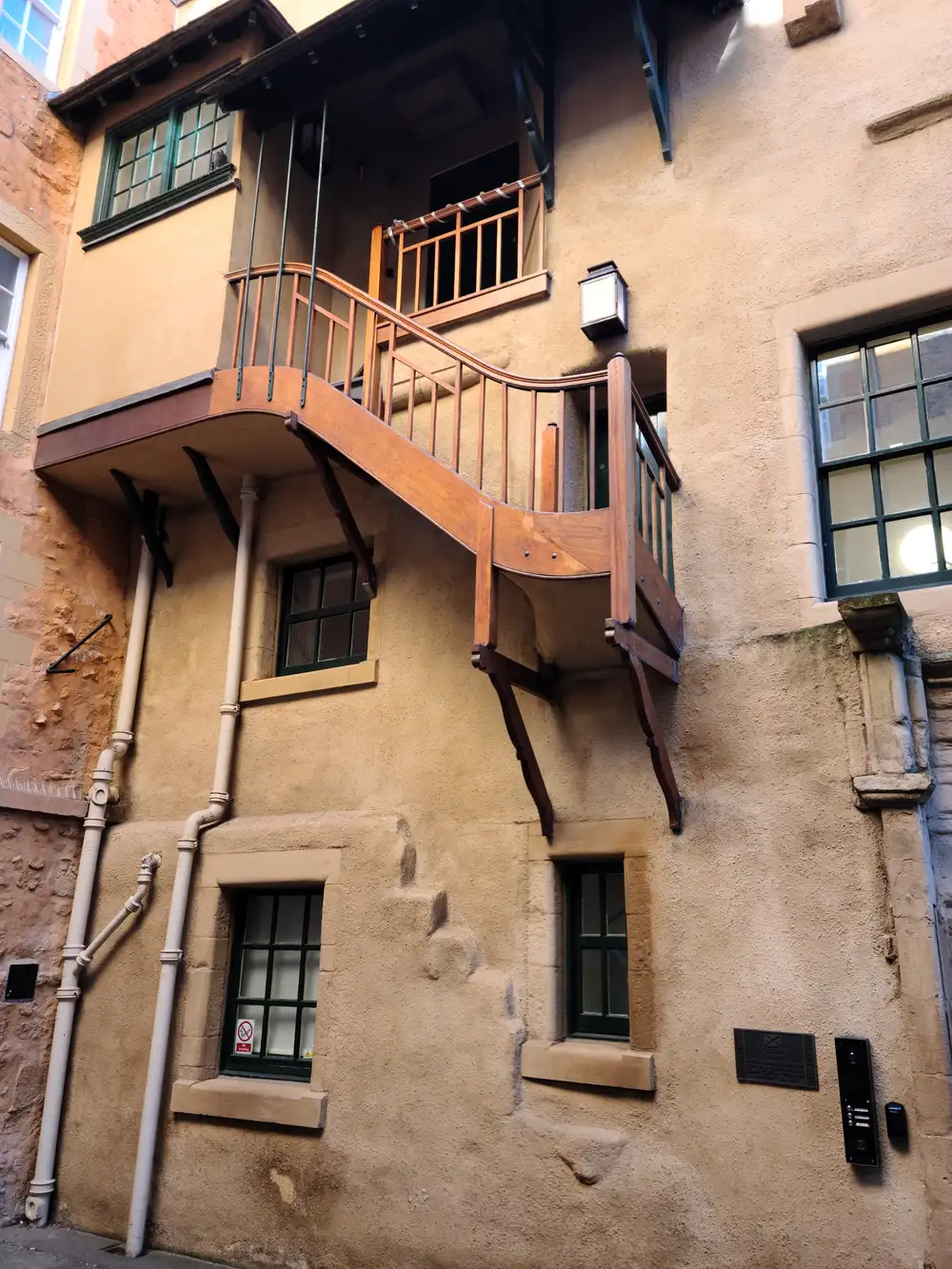
17th-Century Garden Design
When you wander through Dunbar’s Close, you’re walking inside a living history lesson—its layout follows authentic 17th-century Scottish garden principles that once defined Edinburgh’s most fashionable addresses. You’ll spot the tell-tale signs: straight axial paths, geometric compartments, and evergreen hedging creating distinct garden “rooms.”
This formal style reflected continental Baroque influence, with terraced plots descending the Old Town slopes in dramatic sequences. The planting palette evokes the era beautifully—lavender, old roses, salvias, and medicinal herbs mirror the physic gardens that flourished near Holyrood from 1670 onwards.
Edinburgh’s early physicians and apothecaries cultivated medicinal plants here, establishing a culture of botanical experimentation that transformed private closes into living laboratories. You’re experiencing garden design as both art and science.
Royal Mile Hidden Courtyards
Beyond the crowded Royal Mile, Edinburgh conceals over 250 narrow closes and courtyards that most visitors rush straight past. These medieval passages lead to peaceful sanctuaries where you’ll escape the tourist throngs and discover authentic Old Town architecture.
- Lady Stair’s Close — Step into this 17th-century stone courtyard housing The Writer’s Museum, surrounded by towering tenements
- Chessel’s Court — Find the heart-shaped vine on colourful walls in this residential haven off Canongate
- Riddle’s Court — Visit the late-16th-century mansion where James VI once banqueted in 1598
- White Horse Close — Wander the restored coaching inn complex with whitewashed buildings and atmospheric cobbles
These closes originally served as private access routes to vertical tenements where rich merchants lived alongside poor residents.
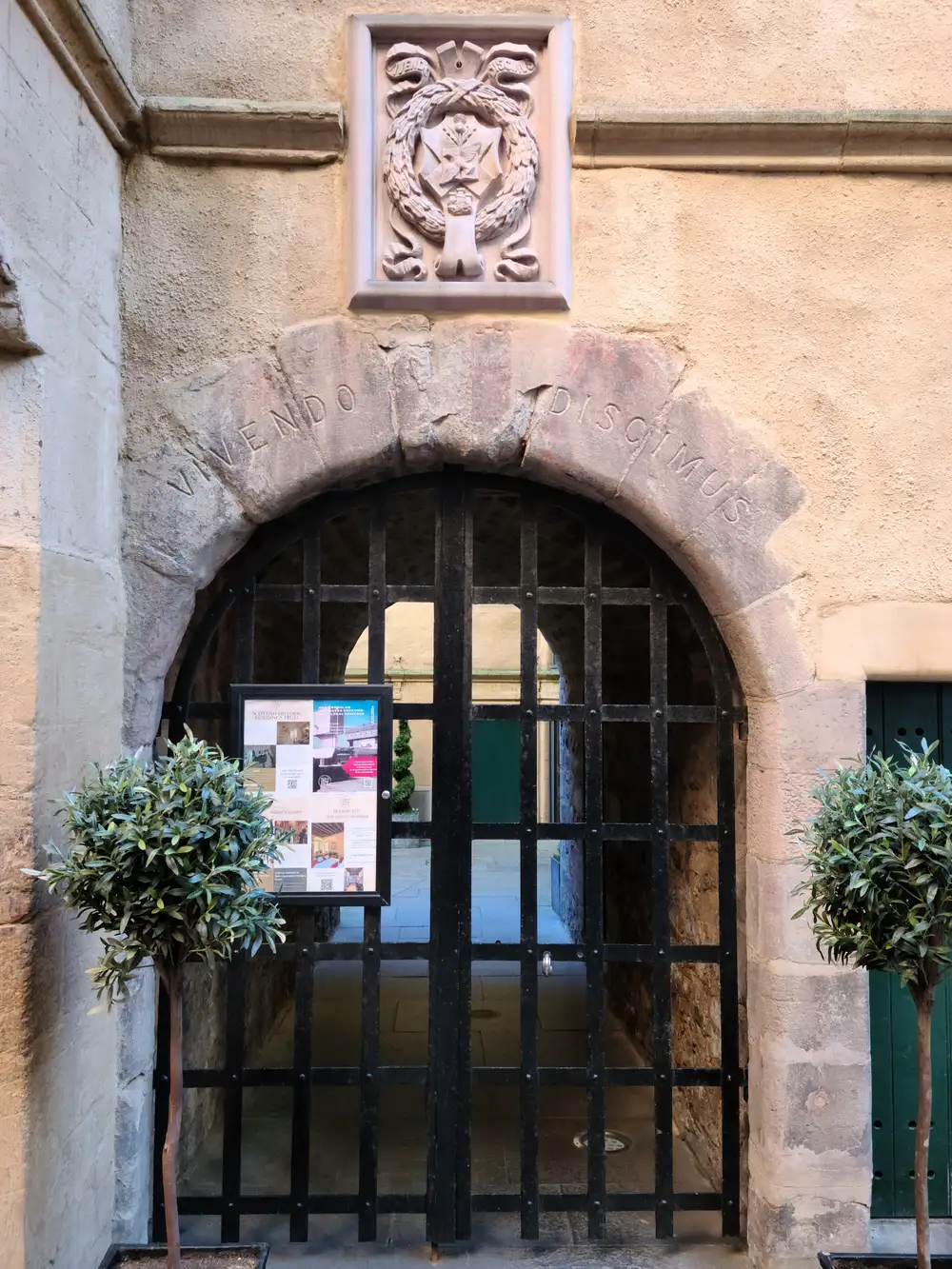
Tour Surgeons’ Hall Museums for Anatomy and Pathology Specimens
Since 1699, Surgeons’ Hall Museums has collected some of the most extraordinary—and unsettling—medical specimens you’ll find anywhere in Scotland. You’ll encounter roughly 12,000 exhibits across multiple galleries, including an eighteenth-century dissected body preserved with lacquer and over 1,700 skulls. The Wohl Pathology Museum spans two floors, showcasing preserved organs, surgical instruments, and anatomical specimens that reveal how diseases ravage the body.
The Burke and Hare exhibit features a book bound in the murderer’s own skin—a haunting reminder of the infamous 19th-century grave robbers.
Located ten minutes from Princes Street in a stunning William Henry Playfair building, this award-winning museum opens daily from 10am to 5pm. Photography isn’t allowed, but the memories will haunt you anyway.
Visit Camera Obscura and Edinburgh’s Quirky Small Museums
Perched on Castlehill since the 1850s, Camera Obscura & World of Illusions combines Victorian ingenuity with modern trickery across six floors of mind-bending exhibits. You’ll watch live images of Edinburgh projected onto a table through the original 19th-century camera obscura—essentially early “CCTV” using mirrors and lenses. The rooftop terrace delivers sweeping views of the castle and Old Town.
- Museum of Childhood — Historic toys, dolls, and games from generations past
- People’s Story Museum — Working-class life in Edinburgh through everyday objects
- Outlook Tower heritage — Learn about Maria Theresa Short, who pioneered this observatory in 1853
- Optical science displays — Discover how camera obscuras date back to 400 BC
Climb Scott Monument for 360-Degree Gothic City Views
Towering above Princes Street Gardens like a blackened stone rocket ship, the Scott Monument rewards brave climbers with some of Edinburgh’s most dramatic panoramas. You’ll tackle 287 narrow spiral steps across four levels, winding past gargoyles and Gothic stonework to reach windswept viewing platforms 200 feet up. The staircase gets progressively tighter and steeper—it’s not for anyone with claustrophobia or mobility issues.
Your effort pays off with 360-degree views spanning Edinburgh Castle, the Royal Mile, and the Firth of Forth on clear days. Start at the ground-floor museum featuring Scott’s marble statue and stained-glass windows, then climb during off-peak hours to avoid bottlenecks.
Wear sturdy shoes, keep right on the stairs, and budget 30–45 minutes for the full ascent and descent.
Hike Arthur’s Seat Volcano in the Middle of Edinburgh
You’ll find an actual 340-million-year-old extinct volcano right in the heart of Edinburgh, and climbing Arthur’s Seat rewards you with sweeping 360-degree views across the city, castle, and Firth of Forth. Multiple hiking routes let you choose your adventure—take the steep 30-minute scramble from Dunsapie Loch or the gentler hour-long path from Holyrood Palace. Early morning or late afternoon offers the best light for photos and fewer crowds on the rocky summit.
Ancient Volcano Summit Views
Right in Edinburgh’s center, an ancient volcano rises 822 feet above the city streets. You’ll stand atop Arthur’s Seat, where 341-million-year-old lava created Edinburgh’s highest point. The summit delivers knockout 360-degree views that’ll make your climb worthwhile.
- Edinburgh’s Old and New Towns sprawling beneath your feet, showcasing the contrast between medieval streets and Georgian elegance
- The Firth of Forth shimmering on clear days, with distant hills dotting the horizon across the Lothian countryside
- Castle Rock and Calton Hill rising from the urban landscape—ancient volcanic siblings from the same fiery past
- Salisbury Crags displaying dramatic cliff faces shaped by millions of years of glacial erosion
You’re witnessing Scotland’s geological story from a viewpoint that’s captivated visitors for centuries.
Multiple Route Options Available
When you’re ready to climb Arthur’s Seat, you’ll find several paths snaking up the ancient volcano—each offering a different adventure based on your fitness level and time constraints. The popular Red Route starts at Holyrood Palace and takes 60–90 minutes round trip, featuring well-trodden paths that shift to rocky scrambles near the top. If you’re short on time but fit, tackle the steep Green Route from Dunsapie Loch—you’ll reach the summit in just 30–45 minutes.
Want more? Create a circular route combining your ascent with the stunning Salisbury Crags balcony path, or extend your exploration to St Margaret’s Loch and St Anthony’s Chapel ruins. Most loops stay under two hours, though you could easily spend all day discovering hidden trails.
Best Times to Climb
Budget 1–2 hours total—most people underestimate this. Factor in photo stops and catching your breath on those steep rocky sections.
Mist can roll in even when the streets look perfect, so verify weather conditions obsessively before heading up.
Meet Cats and Chihuahuas at Edinburgh’s Animal Cafés
Edinburgh takes the animal café trend to delightful extremes with venues dedicated to both feline and canine companionship.
Maison de Moggy, Scotland’s first cat café, sits just off the Grassmarket at 17 West Port. You’ll find over a dozen resident cats—including rare breeds like Sphynx, British Shorthair, and Persian Chinchilla—roaming custom-built spaces with climbing platforms and cosy hideaways. Book ahead for hour-long sessions (£12 per person), order tea and cake, then explore the multi-level playground while cats lounge on window boxes or investigate your shoelaces. The residents aren’t available for adoption; they’re permanent “fur family.”
Edinburgh’s Chihuahua Café, which opened in December 2017 on Frederick Street, claimed the title of world’s first Chihuahua café. Eight socialised Chihuahuas greeted visitors during timed sessions.
Paint Custom Pottery at Doodles Ceramics Studio
- BYOB 7 days a week — turn pottery painting into a social night out with friends
- No session fees — you only pay for the pottery piece you select
- Wheel-throwing and hand-building sessions available on set dates for hands-on clay work
- Open evenings until 21:00 Tuesday through Thursday for after-work creativity
This cosy studio fills up fast during weekends and school holidays.
Hunt for Burke and Hare History at Greyfriars Kirkyard
While Burke and Hare never actually dug up graves themselves, Greyfriars Kirkyard stands as the atmospheric epicentre of Edinburgh’s body-snatching panic that enabled their crimes. You’ll spot iron mortsafes and heavy stone slabs installed to deter “resurrection men” who supplied Edinburgh’s anatomy schools. Watchtowers from the 1820s still overlook the graves, reminders of when terrified locals mounted armed patrols against grave-robbers.
Burke and Hare exploited this fevered atmosphere by murdering at least 16 victims in 1827–1828, selling bodies to Dr. Robert Knox for what’s now over £10,000. Their “Burking” method—smothering victims—left no marks.
Burke was hanged before 25,000 spectators on 28 January 1829. His skeleton remains in Edinburgh Medical School’s collection today.
Escape Crowds at Royal Botanic Garden and Craigmillar Castle
When Edinburgh’s Royal Mile feels like a human conveyor belt and Edinburgh Castle’s queues snake down the hill, you’ll find proper breathing room at two magnificent escapes most tourists never reach. The Royal Botanic Garden spreads across 70 acres just a mile north of the centre, where winding paths through rock gardens and woodland create natural sound barriers from the city. Craigmillar Castle sits three miles southeast—a perfectly preserved 15th-century fortress that’s criminally overlooked.
- Location filters crowds — both sit outside the Old Town tourist circuit
- Spread-out grounds — castle parkland and sprawling gardens let visitors disperse naturally
- Early mornings guarantee solitude — arrive before 10am for near-private exploration
- Different appeal — serious plant collections and genuine medieval ruins attract enthusiasts, not selfie-hunters
Photograph Edinburgh’s Illuminated Monuments After Dark
After the tour buses depart and Edinburgh’s day-trippers head home, the city transforms into something far more dramatic. You’ll find Calton Hill’s monuments glowing against the skyline, while the floodlit Scott Monument towers over Princes Street like a Gothic rocket. Head to the Vennel Steps for classic Castle shots framed by warm street lamps and cobblestones.
Blue hour delivers the magic—balanced light between illuminated stone and dusky sky. Try long exposures along the Royal Mile to blur pedestrians into ghosts around St Giles’ Cathedral, or capture car trails streaking toward the Balmoral clock tower.
Winter brings early darkness and Christmas fairground rides near Scott Monument—perfect for spinning light trails. Shoot through narrow closes for dramatic perspective, or climb Blackford Hill for panoramic city glow.
Conclusion
You’ve only scratched the surface of Edinburgh’s quirky side! From haunted vaults to tide-racing island walks, this city rewards curious travelers who venture beyond the obvious. You’ll find medical oddities, hidden gardens, and dark history around every corner. So grab your camera, lace up your walking shoes, and prepare for adventures you won’t find in standard guidebooks. Edinburgh’s unusual experiences are waiting—you just need to know where to look!