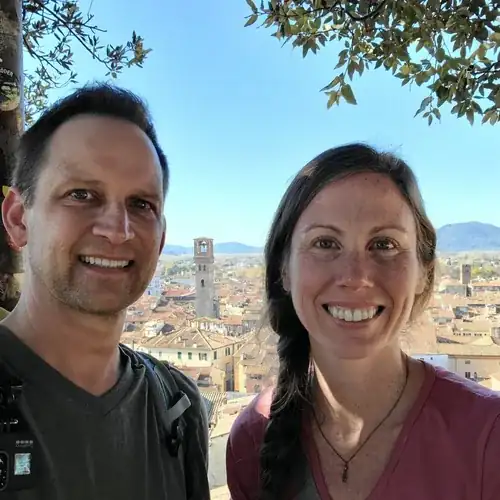
You’ve probably seen photos of Florence’s iconic dome dominating the skyline, but here’s what those pictures don’t show: the 463 narrow, winding steps you’ll climb to reach that view.
Before you book your ticket, you’ll want to know if you’re physically ready for this challenge—and whether your fear of tight spaces might make this experience less “bucket list” and more “nightmare.” Let’s break down what really awaits you inside Brunelleschi’s masterpiece.
- The Dome climb involves 463 steep, narrow steps with no elevator and a one-hour time limit, requiring advance booking weeks ahead during peak season.
- You need good physical fitness, healthy knees and hips, and no heart conditions, claustrophobia, or severe fear of heights to safely complete the climb.
- The €30 Brunelleschi Pass bundles five monuments and is valid for three consecutive calendar days, though the Dome requires a specific timed-slot reservation.
- Halfway up at 250 steps, you’ll encounter Vasari and Zuccari’s massive Last Judgment fresco with 700 figures at eye level—a transformative art experience.
- Book early morning slots (around 08:15) on weekdays during shoulder season to avoid crowds, heat stress, and summer temperatures exceeding 100°F.
- The 463-step interior passage reveals Brunelleschi’s ingenious herringbone brickwork that made the world’s largest masonry dome structurally possible in the 1420s.
- The panoramic view from the lantern spans 360° across Florence, revealing the Arno, Ponte Vecchio, Piazzale Michelangelo, and hills kilometers away.
Do You Need to Be in Shape to Climb Brunelleschi’s Dome?
While you don’t need to be a marathon runner, climbing Brunelleschi’s Dome demands real physical effort. You’ll tackle approximately 463 steep, narrow steps with no elevator and no exit once you start. The winding staircases weren’t designed for tourists—they’re tight, dark, and require constant maneuvering around two-way traffic.
You should be comfortable climbing several hundred stairs without major distress. Healthy knees and hips make the journey much easier. If you have heart conditions, mobility issues, claustrophobia, or fear of heights, skip this climb. The official site explicitly warns against it.
Summer heat intensifies the challenge considerably. The enclosed stone stairways trap heat, causing fatigue and dehydration.
Book early morning slots to reduce heat stress. Wear supportive, closed-toe shoes and leave heavy bags behind to complete the climb within your one-hour time limit.
How to Book Your Timed Dome Climb Ticket
You’ll need to book your Dome climb ticket well ahead of time—especially during peak season when slots sell out a month in advance. The €30 Brunelleschi Pass is your best option since it bundles access to five monuments including the Dome, Giotto’s Bell Tower, and the Baptistry.
Book directly through the official Opera di Santa Maria del Fiore website to guarantee entry, and remember that your chosen time slot can’t be changed once you’ve reserved it. Most cancellation policies allow for changes if you need to adjust your plans 24-72 hours before your scheduled visit.
Advance Reservation Required
This requirement isn’t just a suggestion—it’s enforced to manage the narrow, 463-step stairway safely. Entry is never guaranteed without a valid reservation, and slots regularly sell out weeks ahead during peak season (spring through autumn).
When you book through the Opera di Santa Maria del Fiore portal or authorized third-party platforms, you’ll select your specific date and time. That reserved slot becomes your access window.
Secure your preferred time at least 4-6 weeks in advance during spring through autumn, as timed slots regularly sell out weeks ahead.
The rest of the cathedral complex offers flexible entry, but the Dome stands apart with its rigid, timed-entry control.
Combo Pass Options
Only the dome requires a fixed time slot. The other sites? Visit them anytime within your 3-day window.
Third-party sellers offer similar bundles, sometimes with guided tours or VR experiences added. Prices vary wildly depending on extras like early access or skip-the-line perks.
Remember: it’s one entry per monument. You can’t climb twice or revisit sites on different days. Your dome climb must happen on the first day your ticket becomes valid, so plan accordingly if you’re arriving with jet lag or have other commitments.
What’s Included in the Duomo Complex Pass?
Your Duomo pass isn’t just a ticket—it’s your all-access combo to six incredible monuments across the Santa Maria del Fiore complex! You’ll choose between three passes (Brunelleschi, Giotto, or Ghiberti), each covering different sites and valid for three consecutive days from your first visit. The best part? One pass replaces multiple tickets, so you’ll breeze through the Baptistery, Opera del Duomo Museum, crypt, and more without buying separate entries.
Sites Covered by Pass
- Brunelleschi Pass — Includes Brunelleschi’s Dome climb, Giotto’s Bell Tower, Cathedral via Santa Reparata, Baptistery, Museum, and Santa Reparata Crypt, plus complimentary VR experience
- Giotto Pass — Covers all sites except the Dome climb, ideal for those wanting to skip stairs
- Ghiberti Pass — Includes Cathedral, Baptistery, Museum, and Santa Reparata without any climbing components
All three passes grant three-day access to included monuments.
Booking and Validity Terms
Once you’ve purchased your Duomo complex pass, you’ll have three consecutive calendar days to explore the included monuments—and this timing detail matters more than you might think. The validity counts by calendar days, not 24-hour periods. If you start on Monday at 5 PM, your pass expires Wednesday at closing time.
You’ll pick a specific start date when buying online through Opera di Santa Maria del Fiore’s official website—the only authorized seller. Here’s the critical part: climbing the Dome requires a mandatory time-slot reservation with 45-minute intervals. You must arrive a few minutes early, though there’s about 5 minutes grace period. Other monuments? Visit them flexibly within your three-day window, no additional slots needed.
The 463-Step Route: Narrow Stairs, Low Ceilings, No Elevator
The journey to the top of Brunelleschi’s Dome requires climbing all 463 steps—every single one of them, twice. There’s no elevator, so you’ll ascend and descend entirely on foot through the narrow cavity between the dome’s two shells. Expect tight, winding stone staircases—often single-file—with low ceilings that’ll have taller visitors stooping.
You’ll share these passages with people heading both directions, so patience helps. Small landings offer brief rest spots, but there’s no seating. The route winds through enclosed, tunnel-like corridors with limited light and shoulder room. About halfway up, you’ll reach an interior gallery beneath the frescoed dome, then continue spiraling upward.
The entire climb—up, viewpoint, and down—typically takes 45–60 minutes, leaving little time to linger at each level.
Who Should Skip the Dome Climb (Heart Conditions, Claustrophobia, Mobility Issues)
Given the physical demands of those 463 steps, certain visitors should honestly assess whether this climb is right for them. If you’ve got heart conditions, respiratory problems like asthma, or chronic bronchitis, official rules strongly discourage participation. The enclosed stairways can trigger shortness of breath, palpitations, or dizziness, and emergency evacuation is complicated by narrow passages.
Claustrophobic? The tight corridors—some less than a meter wide—dim lighting, and sensation of being trapped inside thick masonry can provoke panic attacks. The viewing walkway also looks 40 meters straight down, which isn’t ideal for vertigo sufferers.
There’s no elevator, so wheelchair users and visitors with mobility limitations can’t access the dome. Pregnant women should skip it too. Tour operators consistently reinforce these restrictions for good reason.
Vasari’s Last Judgment Frescoes Halfway Up the Climb
Halfway up the climb, you’ll stop in your tracks when Vasari and Zuccari’s massive Last Judgment frescoes suddenly surround you at eye level. The narrow gallery puts you face-to-face with individual saints, angels, and sinners that look tiny from the cathedral floor—now you can see their expressions, read inscriptions, and study the dramatic color shifts between Heaven and Hell. This close-up encounter with 700 figures across nearly 4,000 square meters transforms the grueling climb into an unforgettable art experience.
Vasari and Zuccari’s Masterpiece
Around 250 steps into your climb, you’ll encounter one of the Renaissance’s most ambitious artistic undertakings—a vast fresco cycle covering roughly 3,600 square meters of Brunelleschi’s dome. This monumental Last Judgment features roughly 700 figures and represents a fascinating artistic collaboration. Giorgio Vasari began the project in 1572 under Grand Duke Cosimo I de’ Medici, executing the uppermost registers with restrained coloring and ordered compositions.
But when both patron and painter died in 1574, Federico Zuccari stepped in to complete the work. Zuccari transformed the vision dramatically. He introduced larger, more dynamic figures and vivid Hell scenes inspired by Signorelli’s Orvieto frescoes. You’ll notice muscular nudes, contorted poses, and intense drama—especially in the lower bands. The 1579 completion left a hybrid masterpiece blending Vasari’s measured approach with Zuccari’s late-mannerist exuberance.
Viewing the Fresco Details
At 250 steps up, something remarkable happens—the fresco that looked like a distant blur from the cathedral floor now fills your entire field of vision. You’re standing eye-level with 700 figures sprawled across six concentric zones. Christ the Judge blazes in his golden disk, flanked by angels wielding the sword of judgment.
Below him, the Theological Virtues—Faith, Hope, and Charity—form the pivot between salvation and damnation. Circle the walkway and the narrative unfolds: angelic choirs carrying the Instruments of the Passion, Florentine saints interceding for souls, then the Gifts–Virtues–Beatitudes clustered in triads. The lowest ring plunges into hell. Each vertical segment pairs a specific vice with its tortured sinners—contorted bodies, grasping demons, smoky reds against golden light. The anatomy’s precise. The gestures speak.
Why You Can See Herringbone Brickwork Inside the Dome
The climb up the Duomo rewards you with something most visitors don’t expect: a close-up look at the actual bricks that hold this engineering marvel together. As you wind through the narrow passages between the dome’s two shells, you’ll spot Brunelleschi’s famous herringbone brickwork right there on the walls. This isn’t decorative—it’s the structural genius that made building the world’s largest masonry dome possible back in the 1420s.
- Alternating vertical and horizontal bricks wedge together, preventing any slippage during construction
- Double-helix arrangement distributes weight evenly around the entire dome
- Self-locking courses eliminated the need for massive wooden scaffolding
- Ancient Roman technique reinvented by Brunelleschi for Renaissance architecture
The 360° Panorama From the Lantern at the Top
After marveling at Brunelleschi’s brick genius up close, you’ll push through the final steps and emerge into blazing daylight at the lantern—and wow, what a payoff. The unobstructed 360° panorama spreads out beneath you: terracotta rooftops rippling like a russet sea, punctuated by bell towers and domes. North, you’ll spot San Lorenzo and the Medici Chapels against Fiesole’s hills. South opens toward the Arno, Ponte Vecchio, and Piazzale Michelangelo.
East stretches toward Santa Croce; west rolls past Palazzo Strozzi into the valley. From over 90 meters up, you can trace street alignments, spot Giotto’s Campanile and Palazzo Vecchio, and grasp how the river anchors Florence’s layout. Clear days reveal ridge lines kilometers away—pure panoramic magic.
When to Climb for Fewer Crowds and Better Light
Timing your climb right can transform the experience from elbow-to-elbow shuffle to breezy solo ascent with crystal-clear views. Book the earliest morning slot—around 08:15—when stairways are empty and Florence’s air is crisp. You’ll beat the tour groups and enjoy softer light for photos. Avoid midday, especially in summer, when crowds peak and temperatures soar past 100°F.
- Go mid-week (Tuesday–Thursday) instead of weekends when demand spikes
- Skip peak season (late May–September) for April or late September shoulder months
- Arrive 15 minutes early to secure your timed slot without stress
- Choose late-afternoon in winter for golden-hour light and thinner crowds
- Purchase tickets weeks ahead during high season—prime slots vanish fast
Hidden Terraces: How to Book Special-Access Dome Tours
Why settle for the standard Dome climb when you can step onto secret terraces most visitors never know exist? Florence Cathedral’s hidden balconies sit 100 feet above the piazza, offering panoramic views over red-tile roofs and close-up looks at marble details you’ll never see from below.
These terraces aren’t open to the general public—you’ll need a pre-booked special-access tour. Search for keywords like “Secret Terraces,” “VIP Duomo Tour,” or “Exclusive Terrace Access” on Opera del Duomo’s website or authorized resellers like Viator and GetYourGuide.
Groups cap at 10–18 people and sell out fast, especially during peak season. You’ll climb roughly 150 stairs with a licensed guide, and many packages bundle terrace access with cathedral entry and museum passes under one reservation.
What to Bring (and What Security Won’t Let Through)
Before you tackle those 463 steps, you need to know exactly what you can carry—and what’ll get you turned away at security.
- Medium/large bags and backpacks—Completely banned from the climb
- Food, drinks, and sharp objects—Security will confiscate or refuse entry
- Inappropriate clothing—Cover shoulders, midriff, and wear knee-length bottoms
- Flimsy footwear—Skip flip-flops and heels; wear sturdy shoes with grip
You’ll want to bring your printed Brunelleschi Pass, ID, phone, small camera, and water bottle. Pack light—think pockets or tiny cross-body. Bring a scarf for shoulder coverage and sunscreen for outdoor queues. Security’s strict, so anything questionable means no entry and no refund.
Conclusion
You’ve got all the details—now it’s time to climb! Don’t let those 463 steps intimidate you. Book your ticket, lace up comfortable shoes, and prepare for one of Florence’s most incredible experiences. Yes, it’s steep. Yes, it’s narrow. But when you’re standing at the top, catching your breath and soaking in that jaw-dropping 360° view, you’ll understand why everyone says it’s absolutely worth it. Florence is waiting!