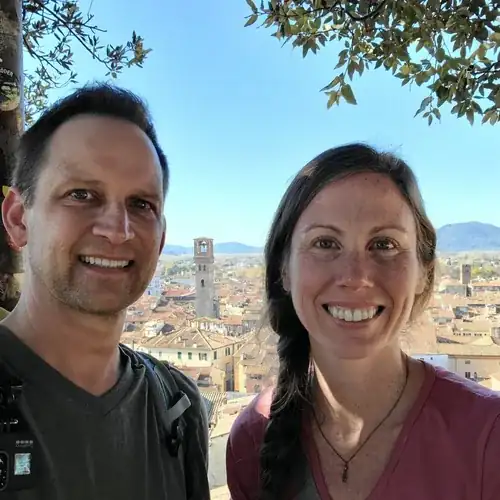
You’ve probably seen those iconic photos of Tuscany—rolling hills dotted with cypress trees, medieval towers piercing golden sunsets, and vineyard-covered valleys that seem to stretch forever. But here’s what most travelers don’t realize: the region’s true magic isn’t just in one postcard-perfect spot. From Florence’s Renaissance treasures to hidden thermal villages and coastal islands, Tuscany’s beauty comes in surprisingly different forms.
Let’s explore what makes each destination worth your time.
- Florence’s Cathedral Quarter contains Brunelleschi’s revolutionary dome and the Uffizi Gallery with masterpieces by Botticelli, Leonardo, and Michelangelo requiring advance booking
- Siena’s Piazza del Campo hosts the Palio di Siena twice yearly, a medieval horse race that transforms the UNESCO-recognized square into a thunderous spectacle
- San Gimignano’s fourteen surviving towers reach up to 54 meters tall and can be explored through Torre Campatelli’s interactive tower-museum tours
- Montepulciano and Montalcino produce world-class wines—Vino Nobile and Brunello respectively—both available for tasting in historic fortress cellars and estate vineyards
- Val d’Orcia’s Renaissance landscape with cypress-lined roads and rolling hills is a UNESCO World Heritage site deliberately designed in the 14th-15th centuries
- Elba Island offers 147 kilometers of coastline with hiking trails and secluded beaches, accessible by ferry as Tuscany’s third-largest island
- Bagno Vignoni features a unique central piazza replaced by a steaming thermal pool fed by 120°F springs used since Etruscan times
Florence’s Renaissance Masterpieces and Cathedral Quarter
Standing in the heart of Florence’s Cathedral Quarter, you’ll find yourself surrounded by an almost overwhelming concentration of artistic genius. Brunelleschi’s dome dominates the skyline—the world’s largest masonry dome at completion, engineered with revolutionary herringbone brickwork and built without traditional scaffolding.
Nearby, the ancient Baptistery of San Giovanni showcases Ghiberti’s bronze “Gates of Paradise” with stunning Old scripture reliefs. The Baptistery also features extraordinary Byzantine mosaics that adorn its interior ceiling.
Inside the Uffizi Gallery, you’ll encounter Botticelli’s ethereal “Birth of Venus” and “Primavera,” Leonardo’s atmospheric “Annunciation,” and Raphael’s harmonious “Madonna of the Goldfinch.” Don’t miss Michelangelo’s “Doni Tondo”—his only finished panel painting—and his profoundly moving “Deposition” at the Opera del Duomo Museum.
The Uffizi Gallery requires advance tickets to avoid long queues, especially during peak summer months. Reserve online at least a few days ahead.
Walk to Piazza della Signoria for open-air Renaissance sculpture at the Loggia dei Lanzi.
Siena’s Gothic Streets and the Piazza Del Campo
When you step into Siena’s labyrinth of Gothic streets, you’ll discover a medieval masterpiece that spirals organically across three hills toward its legendary heart—the Piazza del Campo. These narrow, winding lanes follow natural contours rather than rigid grids, guiding you downward to the shell-shaped Campo.
This spectacular square slopes like an amphitheater, its red herringbone bricks divided by nine white travertine bands—each section honoring Siena’s medieval Government of the Nine. The slender Torre del Mangia soars above Palazzo Pubblico, asserting civic pride against religious power. Strict 1297 regulations created harmonious Gothic façades that still frame the piazza today.
Twice each year, the Palio di Siena transforms this historic square into a thunderous racetrack where bareback riders represent Siena’s 17 contrade in a tradition dating back to medieval times. UNESCO recognizes this entire 170-hectare walled city as the ultimate expression of medieval urban planning, where topography, architecture, and public space merge into pure artistry.
San Gimignano’s Medieval Towers and Stone Skyline
San Gimignano thrusts skyward from its Tuscan hilltop like a medieval forest of stone, earning its striking moniker “Medieval Manhattan” centuries before New York ever dreamed of skyscrapers. You’ll spot fourteen surviving towers piercing the sky—remnants of seventy-two that once defined this vertical cityscape.
Wealthy merchant families built these soaring strongholds during the 1200s, each competing to reach higher until city regulations capped their ambitions.
- Torre Grossa — tallest at 54 meters with seven-foot-thick walls
- Torre Rognosa — 51-meter civic benchmark and former prison
- Torri Salvucci — twin 42-meter towers flaunting family prestige
- Torre Chigi — 13th-century noble residence-fortress
The uniform stone and brick construction creates an unforgettable silhouette across the Elsa Valley. Torre Campatelli now operates as a tower-museum with interactive tours, offering visitors a rare glimpse into medieval life through well-preserved interiors and historical furnishings.
Volterra’s Etruscan Ruins and Hilltop Alleyways
You’ll step back 2,500 years when you wander through Volterra’s Etruscan gates and explore the ancient stone walls that once protected this powerful hilltop city. The narrow medieval alleyways wind past alabaster workshops and Renaissance palazzi, leading you to dramatic viewpoints where the Tuscan countryside stretches endlessly below.
Around every corner, you’ll discover layers of history—from Roman theatre ruins to fortress towers—all framed by sweeping panoramas of rolling hills and distant valleys. The original fortifications stretched approximately 7 km long before being reduced to their current 2.6 km circuit, with impressive sections still visible at landmarks like Porta all’Arco.
Ancient Etruscan Archaeological Sites
Volterra rises up from Tuscany’s hilltops as a living textbook of Etruscan civilization, where 2,700 years of history hasn’t been tidied away behind museum glass—it’s built right into the streets you’ll walk. You’ll pass through Porta all’Arco, one of Italy’s earliest stone arches, its massive 3rd-century BC blocks still framing your entry into town.
- Piano di Castello — twin Hellenistic temples overlooking modern rooftops
- Roman Theatre — marble orchestra and two-storey colonnade stage
- Etruscan Defensive Walls — tracing the entire hilltop circuit
- Vallebuona Necropolis — connected by countryside walking paths
- Porta Diana — monumental Etruscan gateway elements
The Guarnacci Museum houses extraordinary funerary urns and bronze statues, but the real magic happens when you spot Etruscan stonework embedded in medieval buildings throughout town.
Medieval Stone Streets
Walking these ancient streets feels like stepping between centuries—literally. Volterra’s narrow cobblestone pathways wind between high stone walls, creating an atmospheric medieval maze you’ll want to explore for hours. Black and white striped marble distinguishes the religious buildings, while yellow stone marks civic structures.
You’ll discover the Porta dell’Arco—Italy’s oldest archway from the 4th century BC—still standing as the southern entrance. Three carved stone heads representing Jove, Juno, and Minerva guard this ancient gateway. The town’s preserved three-mile wall system combines Etruscan foundations with 13th-century medieval construction.
Throughout the pedestrian zone, traditional stone houses adorned with flowers line the streets, and alabaster workshops showcase Volterra’s signature craft. Every steep incline and winding alley reveals architectural layers spanning Etruscan, Roman, and Medieval periods.
Panoramic Tuscan Hill Views
How do you capture an entire region in a single glance? You’ll find the answer at Volterra’s highest point, where Etruscan ruins meet panoramic sky. The ancient acropolis commands sweeping views across Tuscany’s valleys and distant sea.
Temple foundations, positioned for divination rituals, now frame your perfect photograph of rolling hills and cypress-lined roads. Below, the Roman Theater descends into a natural bowl—dramatic stone tiers visible from elevated wall-walks. Climb the Palazzo dei Priori tower for 360° vistas, or trace 13th-century ramparts serving as aerial platforms.
- Etruscan Acropolis — grassy plateau with open sightlines
- Roman Theatre Overlook — from medieval walls
- Medicean Fortress — ridge position
- Porta Fiorentina — gate opening onto vineyard slopes
- Narrow Hilltop Alleyways — surprise view corridors
At night, illuminated ruins glow against dark valleys below.
Montepulciano’s Hilltop Vineyards and Vino Nobile
Rising 605 meters above the fertile valleys of central Tuscany, Montepulciano commands attention as both a medieval masterpiece and one of Italy’s most celebrated wine towns. You’ll find approximately 1,800 hectares of vines wrapping around sloping hills, producing the renowned Vino Nobile di Montepulciano DOCG.
The steep southeast-facing slopes form an unofficial “Grand Cru” area, yielding intensely concentrated Sangiovese grapes. Wander the Renaissance Piazza Grande and discover ancient underground cellars carved into tufa beneath historic palazzi. These labyrinthine tunnels age Vino Nobile in perfect conditions.
Visit innovative estates like energy-autonomous Cantina Salcheto or historic Fattoria Svetoni to taste wines shaped by elevations between 250–600 meters. The panoramic views over Val di Chiana sweep across vineyards, olive groves, and cypress-lined lanes—quintessential Tuscan beauty.
Most wine estates require advance reservations for tastings. Contact them a few days before your visit to ensure availability and to arrange any cellar tours.
Montalcino: Tuscany’s Brunello Wine Capital and Fortress Walls
Perched high above the Val d’Orcia, Montalcino wraps you in 13th-century walls and towers that have guarded Italy’s most celebrated wine for centuries. You’ll walk the ramparts of the pentagonal fortress—the last stronghold of the Sienese Republic—while panoramic vineyard vistas stretch endlessly below.
Inside the medieval bastions, you can taste legendary Brunello di Montalcino right where soldiers once kept watch over the Tuscan countryside.
Fortress and Medieval Walls
The massive pentagonal fortress dominates Montalcino’s highest point, a 14th-century masterpiece that’s remained completely intact since Sienese architects Mino Foresi and Domenico di Feo completed it in 1361. You’ll walk along fully functional battlements and explore towers equipped with machicolations—those clever stone projections medieval defenders used to rain down punishment on attackers below.
The fortress offers exceptional defensive features you can still experience:
- Complete Watchwalk System — circling all walls and towers
- Five Strategic Towers — positioned at each pentagonal angle
- Machicolated Parapets — with openings for defensive fire
- Accessible Courtyard Pathways — leading to elevated platforms
- 360-Degree Panoramic Views — across Montalcino and Tuscany’s countryside
This fortress never surrendered, serving as Siena’s last bulwark against Florentine conquest. Today, you’ll discover why it proved impregnable while enjoying breathtaking vistas from its ancient ramparts.
Brunello Wine Tasting Rooms
After exploring Montalcino’s fortress walls, you’ll discover that Tuscany’s most celebrated wine awaits inside the very same battlements—and across dozens of estate tasting rooms scattered through the surrounding hills. Enoteca la Fortezza, founded in 1980 within the fortress itself, lets you compare multiple Brunello producers without leaving town.
Fabio Tassi curates an extensive selection and ships internationally—twelve bottles to the USA travel free. Beyond the walls, classic estates like Fattoria dei Barbi and Castello Banfi offer guided cellar tours paired with vertical tastings that showcase vintage variation.
Castiglion del Bosco runs structured seminars tracing grape to barrel, while boutique producers—Baricci, Collosorbo, Capanna—welcome you by appointment for intimate vineyard walks and barrel-room tastings overlooking centuries-old cellars.
Panoramic Val d’Orcia Views
Rising 564 meters above the Orcia and Ombrone valleys, Montalcino commands one of Tuscany’s most celebrated panoramas—the kind that’s graced a thousand postcards yet still stops you cold when you see it firsthand. The fourteenth-century Fortezza provides the best vantage point.
Climb its ramparts for 360° views across UNESCO-listed countryside—rolling hills stitched with vineyards, cypress-lined lanes tracing geometric patterns through golden fields, and isolated farmhouses dotting the landscape. Mount Amiata rises on the southern horizon.
- Patchwork Vineyards — shifting from spring green to summer gold
- Cypress Alleys — creating dark exclamation points through grain fields
- Medieval Hilltop Towns — punctuating distant ridges
- Renaissance-Era Agricultural Patterns — still visible today
- Val d’Orcia’s UNESCO Landscape — “perfect combination of art and landscape”
This view hasn’t changed much since Renaissance artists first painted it.
Chianti Classico’s Walled Villages and Vineyard Routes
Scattered across rolling hills between Florence and Siena, Chianti Classico’s medieval villages tell stories of ancient border wars through their stone walls and watchtowers. You’ll discover Montefioralle’s cobbled streets winding through four cardinal gates, its hundred residents preserving an authentic atmosphere among vineyards.
San Donato in Poggio welcomes you through Porta Fiorentina and Porta Senese, its thirteenth-century walls still guarding Palazzo Pretorio and historic churches. Volpaia’s dark sandstone towers rise dramatically above wine cellars where a fourteenth-century church now serves as a tasting room.
These fortified hamlets blend defensive architecture with wine culture—you’re walking through living museums where medieval gates frame vineyard panoramas and castle cores have transformed into residential neighborhoods without losing their warrior past.
Val d’Orcia’s Cypress-Lined Roads and Rolling Hills
South of Chianti’s walled villages, the landscape opens into Val d’Orcia’s sweeping hills, where dark cypress rows cut geometric lines across golden wheat fields and pale clay slopes. This UNESCO World Heritage site showcases Renaissance-era landscape planning at its finest.
You’ll find that Sienese merchants deliberately shaped this terrain in the 14th–15th centuries, planting cypresses to mark routes, boundaries, and settlements while creating an aesthetically pleasing composition.
- San Quirico d’Orcia — historic farm tracks and pilgrimage routes
- Montalcino — elevated viewpoints over rolling wheat fields
- Radicofani Fortress — panoramic vistas across the valley
- Isolated Podere — farmsteads crowned on hilltops
- Sinuous Dirt Roads — emphasizing landscape curves
These vertical sentinels don’t just frame your photographs—they’re visual signposts guiding you toward rural churches and hilltop villages across 800 km² of undulating terrain.
Pienza’s Renaissance Streets and Valley Panoramas
You’ll find one of history’s most ambitious experiments in urban design at Pienza, where Pope Pius II transformed a sleepy village into a perfectly planned Renaissance town in just three years. The symmetrical streets and harmonious piazza feel like walking through a living textbook of 15th-century architectural ideals.
Better yet, the town sits on a hilltop ridge with sweeping views across the Val d’Orcia’s golden valleys and cypress groves stretching to Monte Amiata.
Ideal Renaissance Town Planning
Piazza Pio II forms the geometric heart, with coordinated civic and religious buildings creating visual balance. Streets follow a human-scale grid along the ridgeline, making the compact hilltop easily walkable. The cathedral, palaces, and town hall surround the square in a unified architectural ensemble.
The trapezoidal plaza layout corrects perspective to emphasize the cathedral façade. Four distinct quarters organize the town around the main street intersection. You’ll experience urban planning as art.
Val d’Orcia Scenic Viewpoints
Pienza’s Renaissance streets function as a series of perfectly framed galleries for Val d’Orcia’s legendary landscapes. You’ll find Via dell’Amore and Via del Bacio opening onto stone parapets where rolling hills stretch endlessly below. The southern panorama walkway delivers the most continuous viewing line—terraces and bastions act as natural balconies over cypress-lined lanes and golden fields.
Visit Palazzo Piccolomini’s hanging garden for a stunning triptych panorama across the entire valley from 490 meters elevation. It’s quieter than the public walls and offers the broadest single view in town.
Below Pienza, the Terrapille “Gladiator field” rewards you with cinematic rows of grain and cypresses. Golden hour transforms everything. Spring and autumn bring the softest light across this UNESCO-listed rural masterpiece.
Cortona’s Etruscan Legacy and Val Di Chiana Views
Beyond the rolling vineyards and Renaissance architecture, Cortona reveals one of Tuscany’s most compelling ancient narratives through its Etruscan heritage. You’ll find two remarkable burial mounds called “Meloni” in the Sodo area, just 2 km from Camucia. These 6th-century BCE structures rise from the earth like giant melons, featuring elaborate chambers and monumental stone construction.
The site’s star attraction is a massive altar decorated with warriors battling wild beasts—the only sculpture of its kind in Etruria. Here’s what makes this archaeological park extraordinary:
- Original Grave Goods — preserved in intact coffer tombs
- Sophisticated Stone Carving — techniques from Etruscan aristocracy
- Monumental Drum — built from massive squared blocks
- MAEC Museum Integration — housing the famous Tabula Cortonensis
- Stunning Val di Chiana Views — from ancient city walls
Bagno Vignoni: Tuscany’s Thermal Pool Village
While Cortona’s ancient stones whisper tales of Etruscan warriors, another corner of Tuscany tells its story through water. You’ll find Bagno Vignoni in the UNESCO-protected Val d’Orcia, where an entire piazza is replaced by a steaming thermal pool. The rectangular basin measures roughly 160 feet long, fed by springs bubbling at 120°F since Etruscan times.
Medieval pilgrims traveling the Via Francigena stopped here to soak their weary feet. Pope Pius II, Catherine of Siena, and Lorenzo de’ Medici all sought these healing waters.
You cannot bathe in the central piazza pool, but the village remains beautifully unchanged with stone houses huddling around the misty basin and travertine channels carrying hot water down the hillside to ancient mill ruins in the Parco dei Mulini below.
Elba Island: Tuscany’s Beach Escape and Coastal Trails
Tuscany isn’t just rolling hills and Renaissance cities—it extends 10 kilometers into the Tyrrhenian Sea as Elba Island, Italy’s third-largest island and the crown jewel of the Tuscan Archipelago. You’ll discover 147 kilometers of coastline mixing sandy beaches, pebble strands, and hidden rocky coves, all wrapped around Monte Capanne’s 1,019-meter peak.
The island delivers a rare combination of beach-and-mountain adventures:
- Crystal-Clear Waters — perfect for swimming, snorkeling, and diving
- Hiking Trails — connecting coastal paths with chestnut forests
- Dramatic Granite Cliffs — plunging into the Tyrrhenian Sea
- Eight Distinct Municipalities — each with unique character
- Year-Round Mild Climate — extending the outdoor season
Marked trails let you summit Monte Capanne in the morning and swim at secluded Fetovaia by afternoon—that’s Elba’s magic.
Conclusion
You’ve just scratched the surface of Tuscany’s incredible beauty! From Florence’s artistic treasures to medieval towers piercing San Gimignano’s skyline, each destination offers something extraordinary. You’ll wander through hilltop vineyards, soak in ancient thermal pools, and explore Etruscan ruins that’ve stood for millennia. Don’t forget Elba Island’s stunning beaches! Pack your bags and get ready to fall head over heels for these magical Tuscan gems. Your Italian adventure’s calling!