
You’ll find Saint-Quentin tucked away in northern France’s Picardy region, where Gothic grandeur meets Art Deco charm in unexpected ways.
This under-the-radar destination doesn’t appear on typical tourist circuits, but that’s precisely what makes it special.
From a basilica with a mysterious floor labyrinth to a town hall adorned with 173 sculptures, there’s more to uncover here than you’d imagine.
Let’s explore what makes this historic town worth your time.
- Saint-Quentin’s Basilique features a 260-meter floor labyrinth from 1495 that medieval pilgrims walked to honor sacred relics
- The Hôtel de Ville’s Gothic façade displays 173 whimsical sculptures and includes a 37-bell carillon that has marked daily life since 1924
- An Art Deco walking circuit reveals 1920s geometric facades, mosaics, and ironwork throughout the town’s post-WWI reconstruction
- The Musée Antoine-Lécuyer houses approximately 100 pastel portraits by Maurice-Quentin de La Tour, Louis XV’s official portraitist
- Marché Saint-Quentin operates Tuesday through Sunday with over 30 vendors selling seasonal produce, artisanal cheeses, and regional specialties
- The Picardie Museum preserves WWII Resistance artifacts and documents over 1,000 local residents deported to concentration camps
- Maison Familiale de Matisse in nearby Bohain-en-Vermandois showcases Henri Matisse’s childhood home and the spark that inspired his artistic career
Tour the Basilique De Saint-Quentin and Its Floor Labyrinth
The Basilique de Saint-Quentin towers over the city as one of northern France’s most impressive Gothic churches, and you’ll immediately understand why when you catch your first glimpse of its soaring facade. This architectural marvel took nearly three centuries to complete, starting with its tower around 1170 and finishing with the nave portal in 1477.
You’ll find rare double transepts inside, a feature uncommon in French Gothic design. But the real treasure lies beneath your feet: a 260-meter labyrinth inscribed in the nave’s paving from 1495. Medieval pilgrims once walked this sacred path to honor Saint Quentin’s relics housed here.
The basilica’s vast rose window displays stunning geometric patterns that fill the interior with warm, ethereal light. Join a guided tour to explore the stunning 12th-century stained glass and discover why Pope Pius IX designated this masterpiece a minor basilica in 1876.
See the Hôtel De Ville’s 173-Sculpture Gothic Facade
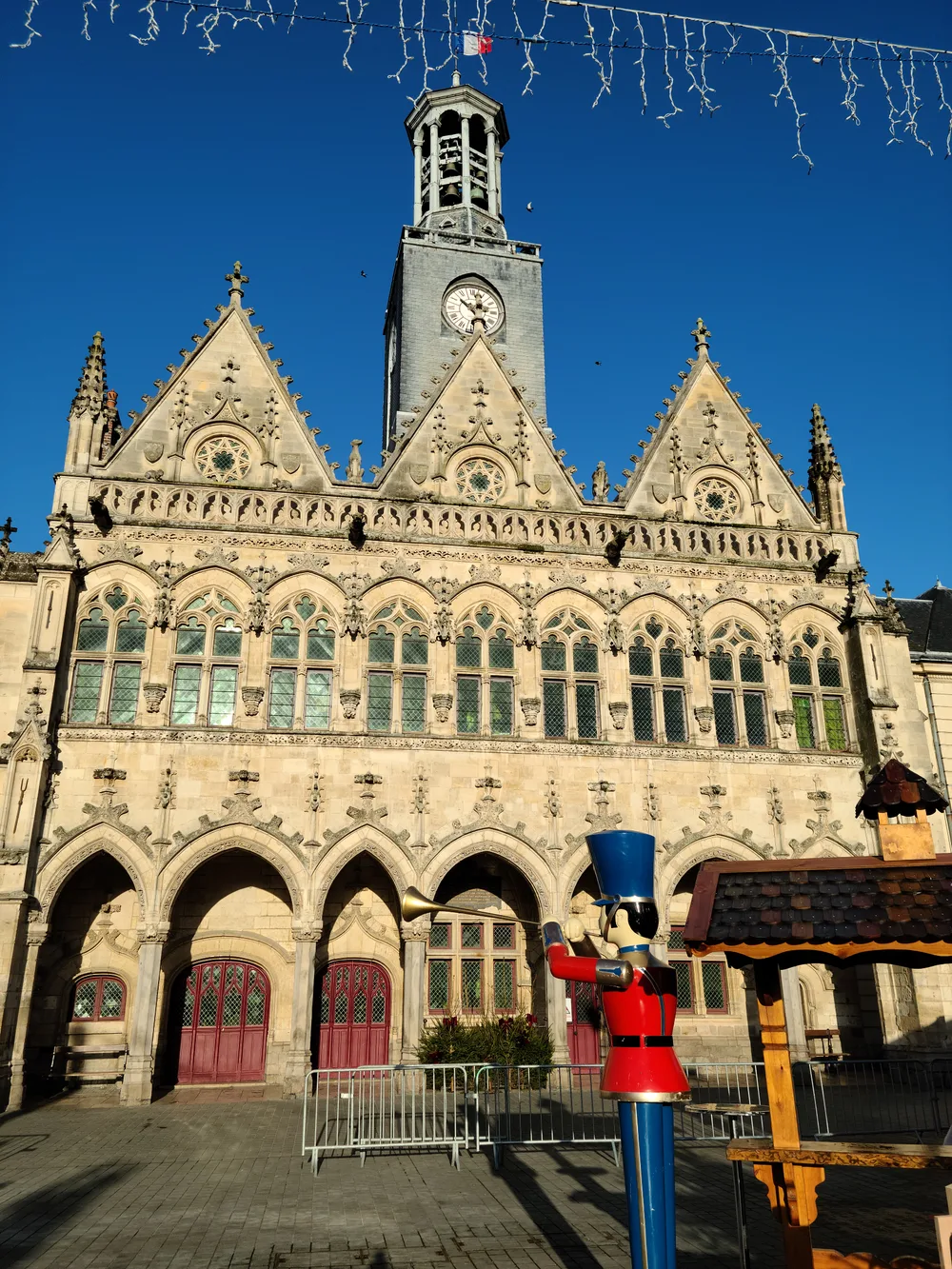
After marveling at the Basilique’s sacred beauty, you’ll find another architectural masterpiece awaits just steps away in the heart of Saint-Quentin’s town square. The Hôtel de Ville’s façade is a stunning Gothic flamboyant showcase featuring 173 whimsical sculptures that’ll captivate you for hours.
Construction spanned nearly two centuries, creating this openwork lace-like design with stone embroideries. You’ll spot intricate vegetal motifs of oak leaves, vine, and curly kale throughout.
- Ground floor portico — sculpted archivoltes and ornamental entrance
- First floor — nine mullioned windows showcasing Gothic complexity
- Upper elevation — three triangular gables crowned by an octagonal campanile
The 37-bell carillon has rhythmed daily life since 1924 and creates a memorable soundscape as you explore the square.
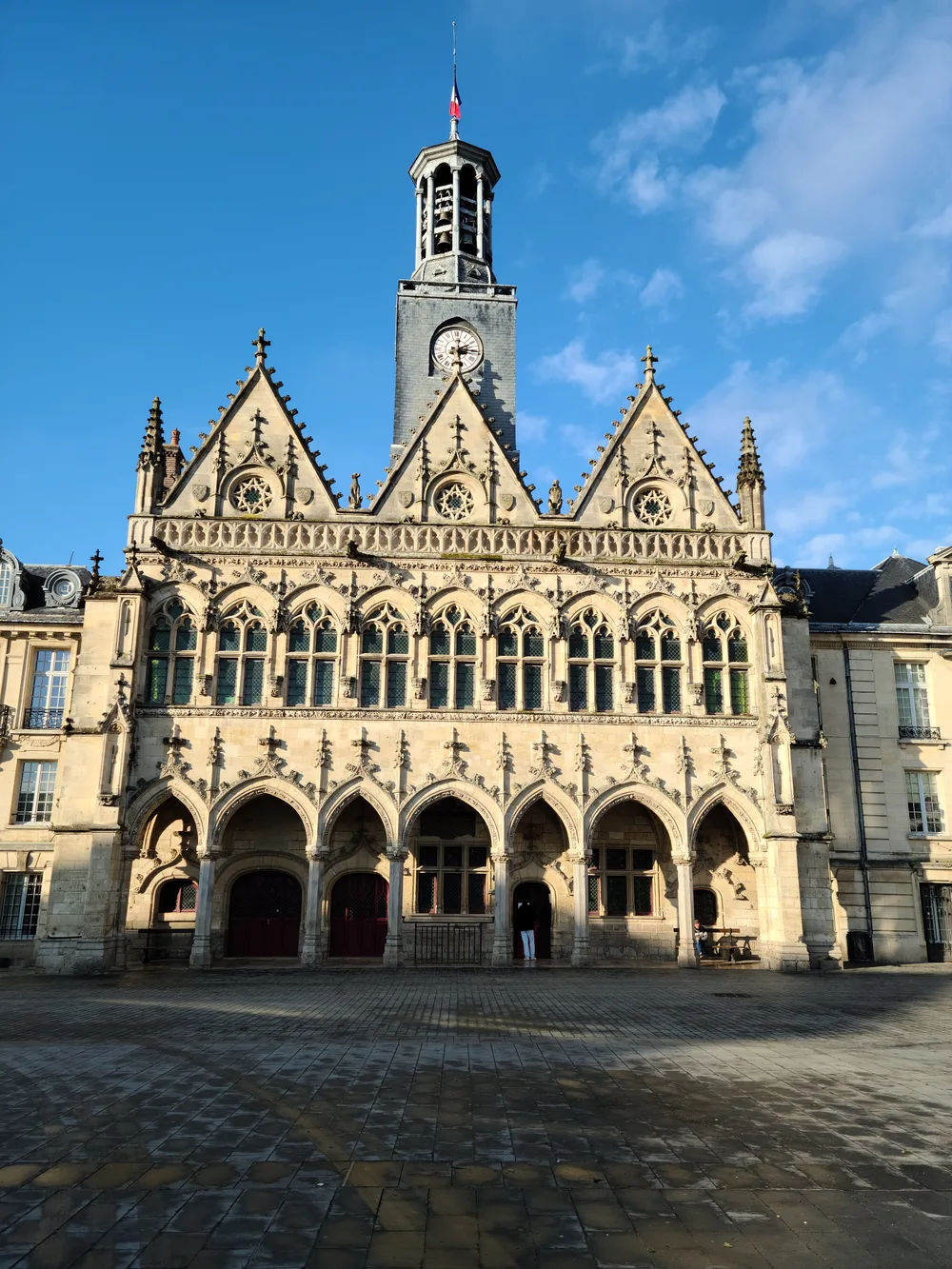
The building underwent significant restoration in 1926, transforming its interior with Art Deco style under architect Louis Guindez. Rent an Art Deco audioguide for just 2 euros to explore this architectural gem year-round.
Follow Saint-Quentin’s Art Deco Architecture Walking Circuit
Stepping away from the Gothic grandeur, you’ll discover Saint-Quentin’s transformation into a 1920s architectural showcase. The designated Art Deco circuit reveals geometric facades, intricate ironwork, and stunning mosaics throughout this “Town of Art and History.” Grab a brochure or audio guide from the Tourist Office to navigate this self-guided tour.
Start along Rue de la Sellerie’s pedestrian streets, where symmetric designs and ornamental details define the post-WWI reconstruction. Don’t miss the Sub-Prefecture’s striking facade and the Post Office’s mosaic-adorned grand hall. The Music School features distinctive bow windows, while Pont d’Isle displays decorative lanterns. Guided tours are also available to uncover hidden treasures like the Town Hall Council Chamber, Casino, and Buffet de la Gare.
The crown jewel? Palais de l’Art Déco, built 1922-1927 with magnificent wrought iron railings and painted stucco. It’s considered one of France’s finest Art Deco buildings, now housing exhibition spaces.
Visit Saint-Quentin’s Musée Antoine-Lécuyer for 18th-Century Portraits
You’ll discover one of France’s most impressive pastel collections at the Musée Antoine-Lécuyer, home to around 100 portraits by Maurice-Quentin de La Tour. This Saint-Quentin native served as official portraitist to Louis XV and mastered the delicate art of pastel during the Enlightenment era. The museum’s three beautifully renovated salons showcase his luminous portraits alongside works tracing pastel art from the 18th century through modern times. The museum also houses collections spanning ceramics, furniture, textiles, drawings, and sculptures, as well as a unique collection of faïences.
Maurice Quentin De La Tour
Art lovers and history enthusiasts will find themselves captivated by the Musée Antoine-Lécuyer, home to the world’s finest collection of Maurice-Quentin de La Tour’s pastel portraits. You’ll discover why this 18th-century master became Louis XV’s official portraitist as you explore his exceptional works.
The museum showcases approximately 100 pastel pieces from La Tour’s workshop, displayed across three beautifully renovated salons. His portraits capture French aristocratic society with remarkable skill and detail.
- Technical mastery — He transformed pastels from a fragile medium into stunning, lasting artwork
- Historical significance — His subjects create an invaluable record of 18th-century French nobility
- Local connection — Born in Saint-Quentin in 1704, he maintained the city as his permanent base throughout his career
You’ll experience art that’s both technically brilliant and historically fascinating.
Fine Arts Collection Highlights
Beyond La Tour’s masterworks, the museum houses an impressive fine arts collection spanning five centuries of European creativity. You’ll discover Italian, Nordic, and French paintings from the 17th through 20th centuries, plus sculptures ranging from the 18th century to the 1920s-1930s art movements.
The collection extends beyond paintings. You can admire exquisite Chinese and Japanese porcelains, French and European faïences from the 1700s, and remarkable ivory pieces. Quality period furniture completes the historical atmosphere.
Don’t miss notable works like Lemoyne’s Portrait de M. de La Tour and Antoine’s Suzanne accusée par les vieillards. The scenography uses carefully controlled lighting to reveal intricate details and expressions you’d otherwise overlook. It’s a thorough art experience that transports you through centuries of European artistic achievement.
Browse Fresh Produce at Marché Saint-Quentin
You’ll discover one of Paris’s largest covered markets at Marché Saint-Quentin, where a stunning 19th-century iron-and-glass hall houses over thirty vendors. Browse half a dozen grocers selling seasonal fruits and vegetables, including organic options, alongside fresh fish delivered daily from the coast. The market welcomes you Tuesday through Sunday with varying hours, so you can shop for artisanal cheeses, regional meats, and international specialties from Italian to Moroccan vendors.
Local Seasonal Produce Selection
The vibrant stalls of Marché Saint-Quentin burst with France’s finest seasonal produce, offering you an authentic taste of what locals enjoy throughout the year. You’ll discover vendor displays packed with vivid, perky fruits and vegetables that peak in flavor when naturally in season. Look for organic (AB) markings highlighting pesticide-free options sourced from regional farms.
- Hearty root vegetables — beetroot, carrots, parsnips, turnips, and Jerusalem artichokes perfect for warming stews
- Vitamin-packed citrus — oranges, lemons, and exotic mangos alongside crisp apples and pears
- Fresh leafy greens — lamb’s lettuce, watercress, and spinach bursting with nutrients
This seasonal focus guarantees you’re getting cheaper, healthier produce that hasn’t traveled far, reflecting France’s commitment to sustainable eating traditions.
Artisanal Goods and Specialties
While seasonal produce forms the heart of Marché Saint-Quentin, artisanal vendors transform this market into a treasure trove of French culinary craftsmanship. You’ll discover multiple fromageries showcasing aged regional cheeses—Brie de Meaux, Mimolette from Lille, and Brebis from Pays Basque. Look for organic (AB) marked stands and raw milk (Lait Cru) selections.
Three butchers, including Boucherie Jouve near rue Cabrol, offer traditional French cuts alongside charcuterie stalls selling pâtes and rillettes. The Rôtisserie Volaille displays game meats, while spicy merguez sausages add North African flair.
Poissonnerie “Les Viviers de Noirmoutier” brings coastal catches directly to your basket—check for sharp eyes and vivid colors ensuring freshness. Don’t miss the patisserie’s croissants and tarts, or explore Portuguese, Thai, Moroccan, and Lebanese take-out options. A Tunisian grocer even stocks premium saffron.
Market Days and Hours
Planning your visit around the right hours guarantees you’ll catch vendors at their best. The market welcomes you Tuesday through Saturday from 8am to 8pm, giving you plenty of flexibility to shop. Sunday operates differently with shorter hours from 8am to 1:30pm, perfect for a morning browse. You’ll find it closed on Mondays.
- Metro & Train — Take lines 4, 5, 7, or RER E to Gare de l’Est
- Bus — Lines 56, 26, 43, or 45 stop nearby at Magenta Gare de l’Est or Place Franz Liszt
- Parking — Use Franz Liszt lot on Rue des Petits Hôtels or Alban Satragne-Magenta garage
The covered market sits at 85 bis boulevard Magenta between Paris’s two major train stations.
Explore the Butterfly Museum’s 20,000 Specimens
Tucked away in the heart of Saint-Quentin’s Espace Saint-Jacques, this remarkable museum houses an astonishing 600,000 insects, with 20,000 specimens on display for visitors to admire. Founded in 1912 through entomologist Jules Passet’s generous bequest, you’ll discover his lifelong passion displayed in original 19th-century furniture.
You’ll spot the world’s largest butterfly among countless colorful species from across the globe. The museum showcases stunning beetles, butterflies, and diverse insects that’ll captivate both adults and children. Plan for under an hour to explore the well-organized galleries and dedicated children’s areas.
Located at 14 Rue de la Sellerie, you can visit Tuesday through Sunday with varying hours. Entry fees are affordable, and staff assist in English and French.
It’s perfect for families and nature enthusiasts alike.
Learn WWII Resistance History at Saint-Quentin’s Picardie Museum
You’ll discover powerful stories of courage at the Musée de la Résistance et de la Déportation de Picardie, where WWII comes alive through local resistance fighters’ experiences. The museum preserves haunting testimonies and artifacts from over 1,000 Picardie residents who were deported to concentration camps during German occupation. You can explore authentic weapons, clandestine radios, and underground press materials that reveal how ordinary citizens risked everything to fight Nazi control from 1940 to 1944.
Picardie’s WWII Resistance Focus
Located in nearby Tergnier, the Picardie Museum stands as one of France’s most compelling World War II Resistance repositories. You’ll discover how ordinary citizens in the Aisne department transformed into courageous resistance fighters during Nazi occupation. The museum’s extensive collection documents this remarkable period through authentic artifacts and firsthand accounts.
- Maquis operations — Detailed reenactments of parachute drops and guerrilla warfare tactics used by local resistance fighters
- Military equipment — Extensive displays of weapons and gear from German, British, American, and Resistance forces
- Personal testimonies — Photographs, documents, and stories from actual participants who risked everything for freedom
While descriptions appear primarily in French, the powerful visual exhibits and artifacts communicate the courage and sacrifice that defined Picardy’s resistance movement.
Deportation History Exhibits
Beyond the military operations and guerrilla tactics, the museum preserves some of the occupation’s most haunting chapters. You’ll encounter detailed exhibits documenting deportation processes that affected Saint-Quentin’s population during Nazi occupation. The displays follow a chronological progression, showing how deportation policies were implemented and executed.
You’ll find preserved accounts from individuals who experienced these traumatic events firsthand. The museum’s archives connect Saint-Quentin’s specific wartime role to broader deportation history across occupied France. These exhibits don’t shy away from difficult subject matter—they’re designed to help you understand the human cost of occupation.
The documentation honors deportation victims while educating visitors about this dark period. You’ll leave with deeper comprehension of how these policies impacted local communities and shaped resistance movements.
Regional Wartime Stories Preserved
The Picardy Resistance and Deportation Museum brings Saint-Quentin’s wartime resistance stories into sharp focus through its carefully curated collections. You’ll discover how local civilians built underground networks, conducted sabotage operations, and gathered intelligence against Nazi occupation from 1940-1944. The indoor exhibits showcase fascinating artifacts that reveal the region’s hidden wartime narratives.
- Secret communications systems — used by local networks to coordinate operations
- Weapon caches and sabotage equipment — that disrupted German control
- Personal stories of resistance fighters — who risked everything for liberation
The museum’s outdoor displays feature larger wartime exhibits that bring these dramatic stories to life. You’ll gain deep appreciation for how ordinary Picards became extraordinary heroes during France’s darkest hours.
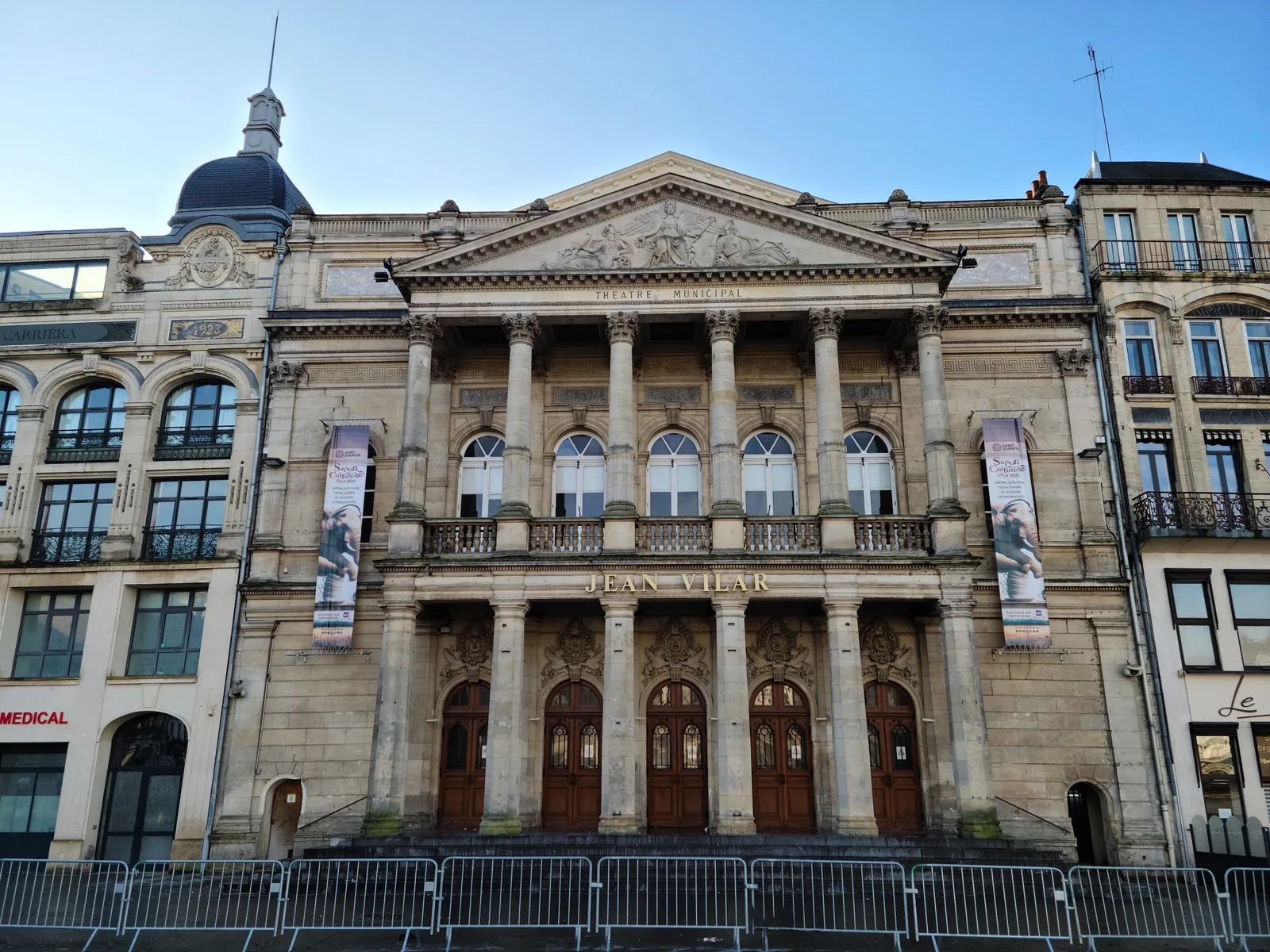
Step Inside Théâtre Jean-Vilar’s Restored Interior
When you push through the doors of Théâtre Jean-Vilar, you’ll discover an Italian-style interior that’s been lovingly restored to showcase its 19th-century grandeur. Wide stone staircases lead you upward past mirrored foyers adorned with sculpted decorations that impressed audiences at the 1844 opening. The 500-seat auditorium glows beneath Eugène Prévost’s 1921 ceiling painting, which depicts Peace and Work escorting a reborn Saint-Quentin after WWI’s devastation.
You can explore the theater’s hidden face through guided tours led by technicians and cultural guides. They’ll take you from the loges to the poulaillers, across the stage to the coulisses. You’ll see backstage areas where performers prepare and discover architectural details invisible from your seat. It’s Saint-Quentin’s cultural heritage brought vividly to life.
Stroll Through Parc d’Isle and the Champs-Elysées Gardens
Sprawling across 100 hectares in central Saint-Quentin, Parc d’Isle serves as the town’s essential green escape where locals and visitors come to breathe fresh air and shake off urban stress. You’ll find walking trails winding through the Champs-Elysées Gardens section, where peaceful paths cut through greenery and connect to surrounding wetland marshes.
- Wildlife encounters — Visit the mini zoo at the far end and explore the Isle Marshes Nature Reserve for bird watching
- Water recreation — Try pedalos or relax at Isle Pond’s beach area
- Active leisure — Play table tennis, mini-golf, or let kids loose on playgrounds
You’ll appreciate the flat, easy trails perfect for casual strolls and family picnics throughout this year-round accessible space.
Visit Maison Familiale De Matisse in Saint-Quentin
Just 20 minutes from Saint-Quentin in the village of Bohain-en-Vermandois, you’ll discover where Henri Matisse spent his formative years before becoming one of France’s most celebrated artists. His family’s former grain shop at 26 Rue du Château now serves as an intimate museum showcasing the artist’s childhood environment.
You’ll explore the very spaces where young Matisse lived surrounded by seeds, colorful fabrics from the local textile industry, and his family’s commerce. The permanent exhibition features original family furniture and reveals how his mother’s gift of paints during his 1888 appendicitis recovery sparked his artistic passion.
The museum offers workshops, temporary exhibitions, and a charming café. It’s open Wednesday through Saturday year-round, with extended Monday hours during summer months, and street parking is free and convenient.
Discover Traditional Crafts at Village Des Métiers D’antan
Back in the heart of Saint-Quentin, you’ll find a remarkable time capsule inside a former Motobécane factory. The Village des Métiers d’Antan transforms 3,200 m² into an authentic 19th-century village where you’ll discover over 50 traditional crafts through 5,000 restored objects.
You’ll wander cobblestone streets past recreated workshops showcasing watchmakers, potters, basket weavers, and saddlers. Each display features QR codes explaining the tools and techniques, while friendly volunteers share fascinating stories about daily life from 1860-1960.
- France’s only Motobécane museum — featuring 120+ vintage models showcasing the town’s industrial heritage
- Fully recreated old-fashioned schoolroom — complete with period furniture and educational materials
- Horse-drawn carriages and rare farm equipment — representing rural life before mechanization
Plan 2-3 hours for your self-guided exploration. Tickets cost €11 for adults, and audio guides make the experience even more interactive.
Conclusion
You’ll find Saint-Quentin’s charm lies in its perfect mix of history, art, and local culture. From the stunning basilica and Gothic architecture to hidden Art Deco gems, there’s always something fascinating around each corner. Don’t miss the vibrant market scene or the peaceful gardens when you need a break. Whether you’re an art lover, history buff, or just seeking authentic French experiences, Saint-Quentin’s got you covered. Pack your camera and comfortable shoes—you’re in for an unforgettable adventure!