You’ve probably heard of Reims, maybe even Amiens—but Saint-Quentin? This northern French gem flies under most travelers’ radars, and that’s exactly what makes it special. Nestled in the Picardy region, it’s a town that’s been knocked down and rebuilt, emerging with stunning Art Deco architecture and a quiet resilience you won’t find in the guidebooks.
If you’re craving authentic France without the crowds, here’s what you need to know before you go.
- Saint-Quentin is a UNESCO-designated “Town of Art and History” rebuilt after World War I destruction, featuring one of Europe’s most impressive Art Deco heritage collections
- The Basilica of Saint-Quentin is the second-largest Gothic church in Hauts-de-France with a rare 260-meter medieval floor labyrinth, one of only three remaining in France
- The Antoine Lécuyer Museum holds the world’s largest collection of pastels by Maurice-Quentin de La Tour with admission at just €5 for adults and free for under-18s
- Direct trains from Paris Gare du Nord reach Saint-Quentin in 1h 13m to 2h 23m with tickets starting at £7 when booked in advance
- Hotels near the Basilica cost around $138 nightly while budget stays on the outskirts start from $44-$56 per night with convenient access via public transport
- The town serves as an ideal base for exploring major World War I battlefield sites including the Somme, Aisne, and Cambrai, all within easy reach
- Saturday and Wednesday markets at Place-Gaspard-de-Coligny offer authentic shopping for fresh regional produce, artisan cheese, and traditional baked goods
Is Saint-Quentin Worth Adding to Your France Trip?
Looking for an off-the-beaten-path French destination that won’t disappoint? Saint-Quentin delivers authentic French charm without tourist crowds. This Upper Picardy capital boasts Europe’s most impressive Art Deco heritage, rebuilt with geometric facades and ornate details after WWI.
You’ll discover the second-largest Gothic church in Hauts-de-France, a stunning 16th-century Town Hall with 173 sculptures, and the remarkable Musée Antoine Lécuyer showcasing French portraiture. Beyond architecture, the 100-hectare Parc d’Isle offers peaceful nature escapes right in town.
The park includes a public garden, wildlife park, and national nature reserve where you can encounter various animals. Saint-Quentin’s pedestrian-friendly center makes exploration effortless, while guided tours reveal hidden gems like the opulent Casino and Buffet de la Gare.
With its “Town of Art and History” designation and high Tripadvisor ratings, Saint-Quentin punches well above its weight for cultural richness and visitor appeal.
Inside the Basilica of Saint-Quentin and Its Gothic Treasures
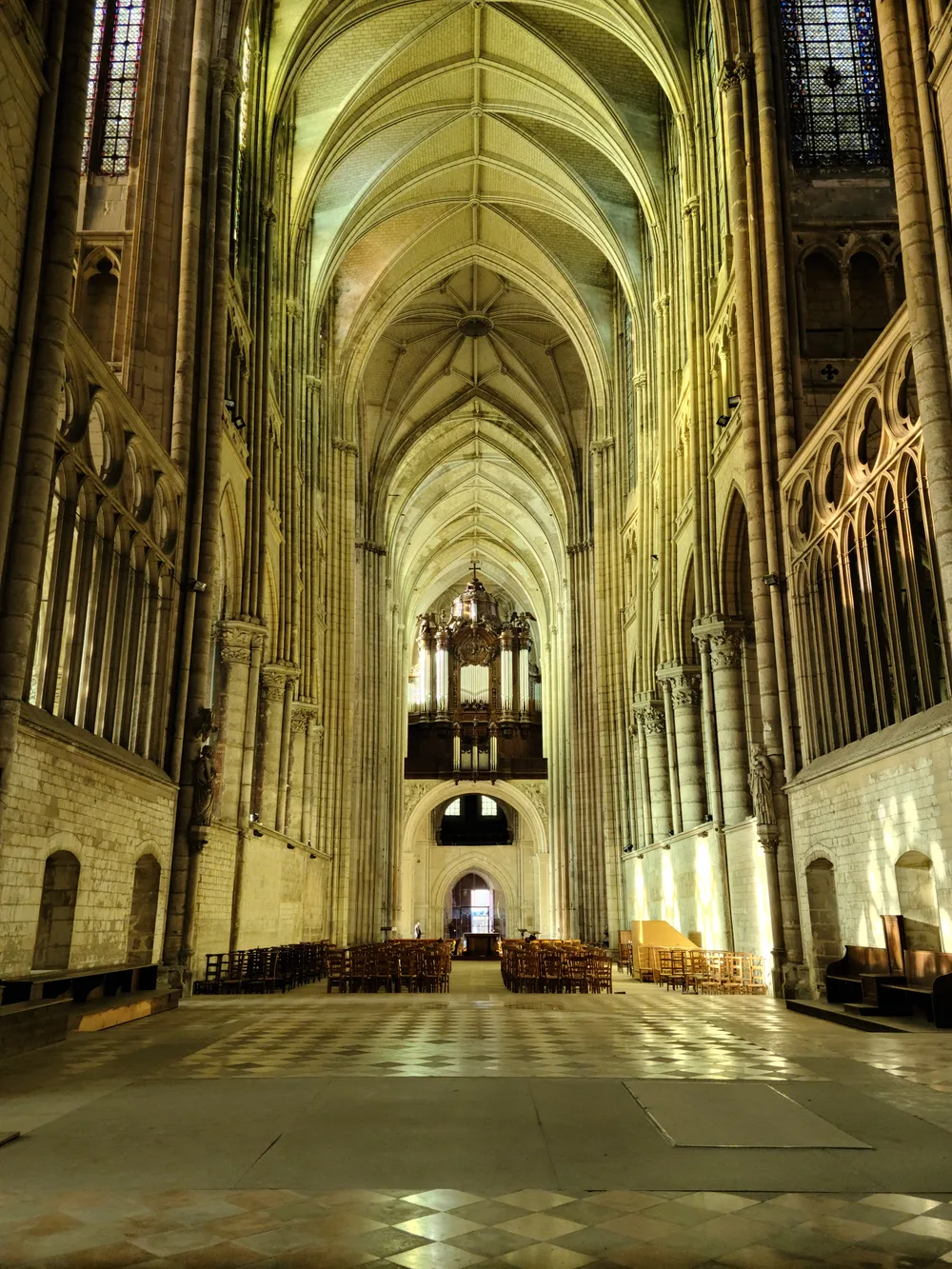
When you step inside the Basilica of Saint-Quentin, you’ll immediately notice the soaring Gothic arches and striking white-and-black stonework that make this 12th-15th century masterpiece one of Picardy’s most impressive churches. The interior stretches an impressive 120 metres long, rising to 34 metres below the vault with dimensions that showcase the evolution of the Gothic style.
The basilica houses the tomb of Saint Quentin himself, whose 4th-century martyrdom put this town on the map for Christian pilgrims. Despite suffering heavy damage during both World Wars—including German troops drilling explosives into its pillars in 1918—the basilica has been beautifully restored and still showcases medieval stained glass and a remarkable 260-meter labyrinth in its nave.
Tomb of Saint Quentin
Beneath the soaring Gothic arches lies the basilica’s most sacred treasure—the tomb of Saint Quentin himself. You’ll find it in the crypt, constructed in 900 AD to house the saint’s remains alongside two other martyrs. This is where the Christian missionary Saint Caius Quintinus rested after his beheading in 287 AD.
The story’s remarkable: his body was thrown into the Somme River and discovered 55 years later by Eusebia, a blind Roman woman who miraculously regained her sight upon finding the relics. She buried them on a hill, sparking the construction of a chapel that eventually became this magnificent basilica.
The chapel’s origins trace back to the 6th century, when it was first dedicated to Saint Quentin before evolving into the grand Gothic structure you see today. You can visit the crypt through guided tours to see these precious 3rd-century relics that’ve drawn pilgrims for centuries.
Gothic Architectural Features
The basilica’s nave will take your breath away with its soaring three-tiered design—arcades at ground level, a delicate triforium in the middle, and massive high windows that stretch nearly half the nave’s height. Strong fasciculated pillars support this exceptional vertical thrust, while quadripartite vaults and flamboyant arches create an intricate ceiling tapestry.
- The octagonal labyrinth — made from black and white paving stones (1495), stretching 260 meters for meditation and one of only three medieval floor labyrinths remaining in France
- Medieval stained glass — in apsidal chapels depicting Virgin Mary and Saint Stephen’s lives
- Rare double-transept layout — featuring 14th-century radiant and 15th-century Flamboyant Gothic styles
- Radioconcentric choir — featuring circular pillars and an extremely rare 45-degree chapel configuration with a great high window’s five-branch star crowning the masterpiece
The basilica also showcases stunning ribbed vaults that exemplify the transition between Romanesque and Gothic construction techniques.
Post-War Restoration Efforts
World War I left the basilica in ruins, with massive artillery damage requiring an extraordinary recovery effort that would span decades. You’ll discover that architect Emile Brunet directed the monumental reconstruction starting in 1919, coordinating the removal of 3,000 cubic metres of rubble and debris.
The restoration team faced incredible challenges, reinforcing unstable masonry while carefully preserving damaged Gothic sculptures.
The Antoine Lécuyer Museum: Masterworks in Pastel
You’re in for a treat at the Antoine Lécuyer Museum, home to the world’s finest collection of pastels by Maurice-Quentin de La Tour, an 18th-century master who captured French nobility with stunning realism. This Saint-Quentin native left behind nearly 100 works that’ll transport you straight to the court of Louis XV—including his famous self-portrait that once graced the 50-franc note.
At just €5 per adult admission (€2.50 reduced, free under-18s), the Antoine Lécuyer Museum is an extraordinary bargain for a two-hour journey through centuries of art history.
Maurice-Quentin De La Tour
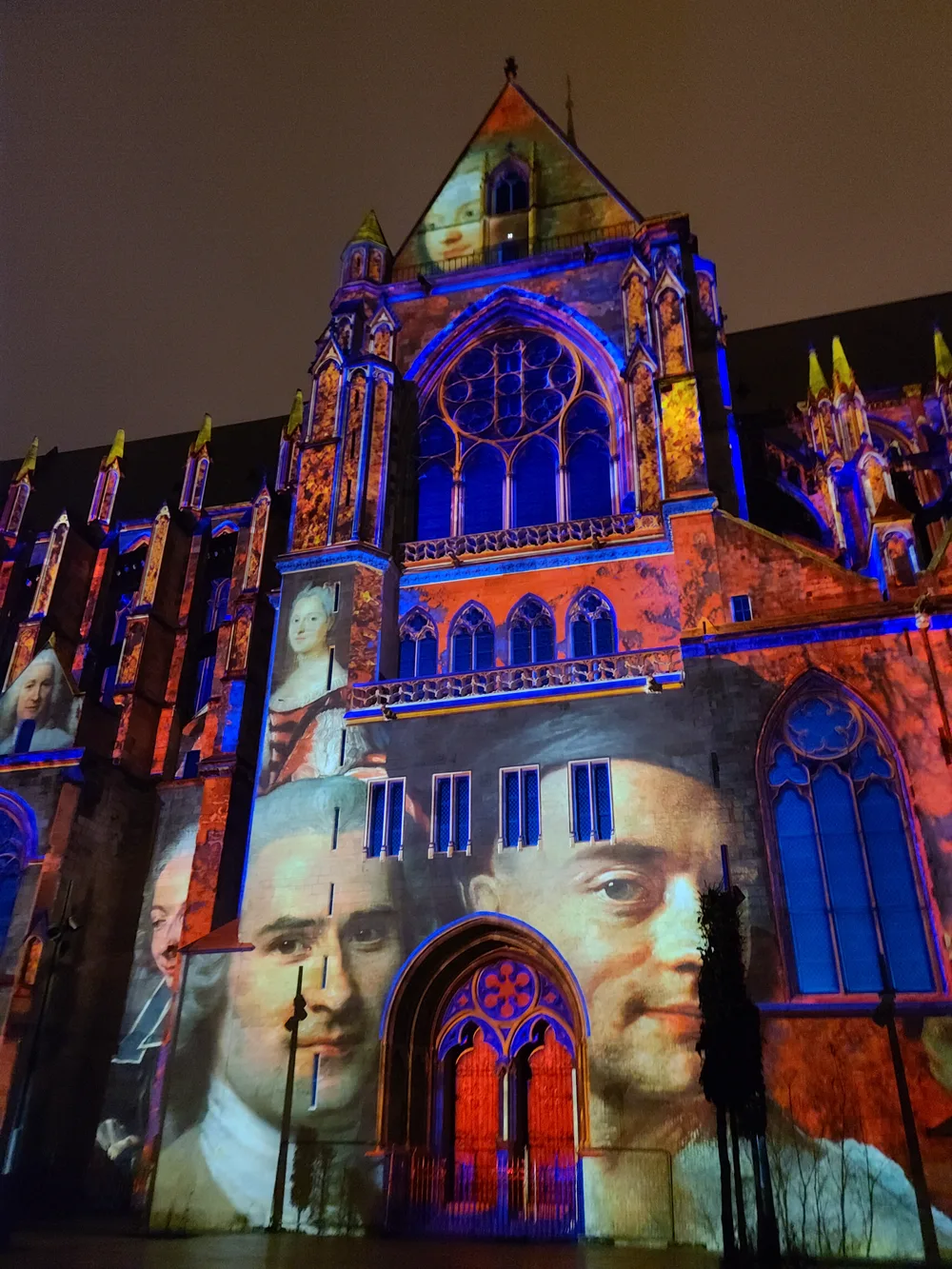
Nestled in the heart of Saint-Quentin, the Antoine Lécuyer Museum safeguards one of art history’s most extraordinary treasures: the world’s largest collection of pastels by Maurice-Quentin de La Tour. Born here in 1704, de La Tour became official portraitist to Louis XV, mastering the delicate art of pastel on paper. He made history with his 1735 portrait of Voltaire, capturing the philosopher’s mischievous smile in vibrant pigments.
- Abbé Jean-Jacques Huber (1742) — intimate ecclesiastical portraiture
- Marc-René, marquis de Voyer d’Argenson (circa 1753) — aristocratic grandeur
- Enlightenment-era character studies — capturing the intellectual spirit of the age
- Revolutionary pastel techniques — pioneering methods that influenced later artists
These fragile, photosensitive works underwent careful renovation in December 2022, ensuring future generations can experience de La Tour’s genius.
Museum Hours and Admission
Planning your visit to the Antoine Lécuyer Museum is straightforward, with generous hours throughout the week that’ll fit most travel schedules. You’ll find the museum open Tuesday through Friday from 2:00 PM to 6:00 PM, while Wednesday and Saturday offer extended morning hours from 10:30 AM to 12:30 PM, plus the afternoon slot.
Sundays welcome visitors from 2:00 PM to 6:00 PM, though Monday means closure. Standard admission costs just €5.00 for adults, with reduced rates at €2.50 available under specific conditions. Groups of 15 or more pay €3.50 per person, and anyone under 18 enters free.
Visit on the first Sunday of any month for complimentary admission and optional guided tours at 3:00 PM—a perfect way to experience the museum at no cost.
Saint-Quentin’s WWI Legacy: Destruction and Rebirth
When German forces swept through Saint-Quentin in August 1914 following the Battle of Le Cateau, they transformed this thriving textile hub into a strategic military nerve center that would endure four brutal years of occupation. The city’s ordeal intensified when occupiers systematically stripped its textile factories, forced residents into labor camps, and evacuated the entire population in March 1917.
- Dynamited streets — reduced to impassable rubble across the entire city center
- Gutted basilica — rigged with explosives by retreating Germans in October 1918
- 620 regional municipalities destroyed — across the entire Picardy region
- 13,000+ soldiers buried — in war cemeteries surrounding Saint-Quentin
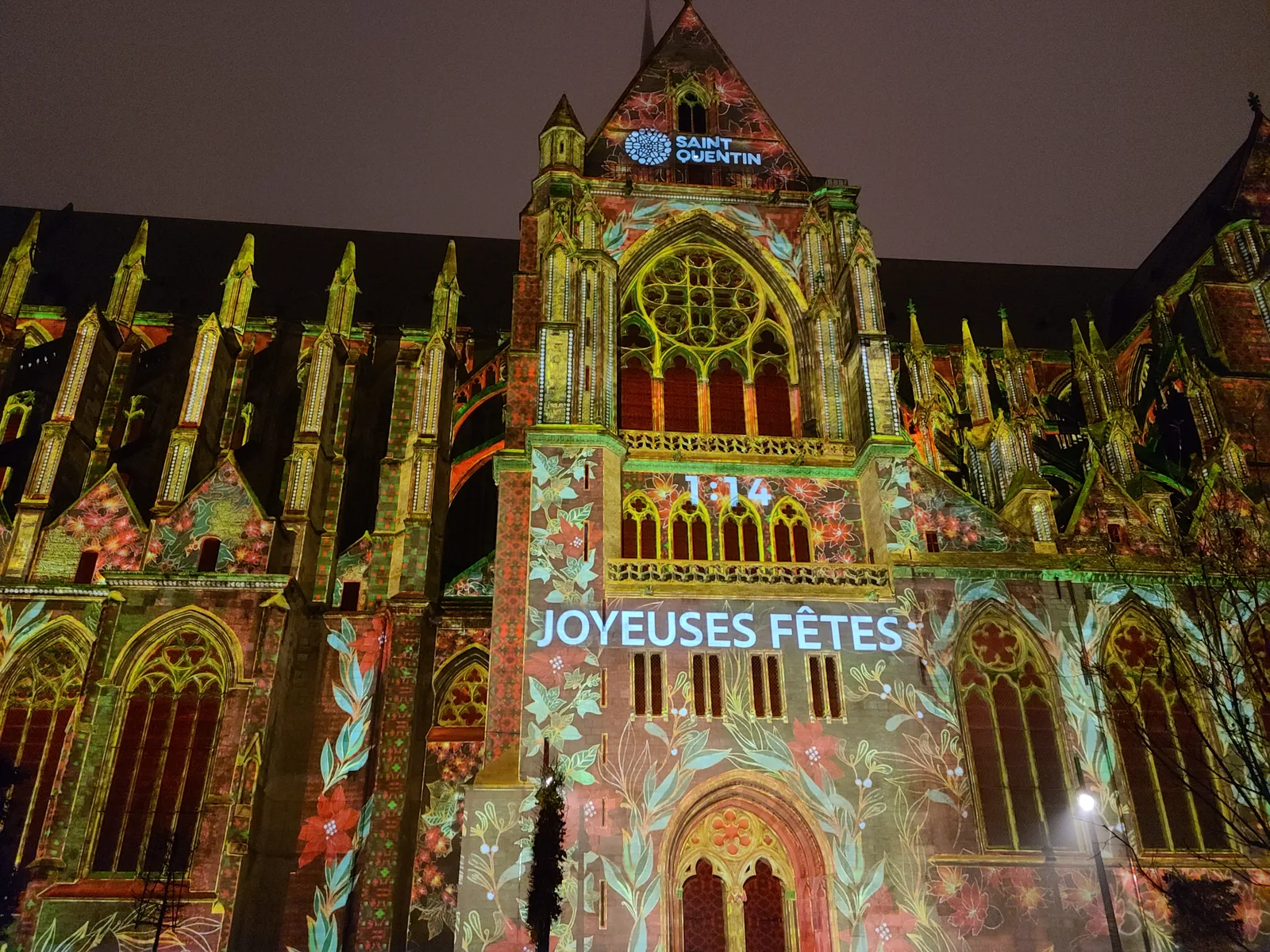
You’ll discover Saint-Quentin’s remarkable Art Deco rebirth throughout the reconstructed city center—a UNESCO World Heritage Site since 2023 that testifies to remarkable resilience after near-total destruction.
Walking Saint-Quentin’s Rebuilt Historic Center
You’ll discover Saint-Quentin’s incredible transformation as you walk through streets that rose from WWI’s devastation into a stunning showcase of 1920s Art Deco architecture. Your route takes you past geometric facades, elegant wrought ironwork, and colorful mosaics that replaced the ruins, creating one of France’s most distinctive urban landscapes.
Don’t miss the towering Gothic Basilique de Saint-Quentin—this 12th-15th century survivor anchors the rebuilt city center and offers a powerful contrast to the modernist buildings surrounding it.
Post-WWI Architectural Restoration
Walking through Saint-Quentin’s historic center today, you’d never guess that 70-75% of its buildings were completely obliterated during World War I. The town’s remarkable reconstruction throughout the 1920s and 1930s transformed devastation into an Art Deco showcase, funded partly by German reparations.
- The Hôtel de Ville — Gothic exterior restored over 25 years with 173 medieval statues, hiding Art Deco interiors from the 1920s-30s
- The Art Deco train station — A flamboyant new construction fitting seamlessly into original street patterns
- Casino cinema (1929) — A striking Art Deco landmark exemplifying postwar exuberance
- Residential streets — Harmonious mixtures of rebuilt Art Deco structures alongside rare pre-WWI survivors
Gothic Basilica Walking Route
The Basilica of Saint-Quentin rises above the rebuilt town center like a miraculous survivor—and that’s exactly what it is. This Gothic masterpiece, the second-largest in Hauts-de-France, has watched over the town since the 12th century. Inside, you’ll find one of only three medieval floor labyrinths left in France—a symbolic pilgrimage path shared only with Chartres and Bayeux.
Start your walk directly in front of the basilica, pass the Gothic Hôtel de Ville, then join the canal banks for a peaceful 10km stretch along the Seine. The route follows GR145, part of the historic Via Francigena pilgrimage dating to 990 AD. This flat, easy path takes you through crop fields and small villages before looping back through Saint-Quentin’s Art Deco streets.
Parc d’Isle and Green Spaces in the City
Just outside Saint-Quentin’s town centre, Parc d’Isle sprawls across 100 hectares as the city’s green heart, where public gardens blend seamlessly with a wildlife park and national nature reserve. You’ll discover the Réserve Naturelle Nationale des Marais d’Isle, sheltering over 160 plant species and equally impressive bird populations.
- Peaceful wetland trails — where herons glide overhead and rare flora thrives
- Charming farmhouse zoo — with friendly domestic animals for kids
- Cycling paths — winding along the Somme River’s tranquil banks
- Waterside picnic spots — at Plage de l’Étang d’Isle with scenic views
The park’s earned its 4.6 TripAdvisor rating as Saint-Quentin’s top nature attraction. You’re minutes from the town centre, yet you’ll feel worlds away while spotting wildlife or simply enjoying France’s natural landscapes.
Planning Your Visit: Best Seasons and What to Expect
Timing your Saint-Quentin adventure correctly transforms a good trip into an unforgettable one. Spring (especially May) and autumn offer the sweet spot—mild temperatures, fewer crowds, and wallet-friendly accommodation rates. You’ll enjoy comfortable weather for exploring the Somme River and wandering scenic paths adorned with fresh blooms or autumn colors.
Summer (June-September) brings warm weather and lively festivals like the Festival des Vieux Métiers, with July and August reaching pleasant highs around 74°F. Expect bustling music and art events throughout this peak season.
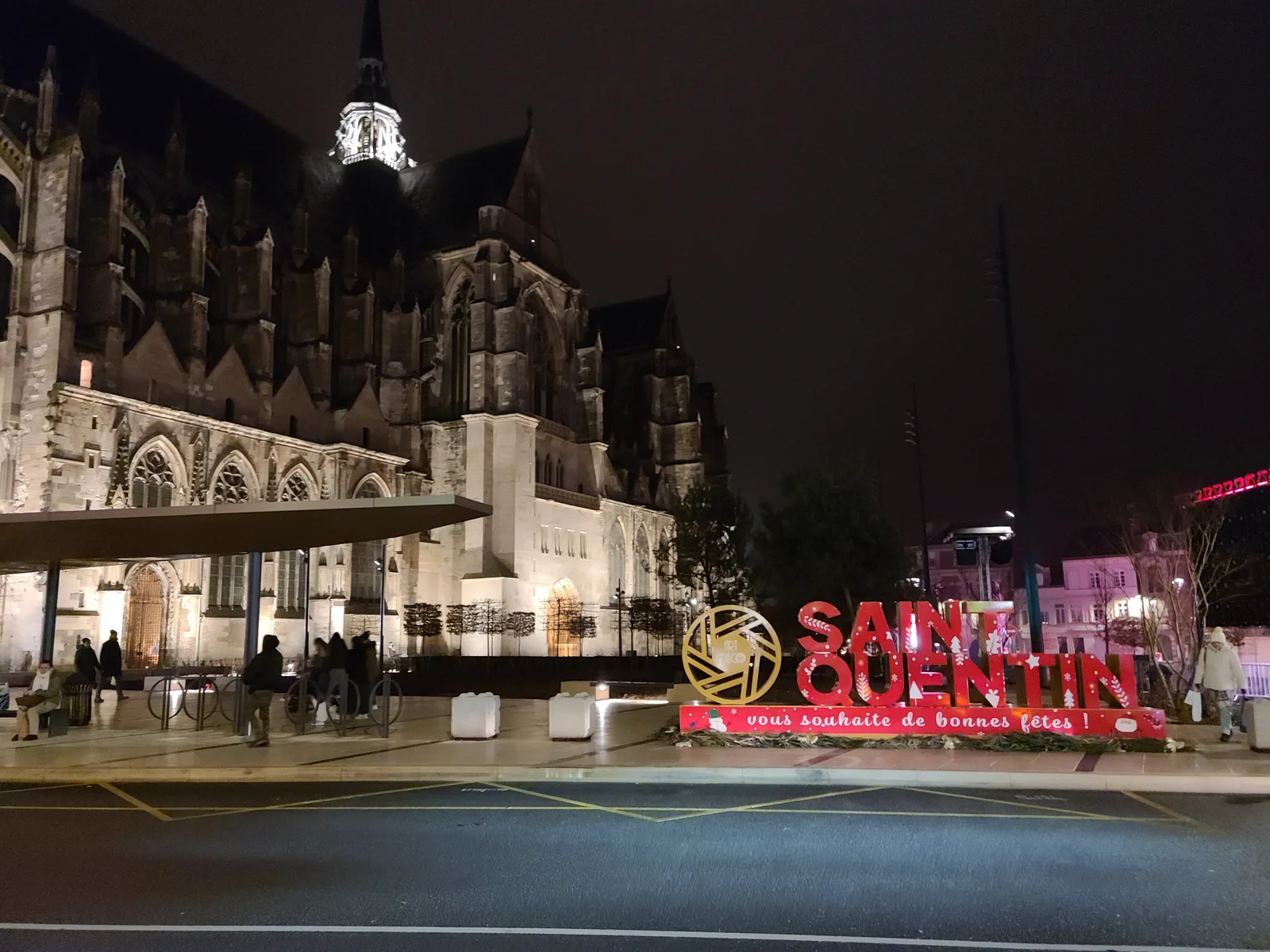
Winter visitors shouldn’t overlook December’s enchanting Christmas market at Place de l’Hôtel de Ville, where festive stalls and twinkling lights create magical atmosphere. Plus, November-December offers the year’s lowest hotel prices, proving Saint-Quentin welcomes travelers beautifully year-round.
Spring and autumn offer the ideal balance of comfortable weather, manageable crowds, and affordable accommodations, making them the sweet spot for most travelers.
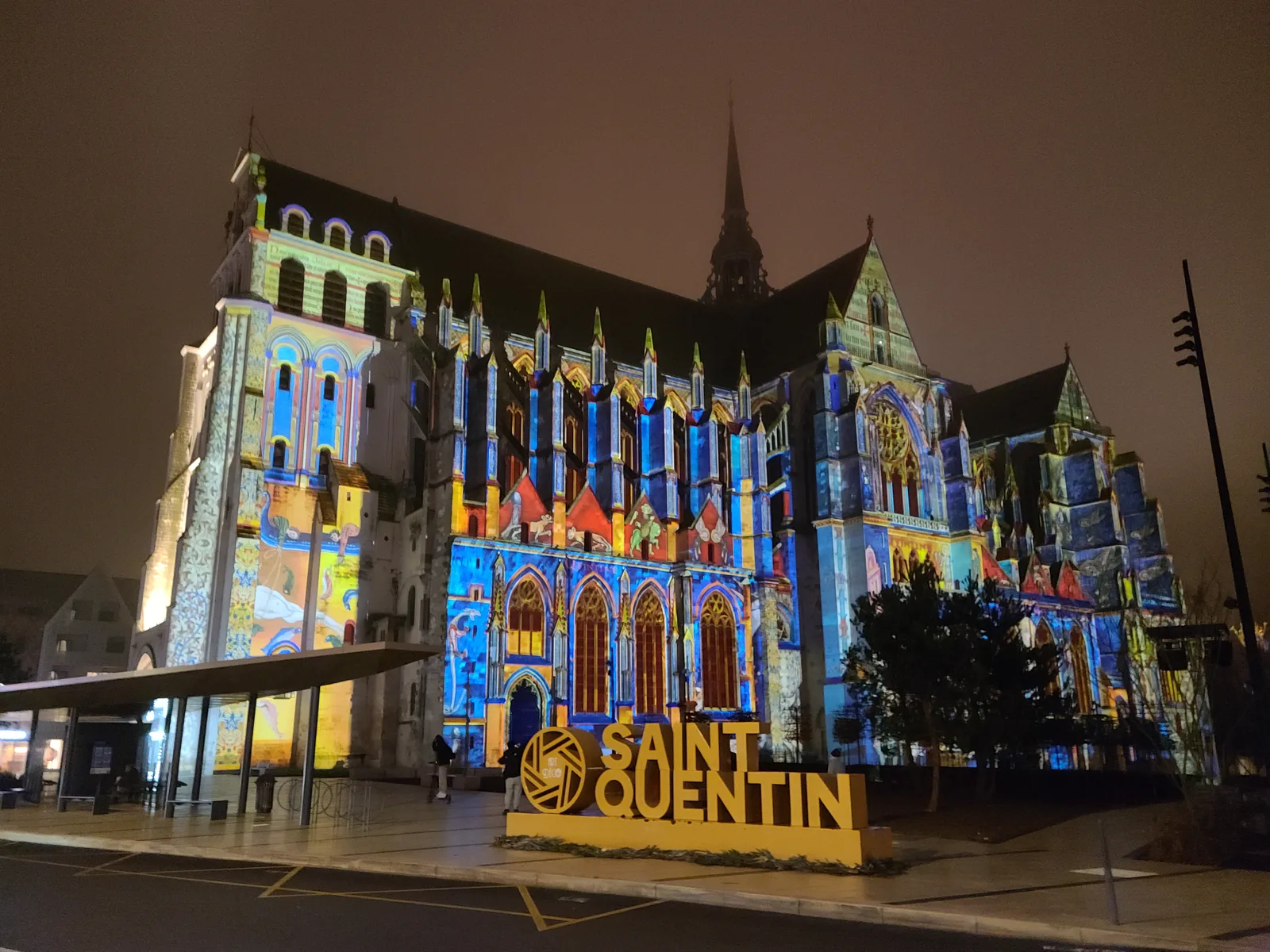
Getting to Saint-Quentin From Paris by Train or Car
How do you reach this charming Picardy destination from France’s capital? You’ve got excellent options! Trains depart from Paris Gare du Nord frequently throughout the day, with 23-25 services available. Direct TER and OUIGO trains whisk you there in just 1h 13m to 2h 23m, covering 129 km.
Tickets start at an affordable £7 when booked ahead. Your journey unfolds beautifully as you board your morning train at 06:34, watching Paris’s cityscape fade into rolling countryside. Speed through charming French villages dotting the Picardy landscape before arriving refreshed at Saint-Quentin’s historic station by mid-morning.
Step onto cobblestone streets ready for exploration. Prefer driving? The A1 motorway gets you there in 1h 30m to 2h. Expect €10-15 tolls one-way, with convenient parking available downtown.
Hotels Near the Basilica vs. Budget Stays on the Outskirts
When you’re planning your Saint-Quentin stay, location profoundly shapes your experience. Hotels near the Basilica put you within 0.1 to 0.3 miles of the historic center, letting you explore on foot. Hôtel Le Florence boasts a stellar 4.4/5 rating in an art deco building, while Chambres D’hotes La Filature scores an exceptional 9.4/10. Expect to pay around $138 nightly for these prime spots.
Budget stays on the outskirts, like B&B HOTEL Saint-Quentin and Premiere Classe, start from just $44-$56 per night. You’ll need a short drive or public transport to reach the Basilica, but you’re saving considerably. These value-focused properties in areas like Gauchy offer family-friendly amenities without the premium downtown prices.
Choose central hotels for walkable convenience and maximized time exploring, or pick outskirts properties to save 60% on lodging and use those savings for dining and attractions.
Saint-Quentin Restaurants Serving Picardy Specialties
You’ll find authentic Picardy cuisine throughout Saint-Quentin’s cozy bistros and elegant restaurants, where regional traditions take center stage. The star of the show is ficelle picarde—a savory pancake rolled with ham, cheese, and mushroom sauce that’s baked until golden. From refined dining rooms to friendly husband-and-wife spots, these local favorites serve generous portions of traditional dishes that showcase the region’s culinary heritage.
Traditional Picardy Dishes
The restaurants of Saint-Quentin proudly showcase Picardy’s rich culinary heritage, where centuries-old recipes meet modern dining spaces. You’ll discover dishes that have delighted locals for generations, each telling a story of the region’s agricultural bounty and cultural influences.
- Ficelle picarde — thin crêpes rolled with ham, mushrooms, and cheese, then baked in creamy Mornay sauce
- Flamiche aux poireaux — an 18th-century leek pie that rivals quiche Lorraine
- Carbonade Flamande — hearty beef stew simmered with onions, beer, and brown sugar
- Gâteau battu — the region’s iconic beaten cake resembling a chef’s hat
These dishes represent Picardy’s soul, combining simple ingredients into memorable flavors you won’t find elsewhere.
Local Restaurant Recommendations
For something more refined, Auberge de l’Ermitage delivers elegant French cuisine at excellent value, while Le 8 par Nicolas Pierre consistently impresses with 1,018 Tripadvisor reviews backing its quality specialties. You’ll find Georges particularly appealing if you’re a cheese lover—their selection is outstanding, paired with great desserts and fresh cooking.
Chez Jean rounds out your options with traditional French meals that locals trust for everyday dining.
The Saturday Market and Where to Shop Locally
Since the Middle Ages, locals have gathered at Place-du-Marché—now called Place-Gaspard-de-Coligny—twice weekly to buy fresh produce, cheese, meat, and bread from traditional stallholders. You’ll find this authentic market operating Wednesdays and Saturdays, with bell-chiming melodies from Hôtel-de-Ville marking each quarter-hour.
- Seasonal Northern France produce — crisp apples, juicy strawberries, earthy chicory
- Artisan cheese wheels — from the local fromagerie with varieties from across Picardy
- Fresh-caught fish — glistening on ice at the fishmonger’s stall
- Warm baguettes and pastries — from the baker with varieties for all tastes
The stallholders welcome questions about unfamiliar items, even in franglais! Book an English guided tour through the tourist office at 3 Rue Emile Zola to learn market history and meet vendors. This off-tourist-trail experience connects you directly with Saint-Quentin’s food culture.
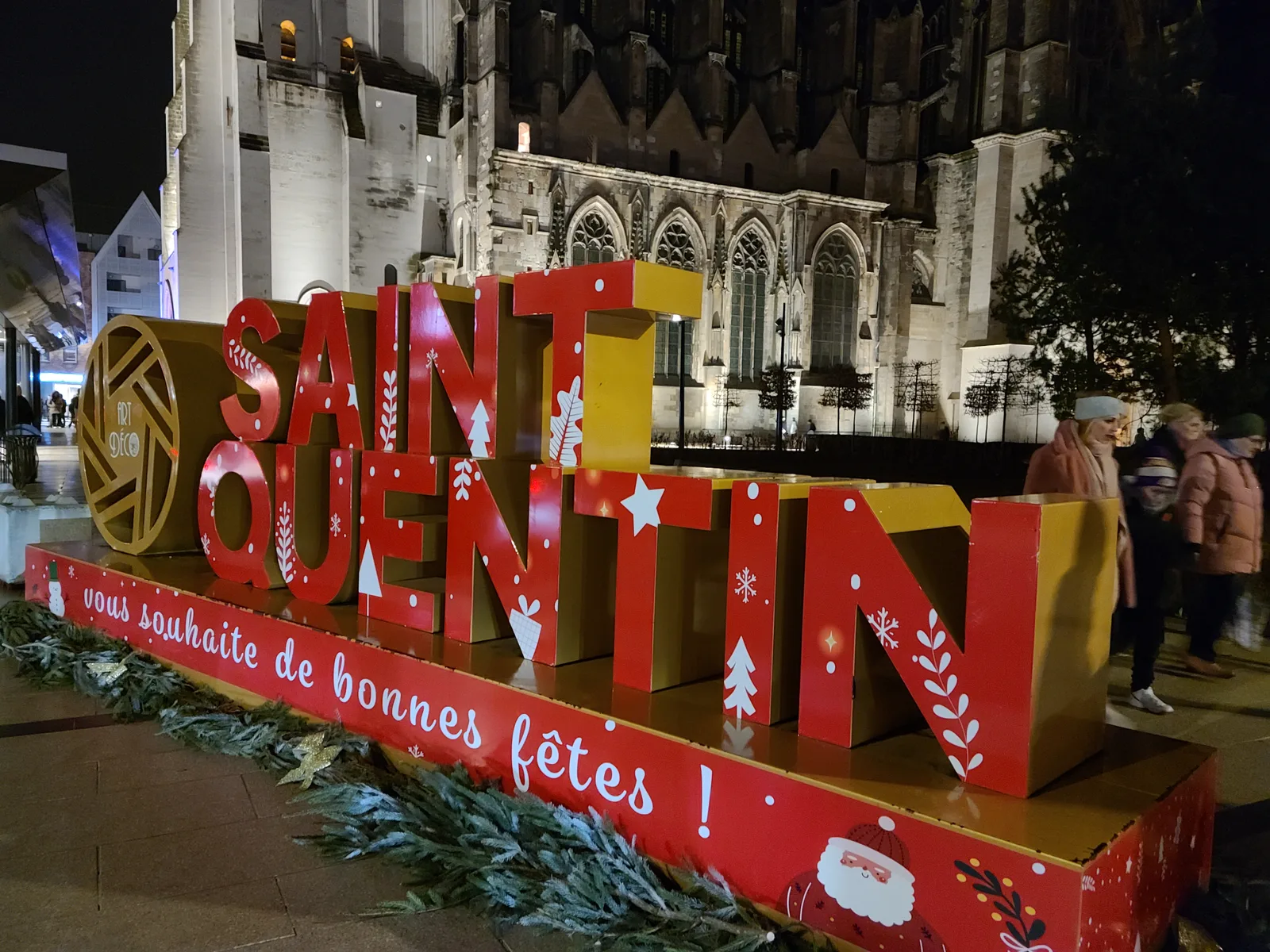
The tourist office offers English-language guided market tours that introduce you to local vendors and teach you about Picardy’s food traditions—a genuine cultural experience many travelers miss.
Using Saint-Quentin as a Base for WWI Battlefield Tours
Beyond the lively market stalls and local flavors, Saint-Quentin’s landscape holds profound historical significance as a cornerstone of World War I’s Western Front. You’ll find yourself ideally positioned to explore three major battlefield areas—Aisne, Cambrai, and the Somme—all within easy reach. The town’s surrounded by 410 Commonwealth, 22 French, and 14 German military cemeteries that tell powerful stories of sacrifice.
You can visit the Battle of Mont Saint-Quentin site where Australian forces broke German lines in 1918, or explore the Bellicourt American Monument nine miles north, commemorating U.S. troops who pierced the Hindenburg Line. Day tours cover March 1918 battles and Wilfred Owen’s final position at the Sambre Canal. These remembrance sites welcome visitors year-round.
Book guided WWI tours in advance through the Saint-Quentin tourist office, as group departures fill quickly during peak season and offer better insights than self-guided visits to complex historical sites.
Getting Around: Walkability and Local Buses
While Saint-Quentin’s World War I heritage draws visitors from around the globe, exploring this charming Picard town doesn’t require a car for most central attractions. You’ll find the compact town center highly walkable, with key landmarks connected through pedestrian-friendly streets. The basilica sits just a downhill stroll from Place du Huit Octobre via Rue de Lyon, while war memorials cluster near conveniently located free parking areas at Rue Lamartine and Place de la Liberté.
- Canal de Saint-Quentin — 11.3 km waterside pathway connecting town to countryside
- Parc des Champs Elysées — 5.1 km urban green space loop ideal for afternoon strolls
- Town center circuit — Navigate the labyrinth of one-way streets on foot with a map
- Camping district route — 3.2 km canal-adjacent walk through residential areas
Digital apps like RouteYou and Outdooractive provide downloadable maps for confident navigation.
Sample Saint-Quentin Itineraries for One or Two Days
Whether you’re squeezing Saint-Quentin into a day trip from Paris or savoring a full weekend in Picardy, this compact city rewards visitors with remarkably diverse experiences.
One-Day Essentials: Start at the stunning Basilica of Saint-Quentin—the second-largest Gothic church in Hauts-de-France—where you’ll walk the rare floor labyrinth. Next, stroll streets lined with Art Deco architecture (grab an audio guide from the tourist office). Cap off your visit at Palais de l’Art Déco (€8 admission, open Tuesday-Sunday 2pm-6pm) or unwind at Parc d’Isle, just five minutes from the station.
Two-Day Exploration: Dedicate your second morning to architectural gems like Le Carillon Cinema and the post office’s grand hall. Then explore the Marais d’Isle wetlands or cruise the Canal de Saint-Quentin for waterside tranquility.
Conclusion
You’ll find Saint-Quentin offers something genuinely different from France’s typical tourist trail. It’s got stunning architecture, moving war history, and that authentic small-town French vibe you’ve been craving. Whether you’re spending a day or using it as your base for exploring WWI sites, you won’t regret making the trip. Pack your walking shoes, brush up on your French, and get ready to discover one of northern France’s best-kept secrets. You’ll love it here.