You’ll find Saint-Quentin sitting quietly in northern France’s Picardy region, just 90 minutes from Paris, yet most travelers rush right past it.
That’s their loss.
This resilient town rebuilt itself with stunning Art Deco flair after WWI, creating a unique architectural landscape you won’t see elsewhere in France.
Between its soaring Gothic basilica, France’s only urban nature reserve, and surprisingly vibrant dining scene, you’ve got the makings of an unforgettable weekend escape.
Here’s how to experience it all.
- Saint-Quentin sits just 1 hour 20 minutes from Paris by train with tickets starting at €3, making it an ideal weekend escape destination
- The town features over 3,000 Art Deco facades rebuilt after World War I, creating one of France’s finest concentrations of geometric design architecture
- The Basilica of Saint-Quentin is Picardy’s second-largest Gothic monument with a rare double-transept design and 34-meter-high vaults built over four centuries
- The Parc d’Isle offers 100 hectares as France’s only urban nature reserve with free entry and activities including canoeing, cycling, and wildlife viewing
- You can explore the Musée Antoine-Lécuyer’s collection of approximately 80-100 pastel portraits by 18th-century master Maurice-Quentin de La Tour
- Downtown hotels range from €41 to €71 per night, with most located within walking distance of the basilica and main attractions
- Guided tours of the Casino Theatre and Buffet de la Gare reveal hidden Art Deco and Belle Époque treasures that require advance booking through the tourist office
Why Saint-Quentin Makes a Perfect French Weekend
Nestled in the Hauts-de-France region, Saint-Quentin delivers an exceptional blend of Gothic grandeur, Art Deco elegance, and accessible charm that’s tailor-made for a weekend escape. You’ll discover the second-largest Gothic church in the region, a magnificent Town Hall with 173 sculptures, and entire streets showcasing Art Deco architecture rebuilt after WWI.
The compact town center lets you stroll from the stunning basilica to vibrant Place de l’Hôtel-de-Ville without wasting precious time traveling between sites. The town is easily accessible by train, just 1h20 from Paris and 1h40 from Lille, making it an ideal destination for a quick getaway.
What sets Saint-Quentin apart is its perfect balance. You can explore fascinating museums like the Butterfly Museum with 20,000 specimens, then unwind in the 100-hectare Parc d’Isle.
Guided tours reveal hidden gems including the Casino theatre and Town Hall’s Art Deco council room, ensuring you’ll maximize every moment.
How to Reach Saint-Quentin and Get Around
Getting to Saint-Quentin couldn’t be easier—you’re just a quick 41-minute train ride from Paris with several budget-friendly options starting at €3. Once you arrive, you’ll find the compact city center sits barely a kilometer from the station, making it simple to reach on foot, by bus, or via a quick taxi ride.
Whether you’re hopping on local buses that run every 10 minutes or exploring the walkable streets on foot, traversing this charming French town is invigoratingly straightforward. The station offers free Wi-Fi throughout, allowing you to easily map out your route or check train schedules as soon as you arrive.
Transportation Options to Town
Whether you’re traveling from Paris, Lille, or Reims, Saint-Quentin’s excellent rail connections make it incredibly easy to reach this charming Picardy town. OUIGO Train Classique offers the fastest route from Paris, with fares starting at just 13€ one-way.
You can book tickets 45 days in advance for these classic line trains reaching speeds up to 160 km/h. Once you arrive at St-Quentin(Aisne) station, getting to the city center is straightforward. The town center sits just 1 km away—you’ll reach it in 15 minutes on foot.
Buses 2, 5, and 6 depart every 10 minutes from nearby Passage Supérieur, taking only 10 minutes total. Prefer convenience? Taxis wait outside the station entrance, charging €4-6 for the quick 2-minute ride downtown.
For exploring the broader region, SQYBUS operates 28 bus routes connecting Saint-Quentin with surrounding municipalities, providing comfortable and reliable transportation for both daily commuters and weekend visitors.
Local Navigation and Mobility
Saint-Quentin’s compact size makes exploring on foot your best option for soaking up the town’s architecture and atmosphere. However, you’ll need transportation from the station to reach the city center efficiently.
- Bus Pastel runs every 10 minutes from Pont Superieur station to Basilique (city center) for €3, taking just 6 minutes
- Budget alternative buses cost only €1 but operate less frequently—one runs every 4 hours, another twice daily
- Taxis offer the quickest ride at 2 minutes for €4–6, perfect when you’re carrying luggage
The local bus network in the Île-de-France region is operated by Groupement Lacroix & Savac, an independent mass transit operator managing numerous lines across the area.
Saint-Quentin’s Gothic Masterpiece Basilica
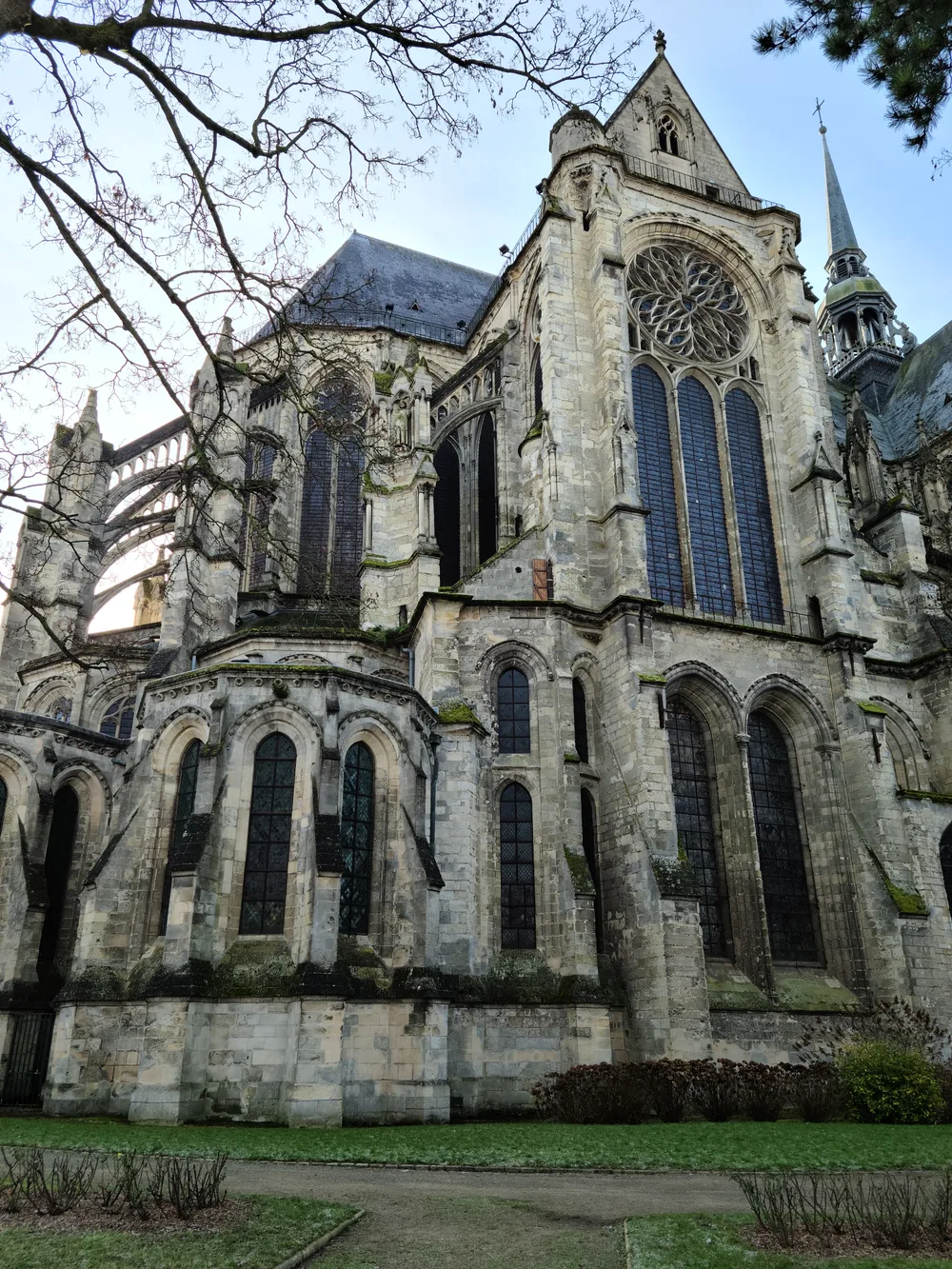
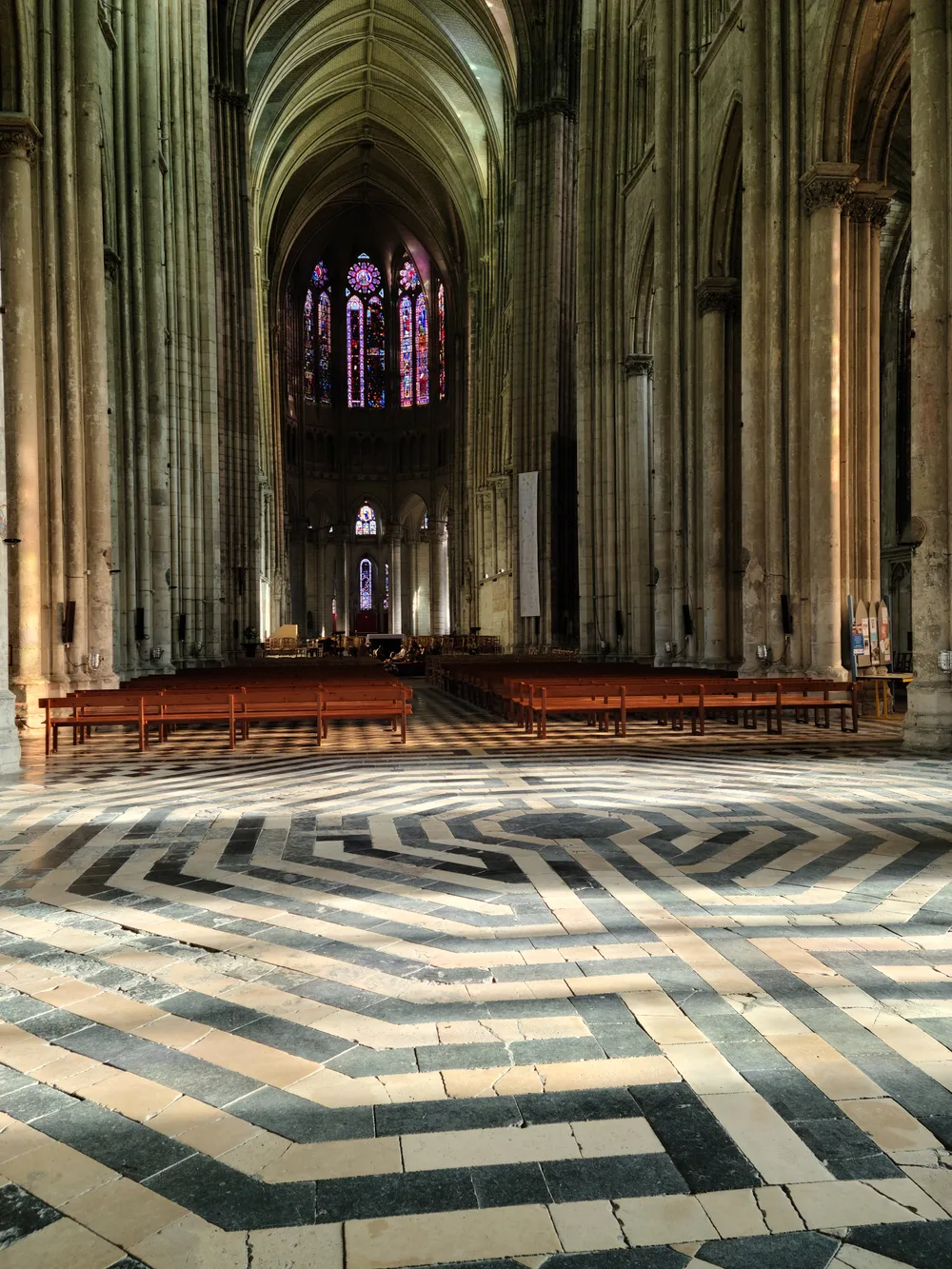
You’ll find the Basilica of Saint-Quentin towering over the city skyline, a stunning Gothic masterpiece that’s been standing since the 12th century. This architectural wonder features a rare double-transept design, soaring 34-meter-high vaults, and brilliant medieval stained glass windows that fill the interior with colored light.
The basilica holds sacred relics of Saint Quentin himself, a 3rd-century martyr whose remains have drawn pilgrims to this spot for centuries.
Architectural Features and History
Rising dramatically above Saint-Quentin’s historic center, the Basilica of Saint-Quentin stands as Picardy’s second-largest Gothic monument, surpassed only by the famous Amiens Cathedral. You’ll discover architectural layers spanning four centuries of construction (12th-15th). The tower you see started around 1170, while the nave wasn’t completed until the early 16th century.
This extended timeline captures Gothic style’s evolution from early designs to flamboyant details. What makes this basilica unique is its double transepts—a rare feature in French Gothic architecture, preserved from ancient Carolingian liturgy. You’ll also encounter mixed-era stained glass with original 12th-century windows alongside Art Deco replacements from WWI reconstruction.
- Double transepts — rare feature in French Gothic architecture, preserved from ancient Carolingian liturgy
- Mixed-era stained glass — original 12th-century windows alongside Art Deco replacements from WWI reconstruction
- Carolingian mosaic fragment — precious floor remnant near the crypt from the 9th-century church
- White gleaming west front — incorporates elements from the original 9th-century Carolingian structure
Sacred Relics and Treasures
At the heart of this magnificent basilica lies an extraordinary spiritual legacy: the relics of Saint Quentin himself, whose martyrdom in the fourth century sparked centuries of pilgrimage and devotion. You’ll find the ancient crypt beneath the choir, where three ninth-century Carolingian vaults house a fourth-century Gallo-Roman marble sarcophagus.
Though emptied in 651 when Saint Eligius divided the relics, it’s still venerated as the saint’s original resting place. The saint’s remains now rest in individual reliquaries behind the high altar, separated into heads, hands, and arms.
Don’t miss the basilica’s other treasures: a stunning fifteenth-century polychrome Saint Michael statue, a fourteenth-century Madonna and Child, and the remarkable sixteenth-century Tree of Jesse half-relief depicting Christ’s genealogy.
The Sculpted Town Hall and Its 37-Bell Carillon
Standing proudly in the heart of Saint-Quentin, the Gothic town hall showcases one of France’s most spectacular civic façades. You’ll discover 173 intricate statues depicting medieval town life across this flamboyant masterpiece, completed in 1509 after two centuries of construction.
The building’s crowned by an octagonal bell tower housing a magnificent 37-bell carillon from 1924.
- The contrast between the Gothic exterior and stunning Art Deco interior from 1926
- The carillon’s daily performances that punctuate city life with musical charm
- Guided tours revealing the building’s fascinating post-WWI restoration funded by German reparations
You’ll find the façade particularly enchanting on weekend mornings when natural light illuminates the detailed stonework. Since interior access requires guided tours, plan accordingly to experience both architectural styles.
Art Deco Treasures Along Rue De La Sellerie
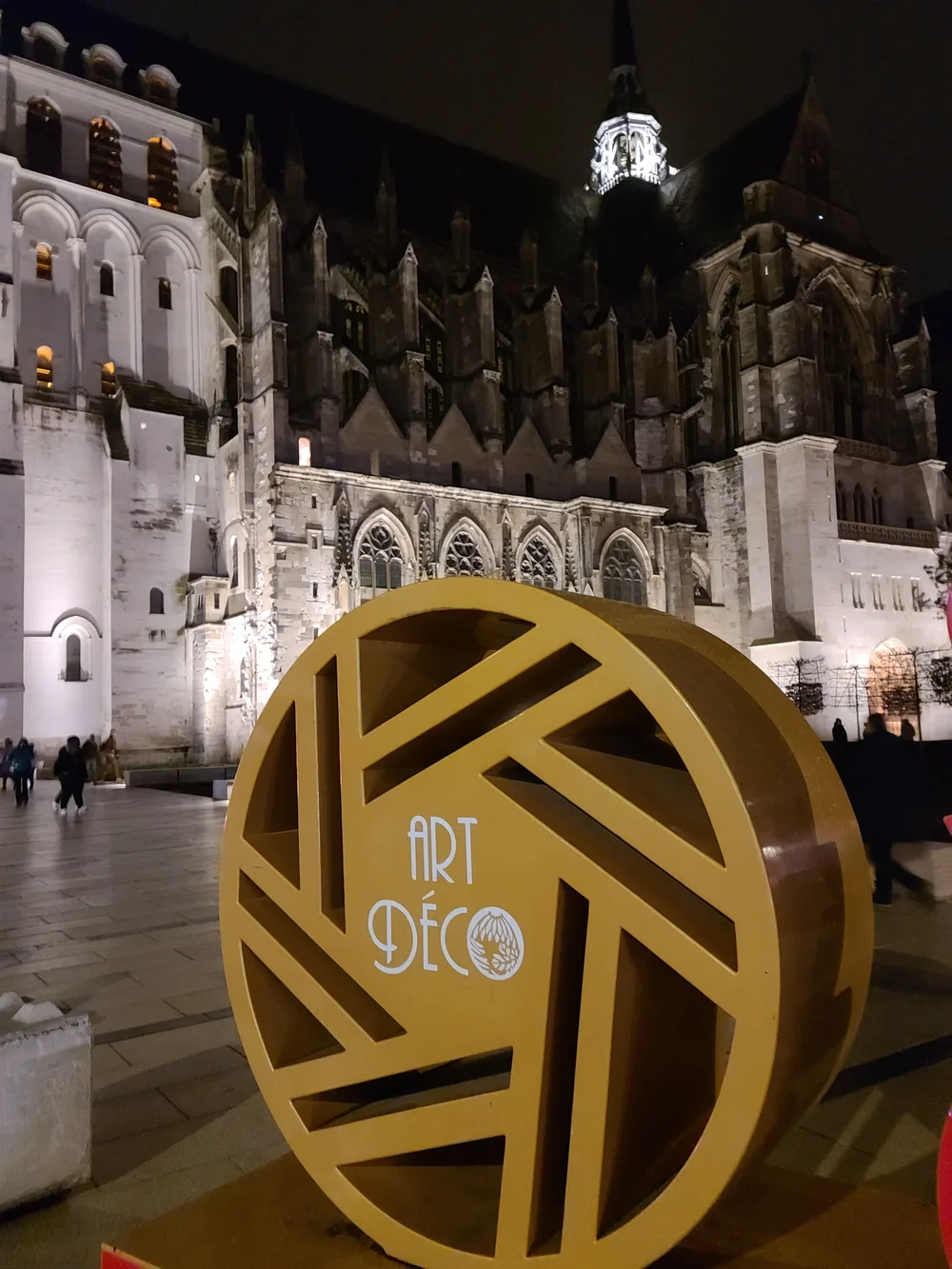
You’ll discover one of France’s finest concentrations of Art Deco architecture along Rue de la Sellerie, where the entire street was rebuilt after WWI. Start at the former Nouvelles Galeries building with its striking “commerce beacons” and geometric stucco decorations—it actually predates Paris’s famous 1925 Art Deco exposition. Walk the street to spot bow-windows, wrought iron details with basket motifs, and bold concrete facades that showcase the creative energy of 1920s reconstruction.
Geometric Facade Design Elements
The concentration of roughly 3,000 Art Deco facades along Rue de la Sellerie makes this street an open-air museum of geometric design. You’ll discover how architects transformed natural forms into stylized geometric patterns, blending classical tradition with Cubism influences. The facades showcase the Roaring Twenties’ spirit through concrete and sculpted stone bas-reliefs that define this architectural movement.
- Sculpted medallions like the ‘Commerce’ piece carved by Raoul Josset
- Decorative bas-reliefs featuring intricate vignettes and geometric motifs
- Clean lines and frescoes that merge everyday commercial architecture with artistic expression
The street’s concentration demonstrates how Saint-Quentin wove Art Deco into daily life, creating an architectural legacy that celebrates modernity and optimism.
Post-War Reconstruction Heritage
Rising from the devastation of World War I, Rue de la Sellerie became Saint-Quentin’s proving ground for architectural innovation. You’ll discover remarkable Art Déco buildings reconstructed throughout the 1920s, showcasing the era’s creativity and vigor. The standout Nouvelles Galeries at number 14, designed by Parisian architect Sylvère Laville in 1922, predates Paris’s famous 1925 Exposition Internationale des Arts Décoratifs.
Its preserved concrete structure features painted stucco decorations and distinctive glass “phare” towers crowning the façade. As you stroll along, you’ll spot Magasins Devred’s reinforced concrete construction from 1922 and pharmacien Soulairac’s corner building. Notice the characteristic bow-windows topped with dormer gables at street angles—architectural signatures of this post-war reconstruction period that transformed devastation into enduring beauty.
Architectural Walking Tour Route
Starting at number 14, your Art Deco walking adventure centers on the magnificent Palais de l’Art Déco, where architect Sylvère Laville transformed war ruins into a modernist masterpiece between 1922 and 1927. You’ll access it through the neo-Gothic Espace Saint-Jacques, built the same year. Inside, discover 1920s fashion, furniture, and decorative objects that defined an era.
- Sculpted medallions like Raoul Josset’s ‘Commerce’ carved into building facades
- Vibrant mosaics and stained-glass windows adorning everyday storefronts
- Wrought ironwork and bas-reliefs showcasing geometric patterns influenced by Cubism
- Municipal Fish Market, Rue de Lyon facades, and Town Hall’s chandelier revealing Saint-Quentin’s optimistic post-war rebirth
The two-hour trail continues past the Municipal Fish Market, Rue de Lyon’s facades, and the Town Hall’s chandelier, revealing Saint-Quentin’s optimistic post-war rebirth through 3,000 Art Deco facades.
Musée Antoine-Lécuyer Portrait Collection
Nestled in Saint-Quentin’s heart, the Musée Antoine-Lécuyer houses one of the world’s most remarkable pastel collections—approximately 80-100 portraits by Maurice-Quentin de La Tour, the 18th century’s undisputed “prince of pastellists.” You’ll encounter the faces of Enlightenment luminaries here: Voltaire’s penetrating gaze, Rousseau’s contemplative expression, King Louis XV’s regal bearing, and the Marquise de Pompadour’s refined elegance all rendered in delicate pastel strokes.
These works originated from de La Tour’s personal studio, bequeathed by his brother to his hometown. Banker Antoine Lécuyer established the museum in 1877, donating his mansion and collections. Though World War I bombardment nearly destroyed the building, reconstruction preserves these treasures today.
Three first-floor salons showcase the pastels exclusively, complemented by decorative arts including Chinese porcelains, European faïences, and period furniture.
Parc d’Isle Nature Reserve and Wildlife Park
Just minutes from Saint-Quentin’s historic center, the Parc d’Isle unfolds across 100 hectares as France’s only urban nature reserve—a remarkable green sanctuary where wetlands, wildlife, and recreation converge along the Somme river. You’ll discover diverse experiences here, from observing protected bird species like elegant avocets and common cranes to exploring the wildlife rescue center and five-continents farm.
The park welcomes you free of charge year-round, opening at 8am daily.
- Paddle across the étang d’Isle pond by canoe or kayak, then cool off at the beach
- Cycle or jog through nature trails while spotting rare wetland plants and animals
- Let kids become “keeper for a day” on Wednesdays, caring for farm animals
The reserve balances conservation with accessibility, offering tranquil paths for contemplation and energetic pursuits alike.
The Butterfly Museum’s 20,000 Specimens
Within the walls of the former Saint-Jacques Church, you’ll find one of France’s most extraordinary insect collections—over 20,000 butterfly specimens that trace their origins to passionate 19th-century collector Jules Passet. This museum, founded in 1912 from Passet’s bequest, houses specimens in their original display furniture, preserving authentic Victorian-era presentation.
You’ll discover the world’s largest butterfly among hundreds of species from around the globe. Interactive exhibits explain life cycles and habitats, making complex science accessible for families and school groups.
The knowledgeable staff speaks both English and French, enhancing your visit. Beyond aesthetics, these century-old specimens provide scientists with essential data on historical species distribution. Plan for less than an hour to explore this enchanting collection at Espace Saint-Jacques in central Saint-Quentin.
Saint-Quentin’s World War Resistance Museums
Saint-Quentin’s tragic World War history transforms from scientific collections to powerful human stories at two remarkable resistance museums. You’ll discover the Musée de la Résistance et de la Déportation in nearby Tergnier, where fascinating artifacts tell stories from Nazi Germany’s rise through D-Day. The museum showcases wreckage from a FW190 and Lockheed P38, complete with their pilots’ incredible tales.
- Historical documents donated by local families reveal authentic Resistance stories and deportation experiences
- Equipment displays from German, British, and American soldiers bring military history to life
- The Deportation section powerfully evokes concentration camp horrors through photographs and artifacts
Entry costs around €5, with free parking available. Saint-Quentin endured devastating occupation during both wars, making these museums deeply meaningful tributes to regional resilience.
5 Traditional Picardy Restaurants to Try
Don’t miss Chez Jean, a beloved spot dating to the last century. Originally rebuilt as Bar de Lyon after World War I, it’s earned 640 TripAdvisor reviews for its excellent French cuisine.
Shopping the Weekly Marché Saint-Quentin
After savoring Picardy’s culinary traditions, you’ll want to experience local life at its most authentic—and there’s no better place than the weekly outdoor markets that pop up throughout Saint-Quentin. The town’s markets buzz with energy as locals shop for fresh produce, regional cheeses, and charcuterie. You’ll find vendors offering seasonal fruits and vegetables alongside specialty items like local honey and artisan breads.
- Wednesday and Saturday mornings bring the largest crowds, with stalls filling the main squares
- Prepared foods let you grab crêpes or regional pastries for breakfast while you browse
- Friendly vendors often offer samples and share cooking tips in French
Arrive early for the best selection, bring cash, and don’t hesitate to practice your French—vendors appreciate the effort.
Guided Tours of the Casino Theatre and Buffet De La Gare
Beyond the bustling markets, Saint-Quentin guards two architectural treasures that most visitors never see—the Casino Theatre and the Buffet de la Gare. You’ll need to book guided tours through the tourist office to access these hidden gems, but it’s absolutely worth the effort.
The Casino Theatre dazzles with its Art Deco elements, restored about ten years ago to its original splendor. Meanwhile, the Buffet de la Gare showcases Belle Époque grandeur inside the train station—a sumptuous room that once welcomed weary travelers in style.
These tours often combine both sites with the Town Hall’s Council Chamber, giving you a thorough look at Saint-Quentin’s architectural heritage. Check the tourist office schedule when planning your weekend, as availability varies throughout the year.
Charming Hotels in Saint-Quentin’s Town Centre
Whether you’re watching the sunrise over the Basilica or returning from an evening stroll through the illuminated streets, you’ll find Saint-Quentin’s town center hotels offer more than just a place to sleep—they’re your home base for exploring this architectural gem.
- Hôtel Le Florence — 4.4 rating with prime location 755 feet from Town Hall, €71 per night with free WiFi and private parking
- ibis budget Saint-Quentin Centre Gare — sits 215 yards from the train station with clean rooms from €58
- B&B HOTEL Saint-Quentin — lowest rates at €41 per night
- Les Nuits Pastel — intimate charm with stellar 4.5 rating for €70
Each property puts you within walking distance of restaurants, bars, and Saint-Quentin’s historic attractions.
Conclusion
You’ll leave Saint-Quentin with a camera full of Art Deco details, a satisfied appetite from Picardy’s best dishes, and memories of bell towers echoing across cobblestone squares. This underrated French gem proves you don’t need crowds or sky-high prices to experience authentic culture. Pack your bags for next weekend—Saint-Quentin’s Gothic spires, vibrant markets, and welcoming locals are waiting. You’ve discovered France’s best-kept secret, and you’ll want to return before telling everyone about it!